
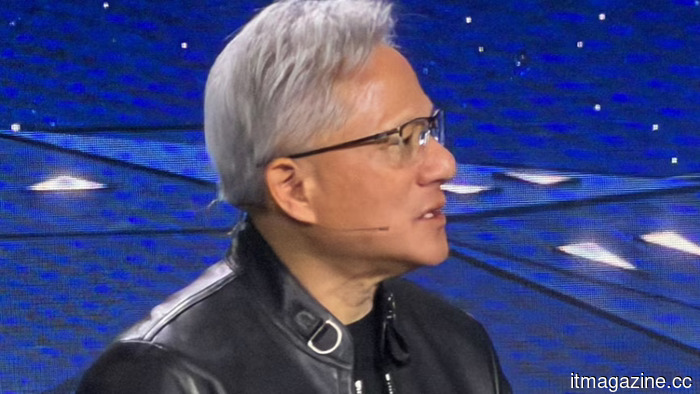
Nvidia is negotiating to secure $250 billion in debt for OpenAI's data centers.
Nvidia is reportedly negotiating to offer approximately $250 billion in financing guarantees for OpenAI, as stated by the Wall Street Journal on Sunday, citing sources knowledgeable about the discussions. This financial support would enable OpenAI to lease a 10-gigawatt campus being developed in southern Ohio by SoftBank’s energy subsidiary.
The rationale for requiring such a guarantee is clear: OpenAI lacks an investment-grade credit rating. Nvidia's financial standing would effectively serve as a substitute, allowing lenders to assess the debt based on Nvidia's creditworthiness instead of that of the borrower.
Financial coverage
The $250 billion figure pertains to the leasing and construction debt for the data center, not the Nvidia chips that will be housed within it. Discussions regarding financing for chip purchases could potentially escalate to an additional $350 billion. The total expenditure for the entire initiative is projected to exceed $500 billion, including costs for silicon, with the first phase, approximately 800 megawatts, expected to be completed by 2028.
Nvidia's support would aid in creating financing mechanisms that reassure lenders regarding the project's funding. Reuters stated it could not promptly confirm the report, and Nvidia, OpenAI, and the US Commerce Department did not provide comments when approached.
The political aspect of the site
The power supply for the Ohio campus is governed by the US government and separately financed by Japan through a recent trade agreement linked to Tokyo’s commitment to invest $33 billion in a natural gas plant. Commerce Secretary Howard Lutnick is involved in determining access allocations.
OpenAI has been actively negotiating for the site for several weeks and is one of the top contenders. Anthropic, Microsoft, and Google have also recently made inquiries with Lutnick, according to the Journal.
The circularity concern
Investor Michael Burry, recognized for predicting the housing market crash of 2008, remarked on X: “Around and around we go. Nvidia to guarantee $200 billion of ChatGPT’s spending on $NVDA chips.” He had increased his short position in Nvidia on Friday at $210.28. Tech analyst Ed Zitron criticized the move, deeming it “an insane thing to do on so many levels and about as bearish as it gets, especially considering it is being built by SoftBank.” Both comments reflect the same structural issue: a chip supplier backing its customer's capacity to continue purchasing chips.
Nvidia has previously allocated over $40 billion toward AI equity stakes, including around $30 billion in OpenAI. Its investment in Ilya Sutskever’s Safe Superintelligence exemplifies this pattern, where Nvidia finances firms that then spend that funding on Nvidia hardware.
A precedent in structure
Vendor guarantees for data center commitments are increasingly common, though the scale here is unprecedented. Google has backed approximately $44 billion for other companies’ data center leases, a figure that the proposed Nvidia guarantee would surpass by nearly six times.
OpenAI's capital structure has grown more complex, with eight banks now supporting SoftBank’s record $40 billion loan to OpenAI, and SoftBank has independently sought margin loans secured by its OpenAI shares. A significant portion of these obligations remains outside conventional debt reporting. Research estimates that Big Tech’s off-balance-sheet AI commitments total around $1.65 trillion, with Meta alone responsible for about $420 billion, nearly triple its reported debt.
Implications for OpenAI
For OpenAI, this arrangement represents a preliminary step toward owning its computing resources rather than leasing them from Microsoft, Amazon, and Oracle. Control over infrastructure differentiates between merely negotiating for capacity and having the ability to dictate terms.
For Nvidia, the incentive lies in ensuring demand certainty. By guaranteeing the construction, it secures years of chip orders from a customer that would otherwise face challenges in financing them, which is why some critics view the arrangement as problematic.
The scale of concern
Spending on AI infrastructure is anticipated to exceed $700 billion this year, with the industry expected to invest more than $3 trillion on data centers through 2028, largely funded by the chips inside. The central risk does not lie in the potential irrelevance of AI, but in the possibility that the expansion outpaces demand or that competitive pressures diminish returns faster than the debt can be repaid.
No agreements have been finalized. The Journal emphasized that discussions surrounding the site and its financing are ongoing and subject to modification, which is significant regarding the proposed $250 billion guarantee.
Other articles
 Fujifilm is increasing camera prices by as much as €500. The AI memory crisis has impacted the photography industry.
Fujifilm will increase the prices of five camera models starting September 1 due to rising DRAM costs. The X100 VI will see a price increase of €200, while the GFX100 II will rise by €500. Canon, Sony, and Nikon are anticipated to take similar actions.
Fujifilm is increasing camera prices by as much as €500. The AI memory crisis has impacted the photography industry.
Fujifilm will increase the prices of five camera models starting September 1 due to rising DRAM costs. The X100 VI will see a price increase of €200, while the GFX100 II will rise by €500. Canon, Sony, and Nikon are anticipated to take similar actions.
 Starting in early 2027, YouTube Premium will offer Peacock at no additional charge. This marks Peacock's biggest distribution agreement.
Starting in early 2027, Peacock Premium ($11/month) will be offered at no additional cost with YouTube Premium. This agreement expands the distribution of YouTube TV and incorporates live sports into YouTube.
Starting in early 2027, YouTube Premium will offer Peacock at no additional charge. This marks Peacock's biggest distribution agreement.
Starting in early 2027, Peacock Premium ($11/month) will be offered at no additional cost with YouTube Premium. This agreement expands the distribution of YouTube TV and incorporates live sports into YouTube.
 Starting in early 2027, YouTube Premium will incorporate Peacock at no additional charge. This marks Peacock's most significant distribution agreement.
Starting in early 2027, Peacock Premium ($11/month) will be offered for free with YouTube Premium. This agreement will expand the distribution of YouTube TV and introduce live sports to YouTube.
Starting in early 2027, YouTube Premium will incorporate Peacock at no additional charge. This marks Peacock's most significant distribution agreement.
Starting in early 2027, Peacock Premium ($11/month) will be offered for free with YouTube Premium. This agreement will expand the distribution of YouTube TV and introduce live sports to YouTube.
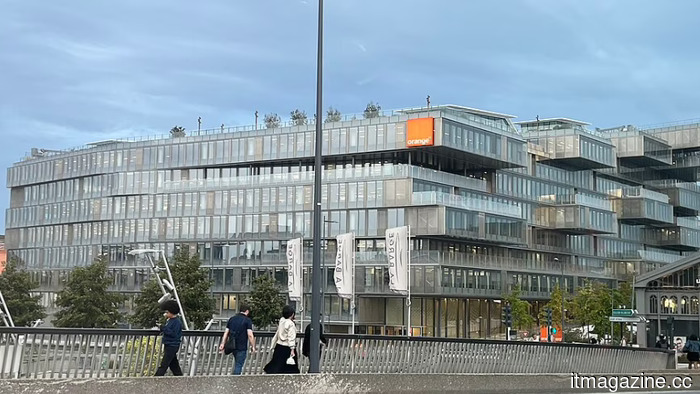 Orange and Morrison are set to launch a EUR 3 billion data center project in France.
Orange and Morrison are set to develop a 400MW data centre platform in France, supported by EUR 3 billion and positioned as a European sovereignty initiative financed by a manager from New Zealand.
Angola secures $321 million in its largest IPO to date with the Unitel launch.
Angola divested a 15% share in Unitel for approximately $321 million, marking its largest initial public offering to date. The shares originate from a seizure in 2022 involving Isabel dos Santos.
Orange and Morrison are set to launch a EUR 3 billion data center project in France.
Orange and Morrison are set to develop a 400MW data centre platform in France, supported by EUR 3 billion and positioned as a European sovereignty initiative financed by a manager from New Zealand.
Angola secures $321 million in its largest IPO to date with the Unitel launch.
Angola divested a 15% share in Unitel for approximately $321 million, marking its largest initial public offering to date. The shares originate from a seizure in 2022 involving Isabel dos Santos.
 Here are the compact printers I would genuinely suggest for back-to-school.
Printing shouldn't require a late-night visit to the library's computer lab. Here are four compact printers that are great to have on your desk, ranging from reliable workhorses to instant photo printers.
Here are the compact printers I would genuinely suggest for back-to-school.
Printing shouldn't require a late-night visit to the library's computer lab. Here are four compact printers that are great to have on your desk, ranging from reliable workhorses to instant photo printers.
Nvidia is negotiating to secure $250 billion in debt for OpenAI's data centers.
Nvidia is said to be considering a $250 billion support package for OpenAI's 10GW campus in Ohio, along with $350 billion in chip financing. Detractors have described the arrangement as circular.