
Competitors of Google prepare to seek compensation following significant EU penalty.
Less than a week after Brussels imposed its first penalty under the Digital Markets Act on Google, the company’s competitors are quickly leveraging the ruling to their advantage. The European Commission fined Google €890 million on July 23, approximately $1 billion at current exchange rates, and rivals who have long pursued the tech giant in European courts now view this infringement finding as new leverage in an expanding collection of private damages claims.
The fine consists of €460 million for prioritizing Google’s own shopping results over those of competitors and €430 million for preventing app developers from directing users away from Google Play. This penalty, which Brussels took months to prepare, comes as Google already faces a record €4.1 billion fine related to Android and over €10 billion in prior European antitrust fines.
What makes this ruling significant for competitors is not just the monetary aspect but the precedent it sets for their own cases. According to EU regulations, a finding of infringement by the Commission can support follow-on damages actions, allowing claimants to argue that liability is effectively established and to focus solely on the amount owed to them.
Legal experts anticipate that this ruling will strengthen ongoing claims in national courts, with Thomas Hoppner of Geradin Partners, a firm representing several complainants, predicting it will “initiate a new wave of litigation.” The advantage lies in both scale and substance, as claimants no longer need to prove that Google violated the rules before discussing the compensation owed.
Some of these cases are already quite advanced. For instance, in Germany, the price-comparison site Idealo received €465 million (approximately $529 million) from a Berlin court in November for claims related to Google's self-preferencing in search results. Sweden's PriceRunner, owned by Klarna, received an even larger judgment this month when a Stockholm court ordered Google to pay roughly $1.5 billion, which could reach approximately $1.97 billion with added interest. Google is expected to appeal, and this case may extend for over another year.
Other lawsuits are still in the works. Italy’s Moltiply, which operates the Trovaprezzi.it shopping platform, is seeking €2.97 billion, while in the Netherlands, two groups supported by the litigation funding company LitFin are pursuing claims exceeding $1 billion collectively.
Most of these lawsuits can be traced back to the Commission’s 2017 decision on Google Shopping, which imposed a €2.42 billion penalty that first illustrated the self-preferencing issue now echoed in the new DMA finding.
The significance of the ruling is highlighted by Google's attempts to keep it out of the courtroom. Before the UK Competition Appeal Tribunal, where Kelkoo, Foundem, and Connexity are seeking a multi-billion-pound claim, Google requested that judges exclude the DMA decision from evidence, arguing that the regulation operates under a different legal framework than the competition-law claims involved. The company asserts that the finding is both inadmissible and irrelevant.
Publicly, Google has remained firm. Kent Walker, its president of global affairs, described the Commission’s decision as the result of “a small group of self-serving complainants” and mentioned that the company is considering an appeal, even as it faces a 60-day ultimatum to change its search results and allow app steering, with non-compliance potentially resulting in daily fines of up to 5% of Alphabet’s global revenue.
Competition chief Teresa Ribera expressed it more straightforwardly, stating that the best products “should succeed because they’re better, not because they’re owned by the company running the search engine.”
For the comparison-shopping services that have engaged in litigation for nearly a decade, this ruling alters the calculations more than the arguments. The EU’s broader initiative to open up Google’s search and Android businesses continues on its own path, while the damages claims have a newer, more pointed document as evidence, and Google now has an increasing number of claimants awaiting their turn.
The question of whether a DMA finding can support a competition-law claim will be first tested in London, and the outcome there is likely to influence how far the remaining claimants can proceed.
Other articles
 New York school halts use of humanoid robot 'Sally' following pressure from the state and union.
Salamanca halted its plans to place a Realbotix humanoid called Sally in a high school classroom after intervention from the state education commissioner.
New York school halts use of humanoid robot 'Sally' following pressure from the state and union.
Salamanca halted its plans to place a Realbotix humanoid called Sally in a high school classroom after intervention from the state education commissioner.
 China has accused the United States of engaging in 'AI hegemonism' and has warned of potential counteractions.
China's commerce ministry has accused Washington of promoting 'AI hegemonism' and has warned of potential counteractions in response to US investigations into the alleged imitation of Anthropic’s Claude.
China has accused the United States of engaging in 'AI hegemonism' and has warned of potential counteractions.
China's commerce ministry has accused Washington of promoting 'AI hegemonism' and has warned of potential counteractions in response to US investigations into the alleged imitation of Anthropic’s Claude.
 Looking for a laptop for back-to-school? Here are my recommended options.
Searching for a new laptop this Back-to-School period? Here are my top recommendations for students, featuring the best choices among Windows, Chromebook, and Mac laptops.
Looking for a laptop for back-to-school? Here are my recommended options.
Searching for a new laptop this Back-to-School period? Here are my top recommendations for students, featuring the best choices among Windows, Chromebook, and Mac laptops.
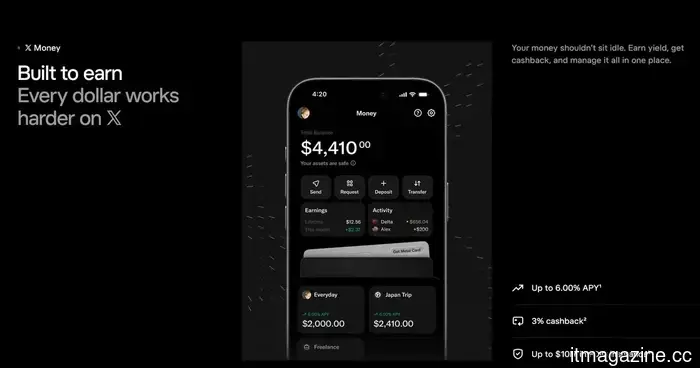 X Money has officially arrived, and it offers much more than just a digital wallet.
X Money has officially debuted in the US, offering peer-to-peer payments, a Visa debit card, and high-yield savings accounts for qualified X Premium users.
X Money has officially arrived, and it offers much more than just a digital wallet.
X Money has officially debuted in the US, offering peer-to-peer payments, a Visa debit card, and high-yield savings accounts for qualified X Premium users.
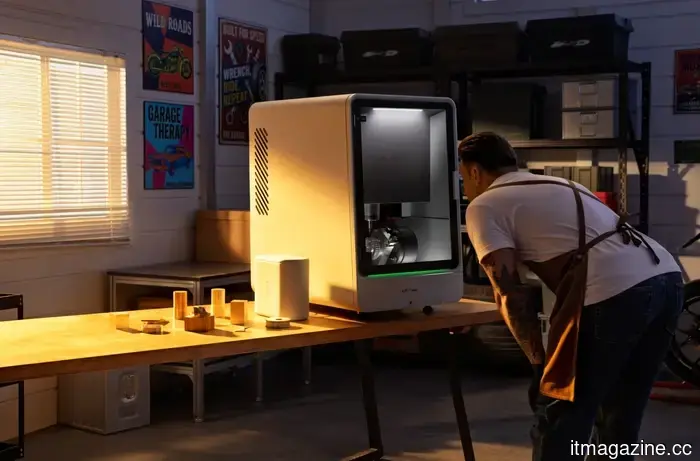 InfiMaker aims to make industrial manufacturing accessible on every desktop through the use of AI.
When individuals envision advanced manufacturing, they often imagine expensive industrial machinery functioning within large factories, rather than a small-scale setup.
InfiMaker aims to make industrial manufacturing accessible on every desktop through the use of AI.
When individuals envision advanced manufacturing, they often imagine expensive industrial machinery functioning within large factories, rather than a small-scale setup.
 Samsung might finally provide the Galaxy S27 Ultra with a significant battery enhancement through the use of silicon-carbon technology.
Information that has been leaked indicates that the Galaxy S27 Pro might have a battery capacity of 5,200mAh, whereas the Ultra version could potentially exceed 5,700mAh.
Samsung might finally provide the Galaxy S27 Ultra with a significant battery enhancement through the use of silicon-carbon technology.
Information that has been leaked indicates that the Galaxy S27 Pro might have a battery capacity of 5,200mAh, whereas the Ultra version could potentially exceed 5,700mAh.
Competitors of Google prepare to seek compensation following significant EU penalty.
Days following the EU's initial DMA fine, Google's competitors are leveraging the decision to pursue billions in private damage claims throughout Europe.