
Coforge claims that AI has improved profit margins, while competitors are observing 'AI deflation'.
Coforge announced its first quarter revenue of $592.2 million on Monday, marking a 33% increase in dollar terms year-on-year and a 21.1% rise compared to the previous quarter. In rupee terms, the annual growth stands at 49%. The profit after tax was reported at $55.6 million. These figures emerge in an industry anticipating contraction.
HCL Technologies has raised concerns about “AI deflation,” with CEO C. Vijayakumar stating revenues could decline by three to five percent in the upcoming year, as reported by The Register in April. Analysts predict that the six largest Indian IT firms will achieve 2.8% growth in constant currency for this financial year.
Coforge's growth rate is approximately twelve times greater than that projection, and it attributes this success to the technology its competitors criticize.
“The combination of our signed order book for the next twelve months, valued at $2.23 billion, a robust large deal pipeline, and unique capabilities with 86% of our revenues derived from AI-led engineering, data, and cloud services positions us to lead industry growth for the third consecutive year,” stated Sudhir Singh, CEO and Executive Director.
Operating margins saw significant improvement, with EBIT margin reaching 16.0%, an increase of 414 basis points from the previous year. EBITDA margin also rose to 20.3%, up 285 basis points. Singh credited this growth to “the impact of AI infusion at scale in client delivery and internal processes,” noting that the quarterly results exceeded the company’s expectations and that “consolidated Q1 margins have surpassed our annual margin guidance.”
This claim challenges the narrative of deflation. Traditionally, Indian IT firms have charged based on personnel, so a decrease in delivery costs might be expected to reduce revenue rather than improve margins.
Staffing trends support this notion, with the trailing twelve-month attrition rate decreasing to 10.4%, down from 10.8% the previous quarter.
However, one critical piece of information is missing. During this period, Coforge finalized its acquisition of Encora, valued at $2.35 billion and paid in shares. Singh stated that the integration of the business is now “fully operational.” The owners of Encora, Advent International and Warburg Pincus, received about 20% of Coforge in stock as part of the transaction.
The results announcement does not provide an organic growth figure or earnings per share, both of which are significant omissions. While profits increased by 110% in rupees, the rise in share count means that the benefit to each shareholder is less than the headline number indicates.
Every headline figure is presented in both currencies, with three of the four pairs reflecting consistent behavior. Revenue, EBITDA, and EBIT suggest that the rupee depreciated by about 12% against the dollar year-over-year, yet the profit figure diverges from this trend, as a 110% growth in rupees next to a 46% increase in dollars suggests a shift toward a 44% move.
The release does not clarify this discrepancy.
Looking ahead, Coforge's indicators are promising. The company secured $691 million in total contract value during the quarter, involving four major deals across North America, Europe, and Latin America. Its executable order book for the next twelve months now totals $2.23 billion, reflecting a 27% increase from the previous quarter and a 44% increase year-on-year. Recently, the firm also announced a European contract worth over $230 million for five years.
An order book represents signed commitments rather than recognized revenue, serving as clear evidence of genuine demand.
Coforge characterizes its workforce as comprising “specialized FDEs in hybrid pod-based delivery units,” with forward deployed engineers working on-site with clients. This model is rapidly gaining traction, as TCS is hiring forward deployed AI engineers, AWS has invested $1 billion in a similar concept, and this role has emerged as one of the significant new AI positions.
The assertion that AI enhances margins is not exclusive to Coforge. JPMorgan has conveyed a comparable narrative to its investors. Despite the industry’s challenges, investment in India continues, with Amazon pledging an additional $13 billion for cloud and AI by 2030.
Looking ahead, Coforge launched three products during the quarter: Nuuron, an AI operating system; NEXA, aimed at insurers; and Aeronova.AI, which assists airlines in transitioning from legacy booking systems. The board also recommended an interim dividend of four rupees per share. Additionally, the release mentions a Form F-1 registration statement submitted to the US Securities and Exchange Commission, which remains ineffective to date.
As time passes, the comparison will become clearer. Until Encora is reflected in both current and previous year figures, differentiating the growth rate and the AI margin claim will be challenging.
Other articles
 Only 27% of hospitals in the US are capable of performing an EEG. Epitel has secured $26 million in funding.
Epitel's $26 million Series B funding supports a wireless EEG that can be worn for as long as 30 days. The FDA classifications refer to it as a monitor rather than a diagnostic tool, and it operates using four sensors.
Only 27% of hospitals in the US are capable of performing an EEG. Epitel has secured $26 million in funding.
Epitel's $26 million Series B funding supports a wireless EEG that can be worn for as long as 30 days. The FDA classifications refer to it as a monitor rather than a diagnostic tool, and it operates using four sensors.
 Italy supports a €500 million investment for the company that owns AOL.
SACE, the export credit agency owned by the Italian treasury, provided a guarantee of €500 million for Bending Spoons. The acquirer based in Milan owns AOL, Evernote, Vimeo, and Eventbrite.
Italy supports a €500 million investment for the company that owns AOL.
SACE, the export credit agency owned by the Italian treasury, provided a guarantee of €500 million for Bending Spoons. The acquirer based in Milan owns AOL, Evernote, Vimeo, and Eventbrite.
 Anthropic's latest pharmaceutical agreement focuses on documentation rather than molecules.
ICON plans to implement Claude for its 40,200 personnel involved in clinical trials. Anthropic mentions that enrollment issues, rather than scientific factors, contribute to delays in as much as 80% of these trials.
Anthropic's latest pharmaceutical agreement focuses on documentation rather than molecules.
ICON plans to implement Claude for its 40,200 personnel involved in clinical trials. Anthropic mentions that enrollment issues, rather than scientific factors, contribute to delays in as much as 80% of these trials.
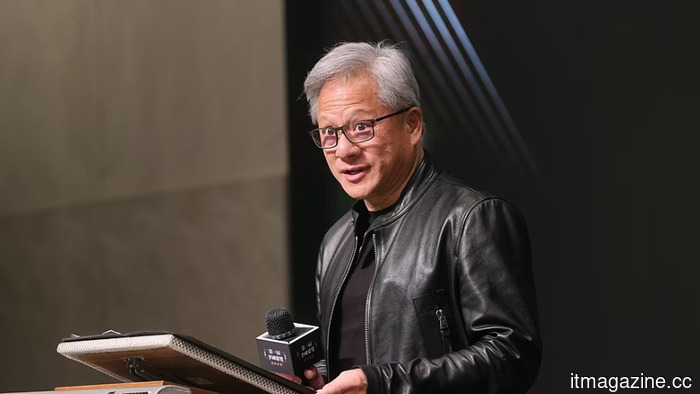 Nvidia's $750 billion AI agreements have driven its credit default swaps to an all-time high.
Nvidia's CDS spread reached an all-time high of 82 bps following $750 billion in AI transactions that sparked concerns about circular financing. Jensen Huang described the criticism as "ridiculous."
Nvidia's $750 billion AI agreements have driven its credit default swaps to an all-time high.
Nvidia's CDS spread reached an all-time high of 82 bps following $750 billion in AI transactions that sparked concerns about circular financing. Jensen Huang described the criticism as "ridiculous."
 Core Scientific shifts its focus to AMD with a 2.5GW AI data center agreement, just months after the CoreWeave deal fell through.
Core Scientific has entered into a data center agreement with AMD that has the potential to reach 2.5GW, just nine months after shareholders turned down a $9 billion acquisition of CoreWeave.
Core Scientific shifts its focus to AMD with a 2.5GW AI data center agreement, just months after the CoreWeave deal fell through.
Core Scientific has entered into a data center agreement with AMD that has the potential to reach 2.5GW, just nine months after shareholders turned down a $9 billion acquisition of CoreWeave.
 Amkor plans to invest up to $3 billion, representing nearly 40% of its revenue.
Amkor reported a record revenue of $1.9 billion for Q2 and saw its net income triple. The company's capital expenditure guidance for 2026 is set at $3 billion, which is approximately 40% of its annualized sales.
Amkor plans to invest up to $3 billion, representing nearly 40% of its revenue.
Amkor reported a record revenue of $1.9 billion for Q2 and saw its net income triple. The company's capital expenditure guidance for 2026 is set at $3 billion, which is approximately 40% of its annualized sales.
Coforge claims that AI has improved profit margins, while competitors are observing 'AI deflation'.
Coforge reported a 49% growth in revenue in rupees and a gain of 414 basis points in EBIT margin. The company finalized a $2.35 billion acquisition but did not reveal any organic growth figures.