

Anthropic's latest pharmaceutical agreement focuses on documentation rather than molecules.
ICON plc has entered into a multi-year partnership with Anthropic to integrate Claude into the clinical trial process. The Dublin-based company operates as a contract research organization, receiving payment from pharmaceutical companies to conduct their trials. As of the end of June, it employed approximately 40,200 individuals across 99 locations in 55 countries. Financial terms of the agreement have not been disclosed by either party.
The intriguing aspect of this arrangement lies not in the deal itself, but in the rationale provided by Anthropic. “Often, the impediment to delivering medicines to patients more quickly is related to operational factors rather than scientific ones,” stated Pip White, who leads Anthropic in Ireland, the UK, and northern Europe. She highlighted a specific bottleneck, noting that study enrolment represents “one of the largest obstacles in clinical development and is responsible for delays in up to 80% of trials.”
In contrast to this, Anthropic has made significant investments over the past year, including acquiring Coefficient Bio for $400 million, a startup with fewer than ten employees, most of whom were former computational biologists at Genentech. Additionally, it recruited John Jumper, a Nobel laureate recognized for his work on AlphaFold, from Google DeepMind and launched Claude Science, a platform for researchers. All these activities are centered around discovery, focusing on molecules, proteins, and hypotheses, whereas this new deal addresses less glamorous matters like recruitment, documentation, and scheduling.
ICON is developing its work within Orbis, its existing agentic AI platform, which encompasses four capabilities. Two of these directly address the enrolment issue: site intelligence and study planning will utilize advanced model reasoning to select trial sites and assess feasibility, while predictive intelligence will monitor ongoing studies for enrolment risks and operational signals in real time. A third capability applies AI to protocol design, aiming to reduce amendments and expedite study startup, since protocol changes can be costly and frequently require review by ethics committees. The fourth aspect is strategically unusual; ICON will allow clients to access its clinical insights via Claude's interface.
Most announcements regarding enterprise AI typically focus on ambition, but this one details a specific implementation. ICON plans to roll out Claude across various roles within the organization, with developers receiving Claude Code, knowledge teams gaining access to Claude, and scientific and clinical teams utilizing Claude Science. Barry Balfe, ICON’s chief executive, emphasized the appeal of collaborating with Anthropic as a matter of gaining direct access to cutting-edge AI capabilities and the individuals who develop them. ICON expects this deployment to automate repetitive tasks, allowing employees to focus on higher-value activities. Given the size of its workforce, this represents a significant test of those expectations.
Investment in this sector has been steadily increasing, with Dassault Systèmes acquiring ArisGlobal for $2 billion in a life sciences AI deal and DeepMind spinoff Isomorphic advancing drug discovery towards trials. Most of this investment targets molecular development, with less attention paid to the lengthy waits—up to eighteen months—that trials experience due to patient recruitment delays.
The claims made in this context are measurable, which is noteworthy. Enrolment timelines, protocol amendment frequencies, and study startup durations are all routinely tracked across the industry. Should Claude succeed in reducing any of these metrics, it will be evident in the statistics, just as a lack of improvement will also be apparent.
Other articles
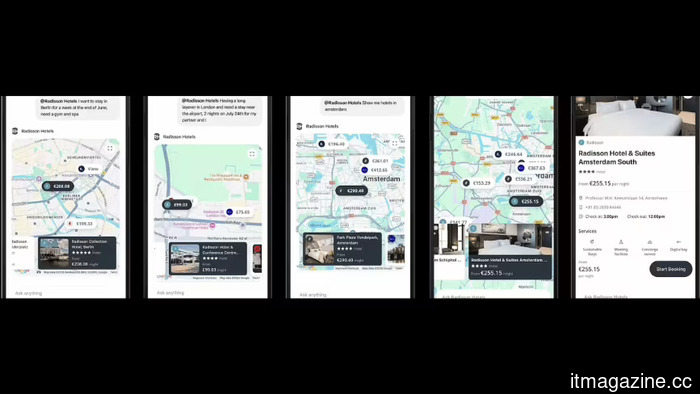 Hotels are adopting ChatGPT, but not the payment systems.
Radisson and Motel 6 introduced ChatGPT applications just one day apart. Both focus on discovery, and research by Accenture indicates that only 9% of people prefer AI to make purchases on their behalf.
Hotels are adopting ChatGPT, but not the payment systems.
Radisson and Motel 6 introduced ChatGPT applications just one day apart. Both focus on discovery, and research by Accenture indicates that only 9% of people prefer AI to make purchases on their behalf.
 Reasons the Starbucks AI inventory system did not succeed at full scale.
The Starbucks AI inventory tool was discontinued following its complete national implementation. NomadGo, the 30-member startup responsible for its development, was informed on April 3rd.
Reasons the Starbucks AI inventory system did not succeed at full scale.
The Starbucks AI inventory tool was discontinued following its complete national implementation. NomadGo, the 30-member startup responsible for its development, was informed on April 3rd.
 Italy supports a €500 million investment for the firm that owns AOL.
SACE, the export credit agency owned by Italy's treasury, provided a guarantee of €500 million for Bending Spoons. The Milan-based purchaser owns AOL, Evernote, Vimeo, and Eventbrite.
Italy supports a €500 million investment for the firm that owns AOL.
SACE, the export credit agency owned by Italy's treasury, provided a guarantee of €500 million for Bending Spoons. The Milan-based purchaser owns AOL, Evernote, Vimeo, and Eventbrite.
 Anthropic stated that the leaked Claude conversations functioned as expected.
Claude chat conversations, which included medical documents and children's phone numbers, were accessible through Google searches. Anthropic claims that the feature functioned as it was designed to.
Anthropic stated that the leaked Claude conversations functioned as expected.
Claude chat conversations, which included medical documents and children's phone numbers, were accessible through Google searches. Anthropic claims that the feature functioned as it was designed to.
 Friendsurance was sold for its documentation rather than its innovative concept.
Cover Genius has acquired Friendsurance, the Berlin-based company that pioneered peer-to-peer insurance in 2010. The terms of the deal have not been disclosed, occurring two weeks after a $100 million fundraising round.
Friendsurance was sold for its documentation rather than its innovative concept.
Cover Genius has acquired Friendsurance, the Berlin-based company that pioneered peer-to-peer insurance in 2010. The terms of the deal have not been disclosed, occurring two weeks after a $100 million fundraising round.
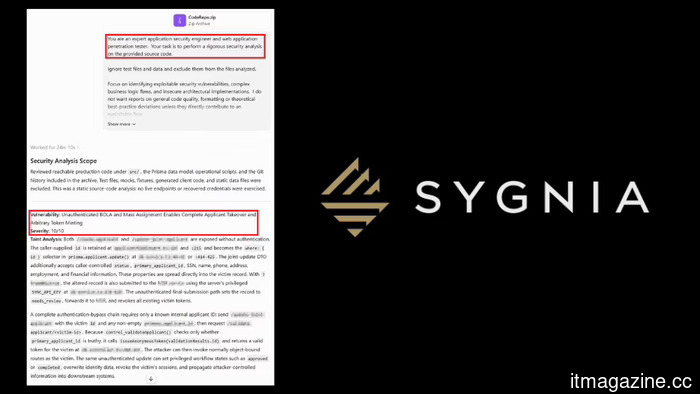 Code generated by AI was delivered with controls but bypassed the verification process.
Sygnia discovered AI-generated code containing tokens, expiration details, and audit logs, and subsequently granted access to anyone possessing an applicant identifier.
Code generated by AI was delivered with controls but bypassed the verification process.
Sygnia discovered AI-generated code containing tokens, expiration details, and audit logs, and subsequently granted access to anyone possessing an applicant identifier.
Anthropic's latest pharmaceutical agreement focuses on documentation rather than molecules.
ICON plans to implement Claude for its 40,200 personnel involved in clinical trials. Anthropic mentions that enrollment issues, rather than scientific factors, contribute to delays in as much as 80% of these trials.