
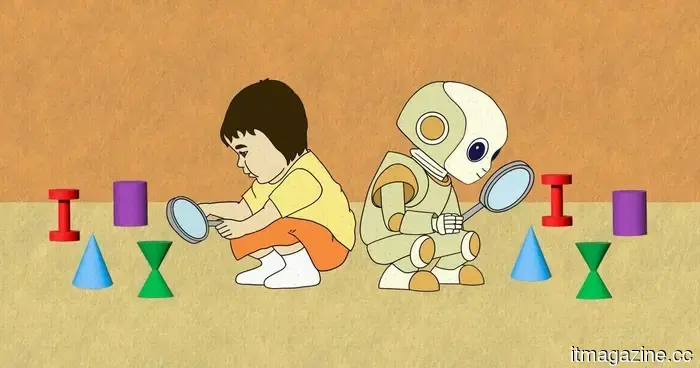
Researchers instilled curiosity in robots similar to that of toddlers, which allowed them to acquire language at double the speed.
Provide a robot with curiosity, and it begins to learn language (and misbehave) similarly to a toddler.
Scientists have been investigating how children acquire language so quickly for decades, and a recent study from the Okinawa Institute of Science and Technology (OIST) may have uncovered part of the answer: curiosity.
Researchers constructed a virtual robot equipped with a brain-like neural network and let it explore a simulated 3D environment filled with shapes, colors, and simple commands such as “push left magenta dumbbell.”
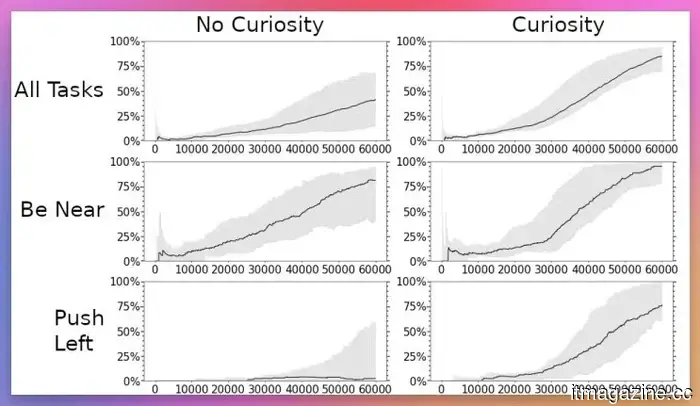
Some robots received rewards solely for completing tasks accurately, while others earned additional rewards for exhibiting curiosity, effectively receiving a small internal boost each time they encountered something that challenged their existing knowledge of the world.
How does curiosity facilitate a robot's language learning?
The curious robots did not just perform better than their apathetic counterparts; they significantly outperformed them. According to the study published in Science Advances, the curious robots achieved a true understanding of language in roughly half the time.
The study's author, Theodore Tinker, likened it to trying white chocolate for the first time even if you already enjoy dark chocolate. You take the plunge, and in the end, you gain a greater knowledge of chocolate overall.
Things became even more intriguing halfway through training. The curious robots began knocking things over and engaging in actions that were not requested, essentially playing. This behavior was not programmed; it emerged spontaneously.
Do robots make the same mistakes as toddlers?
The robots also displayed a familiar pattern observed in how children learn language. Kids often initially get certain verb forms correct, then start applying grammatical rules too broadly and make errors with verbs they had previously used correctly, later sorting out the exceptions and self-correcting. The robots exhibited the same U-shaped decline in performance.
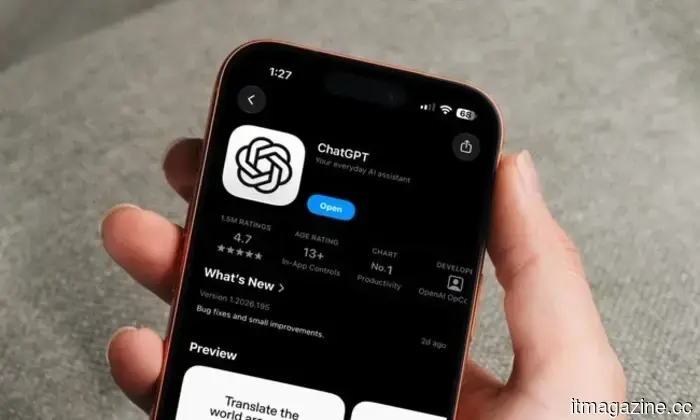
It’s also a stark contrast to how current chatbots learn. Large language models like ChatGPT are trained on extensive datasets and generate the most statistically likely next word. This robot’s brain functions more like a human's, prioritizing accuracy while striving to maintain its beliefs, updating them only when sufficiently surprised.
None of this suggests that robots grasp language in the same way humans do. However, it does indicate that combining curiosity with a diverse range of experiences could be a significant factor in how toddlers decode language with so little information.
Rachit is an experienced tech journalist with over a decade of experience reporting on the consumer technology sector.
A Florida pastor sought advice from ChatGPT about his well-being. It nearly resulted in a fatal outcome. When "just relax and recover" turns out to be the worst medical advice possible.
Scott Winters, a pastor from Florida, is suing OpenAI after ChatGPT allegedly provided him what his lawsuit terms "extremely dangerous" medical advice, which nearly cost him his life. What transpired with the pastor?
You can now purchase a computer mouse that is entirely controlled by your tongue.
Augmental has commenced public sales of the MouthPad and has introduced a new wearable that enables hands-free typing.
Augmental first showcased its tongue-controlled MouthPad as a curiosity at CES 2024. Today, the device is a commercial product available for purchase, as the company has opened public sales in the US along with a beta launch of Vox, a companion wearable designed to handle the typing aspect of Augmental's hands-free computing vision.
A retainer that also functions as a mouse.
Yet another study indicates AI is detrimental to elections, exposing deeper issues.
AI may be an election time bomb just waiting to be triggered.
In yet another election cycle, a study has concluded that seeking political guidance from an AI chatbot is an exceptionally poor decision. Research conducted during Hungary's 2026 parliamentary election revealed that ChatGPT and Google Gemini provided not only inaccurate but also inconsistent and unreliable voting advice. The chatbots misclassified voter profiles, overlooked relevant parties, recommended parties not present on the ballot, and sometimes gave materially different responses when provided the same information multiple times.
AI continues to fail the voter test.




Other articles
 A pastor from Florida inquired with ChatGPT about his well-being, which almost led to a life-threatening situation for him.
A pastor from Florida has filed a lawsuit against OpenAI, claiming that ChatGPT trivialized his symptoms for several weeks, which resulted in him later experiencing a near-fatal blood clot that doctors attribute to the bot's guidance.
A pastor from Florida inquired with ChatGPT about his well-being, which almost led to a life-threatening situation for him.
A pastor from Florida has filed a lawsuit against OpenAI, claiming that ChatGPT trivialized his symptoms for several weeks, which resulted in him later experiencing a near-fatal blood clot that doctors attribute to the bot's guidance.
 Startups are calling on Trump to refrain from banning Chinese open-weight AI.
Almost 200 American startups, such as Y Combinator and Proton, are cautioning that a ban on Chinese open-weight AI could jeopardize their existence and give the market advantage to Anthropic.
Startups are calling on Trump to refrain from banning Chinese open-weight AI.
Almost 200 American startups, such as Y Combinator and Proton, are cautioning that a ban on Chinese open-weight AI could jeopardize their existence and give the market advantage to Anthropic.
 A pastor in Florida inquired with ChatGPT if he was doing fine, which almost resulted in a life-threatening situation for him.
A pastor from Florida is taking legal action against OpenAI, claiming that ChatGPT disregarded his symptoms as trivial for several weeks, which ultimately led to him experiencing a near-fatal blood clot that doctors attribute to the chatbot's guidance.
A pastor in Florida inquired with ChatGPT if he was doing fine, which almost resulted in a life-threatening situation for him.
A pastor from Florida is taking legal action against OpenAI, claiming that ChatGPT disregarded his symptoms as trivial for several weeks, which ultimately led to him experiencing a near-fatal blood clot that doctors attribute to the chatbot's guidance.
 Startups are appealing to Trump not to impose a ban on Chinese open-weight AI.
Almost 200 startups in the US, among them Y Combinator and Proton, have cautioned that banning Chinese open-weight AI could eliminate hundreds of these companies and allow Anthropic to dominate the market.
Startups are appealing to Trump not to impose a ban on Chinese open-weight AI.
Almost 200 startups in the US, among them Y Combinator and Proton, have cautioned that banning Chinese open-weight AI could eliminate hundreds of these companies and allow Anthropic to dominate the market.
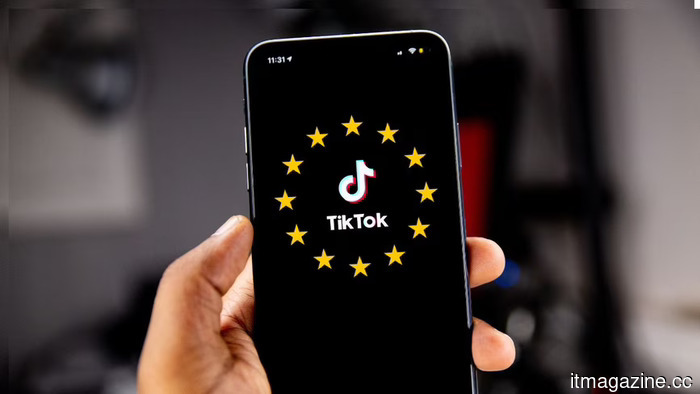 The EU has accused TikTok of not adequately safeguarding children's privacy in accordance with the DSA.
Brussels claims that TikTok allowed minors’ accounts to be accessible to strangers, according to initial findings from the DSA, which could result in a penalty of up to 6% of global revenue.
The EU has accused TikTok of not adequately safeguarding children's privacy in accordance with the DSA.
Brussels claims that TikTok allowed minors’ accounts to be accessible to strangers, according to initial findings from the DSA, which could result in a penalty of up to 6% of global revenue.
 Dassault Systèmes is set to acquire ArisGlobal for as much as $2 billion.
Dassault Systèmes is acquiring the US drug-safety AI company ArisGlobal for as much as $2 billion, marking a significant investment in life sciences from a company concerned that AI might disrupt its fundamental business.
Dassault Systèmes is set to acquire ArisGlobal for as much as $2 billion.
Dassault Systèmes is acquiring the US drug-safety AI company ArisGlobal for as much as $2 billion, marking a significant investment in life sciences from a company concerned that AI might disrupt its fundamental business.
Researchers instilled curiosity in robots similar to that of toddlers, which allowed them to acquire language at double the speed.
Researchers at OIST endowed a virtual robot with curiosity, resulting in it learning language at twice the speed, complete with playful detours and the grammatical errors typical of toddlers.