
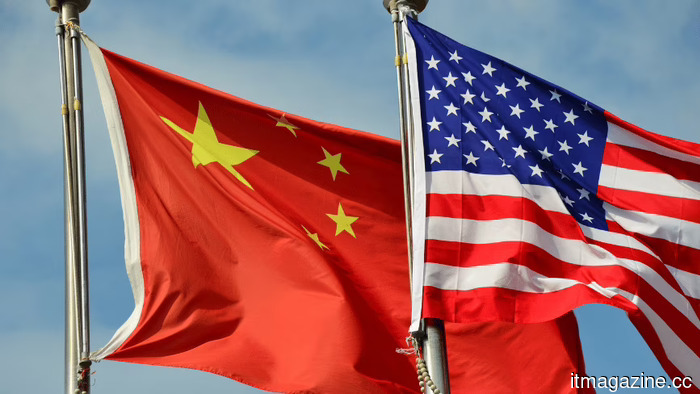
Startups are appealing to Trump not to impose a ban on Chinese open-weight AI.
Silicon Valley typically does not unite against its own, but this week saw an exception. Nearly 200 American startups have requested that the Trump administration refrain from restricting access to Chinese open-weight AI models. They caution that a ban would severely impact the next generation of US companies.
This appeal, initially reported by Politico, originated from the newly established Little Tech Association. The endorsers, which include Y Combinator and the privacy-focused company Proton, sent a letter on Wednesday to President Trump, Commerce Secretary Howard Lutnick, and the White House science adviser Michael Kratsios. Their message was straightforward: avoid imposing a sweeping ban and instead implement targeted safeguards.
The rationale behind startups' interest in Chinese models is that open-weight models have their weights published, allowing anyone to download and utilize them. For instance, Moonshot’s Kimi K3 and Alibaba’s models are affordable, efficient, and freely accessible for further development. Entrepreneurs facing financial constraints rely on these models instead of purchasing credits from Anthropic or OpenAI. The group contends that a ban would fail to halt the proliferation of these models and would merely benefit a select few major companies.
“There will be countless companies that will immediately perish,” stated Suhail Doshi, the founder of the startup Particle and a member of the association. “This is advantageous for Anthropic. We’ll all be compelled to invest in Anthropic.”
This situation marks a notable division within the AI sector. Anthropic, along with OpenAI, has advocated strongly for restrictions on Chinese models due to security concerns. However, the startups argue that such bans would provide minimal security benefits while significantly harming competition. According to The Information, these two labs now find themselves almost isolated in their stance within the industry.
The Little Tech Association is calling for precision, emphasizing the need for "a scalpel rather than a sledgehammer," as stated by its executive director Harry Godfrey. He further noted that the goal is to find the least intrusive measures that effectively address genuine security issues without increasing costs or restricting access.
The dissent follows a period of heightened tensions, which escalated after Moonshot introduced Kimi K3, a model that outperformed Anthropic’s Fable 5 and OpenAI’s GPT-5.6 Sol in coding assessments. Subsequent reports indicated that the administration might consider a full ban on Chinese models.
Officials have maintained pressure, with Treasury Secretary Scott Bessent mentioning on Fox Business that the US could impose “sanctions” on companies implicated in the theft of American intellectual property. Kratsios went even further by claiming that Moonshot had extracted elements from Anthropic’s Fable model and utilized banned Nvidia GB300 servers to train K3. Moonshot has not yet responded to these allegations. Meanwhile, the Commerce Department’s export-control division has initiated a formal investigation into whether Chinese companies are acquiring restricted US chips.
As of now, the proposed ban remains unsubstantiated chatter. A White House spokesperson referred to rumors about it as “baseless speculation” and indicated that a comprehensive ban was not seriously under discussion. However, the discourse is intensifying, and the divisions it has revealed are genuine.
The larger corporations are advocating for barriers, while startups favor keeping avenues of access open. In Shanghai, Xi Jinping is promoting affordable, open AI on a global scale.
Other articles
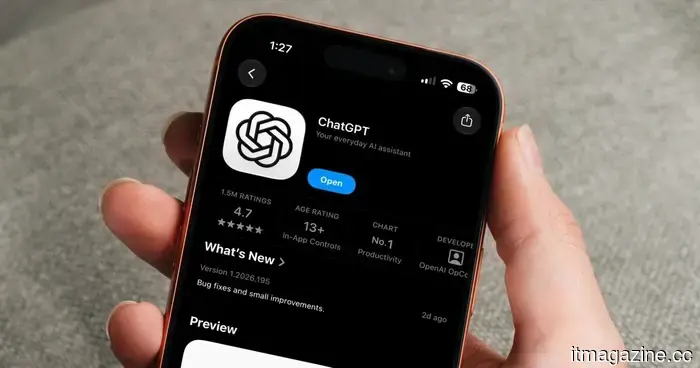 A pastor from Florida inquired with ChatGPT about his well-being, and it almost led to a life-threatening situation.
A pastor in Florida is taking legal action against OpenAI, claiming that ChatGPT minimized his symptoms as trivial for several weeks. Subsequently, he experienced a nearly fatal blood clot, which doctors attribute to the guidance he received from the chatbot.
A pastor from Florida inquired with ChatGPT about his well-being, and it almost led to a life-threatening situation.
A pastor in Florida is taking legal action against OpenAI, claiming that ChatGPT minimized his symptoms as trivial for several weeks. Subsequently, he experienced a nearly fatal blood clot, which doctors attribute to the guidance he received from the chatbot.
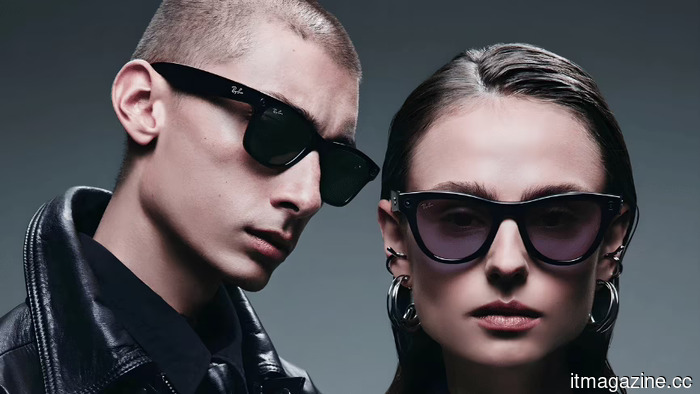 Instagram prohibits videos of harassment recorded with Meta glasses.
Instagram will eliminate videos recorded with Meta's smart glasses that are used to harass individuals, following instances where "pickup artist" accounts misused them as "pervert glasses." Two accounts have been removed.
Instagram prohibits videos of harassment recorded with Meta glasses.
Instagram will eliminate videos recorded with Meta's smart glasses that are used to harass individuals, following instances where "pickup artist" accounts misused them as "pervert glasses." Two accounts have been removed.
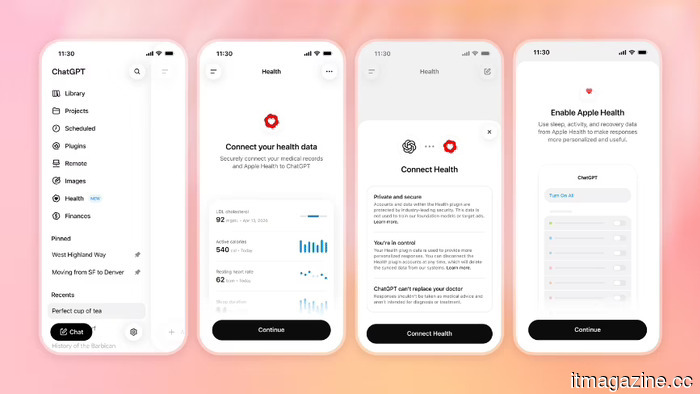 ChatGPT Health is now available to all adults in the United States.
OpenAI is making ChatGPT Health accessible to all adults in the US, linking it with Apple Health and medical records, and asserting that its AI reasons "better than clinician level."
ChatGPT Health is now available to all adults in the United States.
OpenAI is making ChatGPT Health accessible to all adults in the US, linking it with Apple Health and medical records, and asserting that its AI reasons "better than clinician level."
 Researchers instilled curiosity in robots similar to that of toddlers, which enabled them to acquire language at twice the speed.
Researchers at OIST instilled curiosity in a virtual robot, allowing it to learn language at double the speed, complete with playful detours and the kinds of grammatical errors typical of toddlers.
Researchers instilled curiosity in robots similar to that of toddlers, which enabled them to acquire language at twice the speed.
Researchers at OIST instilled curiosity in a virtual robot, allowing it to learn language at double the speed, complete with playful detours and the kinds of grammatical errors typical of toddlers.
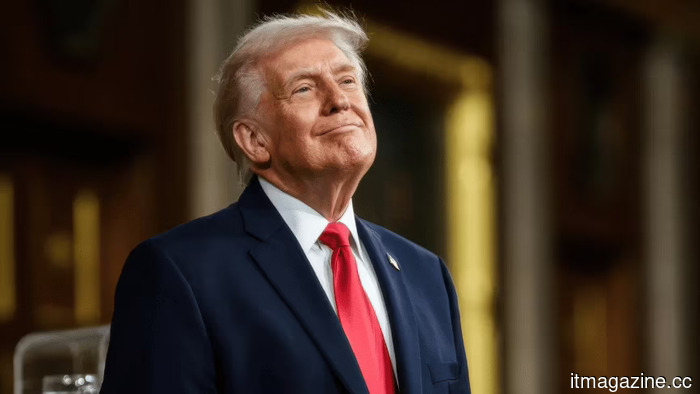 Trump's commitment to the data center's energy supply raises doubts among energy specialists.
Trump broadened a voluntary commitment to protect families from the electricity expenses of AI data centers. Experts indicate that it lacks enforcement mechanisms and is ineffective.
Trump's commitment to the data center's energy supply raises doubts among energy specialists.
Trump broadened a voluntary commitment to protect families from the electricity expenses of AI data centers. Experts indicate that it lacks enforcement mechanisms and is ineffective.
 Patreon reduces its workforce by 20% while being cautious about AI developments.
Patreon is eliminating 93 positions, which accounts for 20% of its workforce. CEO Jack Conte states that AI is not taking over these roles, but has "fundamentally transformed" the company's operations.
Patreon reduces its workforce by 20% while being cautious about AI developments.
Patreon is eliminating 93 positions, which accounts for 20% of its workforce. CEO Jack Conte states that AI is not taking over these roles, but has "fundamentally transformed" the company's operations.
Startups are appealing to Trump not to impose a ban on Chinese open-weight AI.
Almost 200 startups in the US, among them Y Combinator and Proton, have cautioned that banning Chinese open-weight AI could eliminate hundreds of these companies and allow Anthropic to dominate the market.