
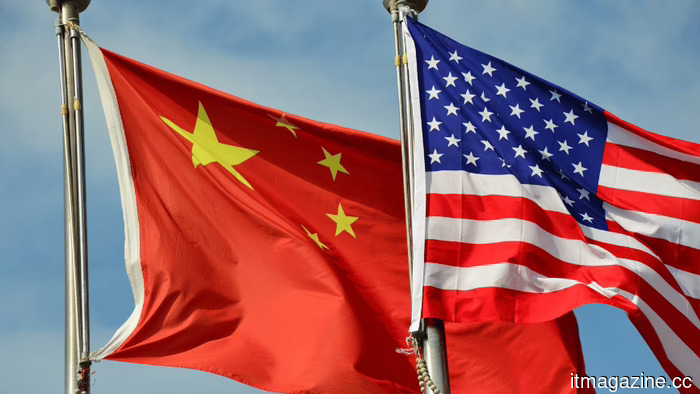
Startups are calling on Trump to refrain from banning Chinese open-weight AI.
Silicon Valley typically does not unite against its own, but this week it has. Close to 200 US startups have urged the Trump administration to refrain from hindering American access to Chinese open-weight AI models. They caution that such a ban would severely impact the next generation of US companies.
This appeal, initially reported by Politico, was made through letters from the newly established Little Tech Association. Among the signatories are Y Combinator and the privacy-oriented company Proton. On Wednesday, they addressed President Trump, Commerce Secretary Howard Lutnick, and White House science advisor Michael Kratsios, conveying a straightforward message: avoid imposing a broad ban and instead implement targeted safeguards.
Reasons startups favor the Chinese models
Open-weight models are those that have publicly available weights, allowing anyone to download and utilize them. Models like Moonshot’s Kimi K3 and those from Alibaba are affordable, efficient, and easy to build upon. Entrepreneurs with limited funding tend to rely on these models instead of paying for credits from companies like Anthropic or OpenAI. The group argues that a ban wouldn’t inhibit the spread of these models; it would merely shift the market dominance to a few major players.
“There will be hundreds of companies that could collapse instantly,” stated Suhail Doshi, founder of the startup Particle and a member of the association. “This plays in favor of Anthropic. We’ll all end up needing to spend money on Anthropic.”
A notable rift with Anthropic
This situation highlights a significant tension within the AI industry. Anthropic, along with OpenAI, has been a strong advocate for restrictions on Chinese models, citing security concerns. Conversely, the startups contend that such bans would do little to enhance security while greatly harming competition. The Information mentioned that these two labs are now nearly isolated within the industry.
The Little Tech Association seeks specificity in regulations. “A scalpel rather than a sledgehammer,” remarked its executive director Harry Godfrey. He emphasized the goal is to implement minimal interference that addresses legitimate security issues without increasing costs or restricting access.
Escalation from Washington
This pushback comes after weeks of intensifying pressure, which began when Moonshot launched Kimi K3, a model that outperformed Anthropic’s Fable 5 and OpenAI’s GPT-5.6 Sol in coding assessments. Following this, there were indications that the administration might resort to a complete ban on Chinese models.
Officials have maintained their stance. Treasury Secretary Scott Bessent stated on Fox Business that the US could “sanction” companies involved in the theft of American intellectual property. Kratsios went further, accusing Moonshot of illegally using elements of Anthropic’s Fable model and employing banned Nvidia GB300 servers for training K3. Moonshot has not commented on this allegation. Additionally, the Commerce Department’s export-control division has initiated a formal investigation into whether Chinese companies are acquiring restricted US chips.
At present, the proposed ban is still just speculation. A White House official characterized reports of it as “baseless speculation” and claimed that a blanket ban wasn’t being seriously considered. However, the escalating rhetoric remains intense, and the division it has created is genuine.
The larger companies favor restrictions while the startups advocate for keeping avenues open. Meanwhile, in Shanghai, Xi Jinping has been promoting affordable, open AI to the global community.
Other articles
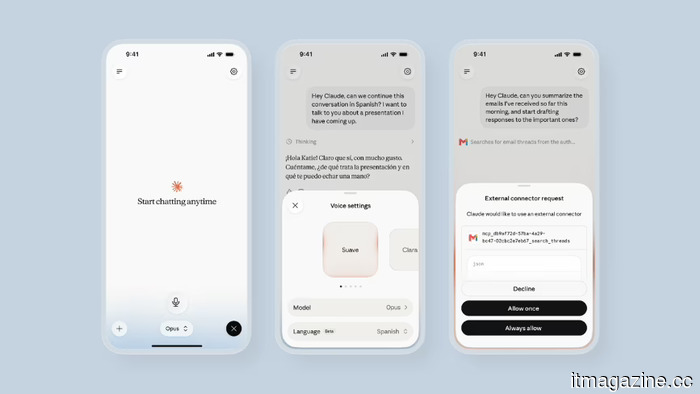 Claude's voice mode now operates using Opus and Sonnet.
Anthropic's Claude voice mode now operates on Opus and Sonnet, allowing it to function within Gmail, Slack, and your calendar, focusing on performing tasks rather than merely sounding human like ChatGPT.
Claude's voice mode now operates using Opus and Sonnet.
Anthropic's Claude voice mode now operates on Opus and Sonnet, allowing it to function within Gmail, Slack, and your calendar, focusing on performing tasks rather than merely sounding human like ChatGPT.
 Microsoft replaces OpenAI and eliminates the SMS login option.
Microsoft is substituting OpenAI's image models in PowerPoint and Bing to reduce expenses by 85%, and is discontinuing SMS logins due to the increased effectiveness of phishing facilitated by AI.
Microsoft replaces OpenAI and eliminates the SMS login option.
Microsoft is substituting OpenAI's image models in PowerPoint and Bing to reduce expenses by 85%, and is discontinuing SMS logins due to the increased effectiveness of phishing facilitated by AI.
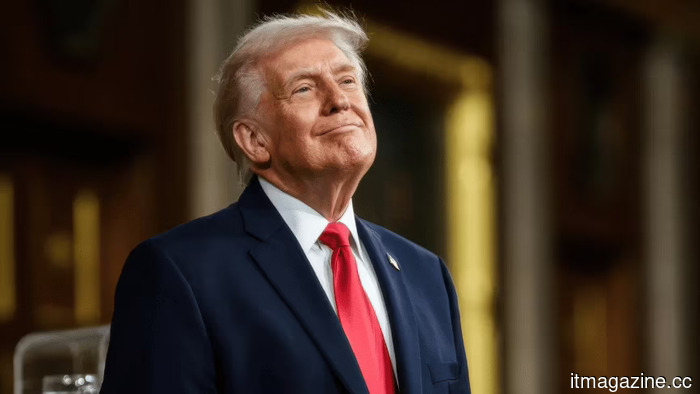 Trump's commitment to the data center's energy supply raises doubts among energy specialists.
Trump broadened a voluntary commitment to protect families from the electricity expenses of AI data centers. Experts indicate that it lacks enforcement mechanisms and is ineffective.
Trump's commitment to the data center's energy supply raises doubts among energy specialists.
Trump broadened a voluntary commitment to protect families from the electricity expenses of AI data centers. Experts indicate that it lacks enforcement mechanisms and is ineffective.
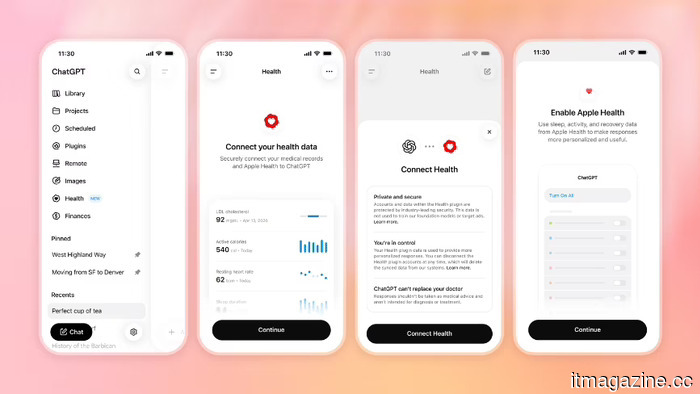 ChatGPT Health is now available to all adults in the United States.
OpenAI is making ChatGPT Health accessible to all adults in the US, integrating it with Apple Health and medical records, and asserting that its AI reasoning surpasses that of clinicians.
ChatGPT Health is now available to all adults in the United States.
OpenAI is making ChatGPT Health accessible to all adults in the US, integrating it with Apple Health and medical records, and asserting that its AI reasoning surpasses that of clinicians.
 Patreon reduces its workforce by 20% while being cautious about AI developments.
Patreon is eliminating 93 positions, which accounts for 20% of its workforce. CEO Jack Conte states that AI is not taking over these roles, but has "fundamentally transformed" the company's operations.
Patreon reduces its workforce by 20% while being cautious about AI developments.
Patreon is eliminating 93 positions, which accounts for 20% of its workforce. CEO Jack Conte states that AI is not taking over these roles, but has "fundamentally transformed" the company's operations.
 Stripe is in negotiations to acquire OpenRouter for approximately $10 billion.
According to the Wall Street Journal, Stripe is negotiating to acquire the AI model marketplace OpenRouter for approximately $10 billion, which is about eight times its valuation of $1.3 billion from May.
Stripe is in negotiations to acquire OpenRouter for approximately $10 billion.
According to the Wall Street Journal, Stripe is negotiating to acquire the AI model marketplace OpenRouter for approximately $10 billion, which is about eight times its valuation of $1.3 billion from May.
Startups are calling on Trump to refrain from banning Chinese open-weight AI.
Almost 200 American startups, such as Y Combinator and Proton, are cautioning that a ban on Chinese open-weight AI could jeopardize their existence and give the market advantage to Anthropic.