
Dassault Systèmes is set to acquire ArisGlobal for as much as $2 billion.
Dassault Systèmes is among the largest software firms in Europe, and this year has been particularly challenging for it. Its share prices have plummeted by around 25%. In February, it ousted its chairman. Investors are concerned that an emerging wave of AI could undermine its core business.
In response, the company announced on Thursday that it plans to spend up to $2 billion on a relatively unknown company. The French firm will acquire ArisGlobal, a producer of drug-safety and regulatory software, for approximately $1.8 billion in cash, with an additional potential $200 million linked to future AI earnings. The seller is Nordic Capital, a Swedish private equity firm that has owned ArisGlobal since 2019. The entire amount will come from Dassault’s cash reserves.
ArisGlobal may not be widely recognized, but it plays a crucial role in the pharmaceutical sector. Founded in 1989 and located in Waltham, Massachusetts, it services over 200 clients, including half of the world’s top 50 pharmaceutical companies, along with biotech firms and government health regulators. Its software manages more than 12 million patient safety reports annually, with projected revenues of around $175 million by 2026.
Its appeal to Dassault lies in the AI technology embedded within it. ArisGlobal’s NavaX system employs generative AI for the labor-intensive processes of drug-safety monitoring and regulatory submissions. These tasks are largely manual and closely regulated. The company claims it reduces this workload by over 30%. The market for such compliance software is projected to reach $7.5 billion by 2030.
Dassault is not the only company looking to expand; other legacy software firms, such as SAP and Adobe, have opted to acquire AI capabilities rather than develop them in-house.
Dassault specializes in creating “virtual twins,” which are detailed digital replicas of real machines, factories, or, increasingly, human bodies. This technology assists 390,000 clients in designing cars, airplanes, and pharmaceuticals. Chief Executive Pascal Daloz aims to integrate ArisGlobal’s real-world patient data with its virtual twin technology, aspiring to create the industry's first platform that combines real-world evidence with virtual data.
“Life Sciences is entering a new phase of innovation led by AI and the move towards precision medicine,” stated Daloz. ArisGlobal CEO Aman Wasan was more straightforward, asserting, “The future of Life Sciences will not depend on improved software but on connected intelligence.”
However, this optimism comes amid significant pressure. Dassault has spent 2026 dealing with investor concerns about AI potentially disrupting software firms like theirs. The particular concern revolves around “world models,” which enable machines to understand the physical world without needing a custom-built twin, leading to a steep decline in stock prices. The chairman's sudden departure in February further highlighted the company's difficulties. This marks Dassault’s first major acquisition since those events.
Interestingly, the division they are investing in is currently their weakest. Revenues from life sciences dropped 4% in the second quarter and 12% in the first, affecting overall performance, according to Bloomberg. Their prior investment in the health sector, the 2019 acquisition of clinical trials firm Medidata, has not met expectations. Now, they are placing another bet on the same industry, hoping that AI can elevate this struggling segment into a growth driver.
For the time being, investors responded positively, with Dassault's shares rising about 5% on Thursday. The company also reported solid quarterly results, with a 4% increase in revenue and a 14% growth in cloud services. The deal is expected to be finalized in the latter half of 2026, pending regulatory approval. However, whether it can alleviate the deeper concern that AI might also threaten the makers of virtual twins remains a more complex issue.
Other articles
 Patreon reduces its workforce by 20% while being cautious about AI developments.
Patreon is eliminating 93 positions, which accounts for 20% of its workforce. CEO Jack Conte states that AI is not taking over these roles, but has "fundamentally transformed" the company's operations.
Patreon reduces its workforce by 20% while being cautious about AI developments.
Patreon is eliminating 93 positions, which accounts for 20% of its workforce. CEO Jack Conte states that AI is not taking over these roles, but has "fundamentally transformed" the company's operations.
 The EU accuses TikTok of not safeguarding children's privacy in accordance with the DSA.
Brussels claims that TikTok allowed minors' accounts to be visible to strangers, according to initial findings from the Digital Services Act (DSA) that could result in a fine of up to 6% of its global revenue.
The EU accuses TikTok of not safeguarding children's privacy in accordance with the DSA.
Brussels claims that TikTok allowed minors' accounts to be visible to strangers, according to initial findings from the Digital Services Act (DSA) that could result in a fine of up to 6% of its global revenue.
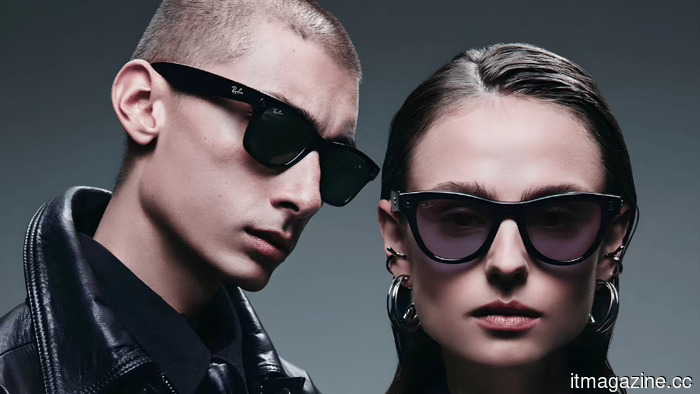 Instagram prohibits videos of harassment recorded using Meta glasses.
Instagram will eliminate videos recorded with Meta's smart glasses intended to harass individuals, following the misuse of these glasses by "pickup artist" accounts that labelled them as "pervert glasses." Two accounts have already been removed.
Instagram prohibits videos of harassment recorded using Meta glasses.
Instagram will eliminate videos recorded with Meta's smart glasses intended to harass individuals, following the misuse of these glasses by "pickup artist" accounts that labelled them as "pervert glasses." Two accounts have already been removed.
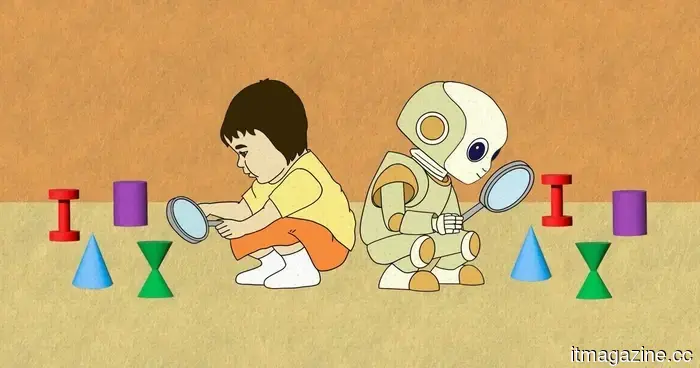 Researchers created robots with curiosity similar to that of toddlers, resulting in them acquiring language at twice the speed.
Researchers at OIST equipped a virtual robot with curiosity, allowing it to learn language at double the speed, complete with playful detours and the grammatical mistakes typical of toddlers.
Researchers created robots with curiosity similar to that of toddlers, resulting in them acquiring language at twice the speed.
Researchers at OIST equipped a virtual robot with curiosity, allowing it to learn language at double the speed, complete with playful detours and the grammatical mistakes typical of toddlers.
 Meta successfully avoids a dismissal of the WhatsApp privacy lawsuit as the judge doubts the specifics provided by the whistleblower.
A federal judge dismissed a class action lawsuit claiming that Meta is able to read encrypted WhatsApp messages, but allowed plaintiffs the opportunity to refile.
Meta successfully avoids a dismissal of the WhatsApp privacy lawsuit as the judge doubts the specifics provided by the whistleblower.
A federal judge dismissed a class action lawsuit claiming that Meta is able to read encrypted WhatsApp messages, but allowed plaintiffs the opportunity to refile.
 A pastor in Florida inquired with ChatGPT if he was doing fine, which almost resulted in a life-threatening situation for him.
A pastor from Florida is taking legal action against OpenAI, claiming that ChatGPT disregarded his symptoms as trivial for several weeks, which ultimately led to him experiencing a near-fatal blood clot that doctors attribute to the chatbot's guidance.
A pastor in Florida inquired with ChatGPT if he was doing fine, which almost resulted in a life-threatening situation for him.
A pastor from Florida is taking legal action against OpenAI, claiming that ChatGPT disregarded his symptoms as trivial for several weeks, which ultimately led to him experiencing a near-fatal blood clot that doctors attribute to the chatbot's guidance.
Dassault Systèmes is set to acquire ArisGlobal for as much as $2 billion.
Dassault Systèmes is acquiring the US drug-safety AI company ArisGlobal for as much as $2 billion, marking a significant investment in life sciences from a company concerned that AI might disrupt its fundamental business.