

Kalanick secures $1.7 billion for Atoms, with an investment from Uber as well.
Travis Kalanick has made his return, and Uber is helping to finance him. The founder who was ousted by Uber in 2017 has secured $1.7 billion for Atoms, an industrial AI and robotics company he has been quietly developing for years.
Andreessen Horowitz led this funding round, with co-founder Ben Horowitz joining the board. Among the investors is Uber, the company Kalanick founded in 2009 and eventually left under difficult circumstances.
That past departure still casts a shadow over the narrative. Uber forced Kalanick out as CEO in 2017 following allegations of sexual harassment, discrimination, and a toxic workplace culture. Now, nine years later, his former company is writing him a check. Kalanick, known for his boldness, refers to this funding round as “unfinished business.”
This equity financing comes with significant debt. In addition to Andreessen Horowitz, Bain Capital, Fifth Wall, and others, Atoms has secured credit facilities from major banks including JPMorgan, Goldman Sachs, Bank of America, Wells Fargo, and Barclays. The company has not disclosed its valuation, but this kind of capital is typically necessary for building heavy machinery, not just apps.
Kalanick’s focus revolves around a single idea he has pursued for 16 years: transforming the physical world into something that software can manage. He envisions manufacturing as the processor, real estate as storage, and transportation as the network. Just as Uber digitized transportation for the public, his ghost kitchen venture CloudKitchens did the same for food. Atoms aims to do it for entire industrial sectors, which Kalanick describes as an “atoms-based computer.”
The focus is on the less glamorous sectors of the economy: mining, construction, heavy transport, and food. He refers to this set of tools as Industrial AI, which combines software, sensors, robotics, and models intended to automate entire industries. He labels the broader evolution as the “Age of Atoms.”
Kalanick departs from many others in the field by not pursuing general-purpose humanoid robots. While competitors invest heavily in such robots, Atoms is developing specialized machines for specific tasks. Horowitz contends that custom-built hardware is far more capable of handling harsh industrial environments than humanoid robots. This represents a strategic bet against the trending approach in physical AI.
Reports indicate that Atoms is divided into three segments. Atoms Food integrates CloudKitchens along with its cooking and delivery software. Atoms Mining utilizes autonomous machines at extraction locations, following Atoms’ acquisition of Pronto, a startup led by former Uber and Google engineer Anthony Levandowski. Atoms Transport is described by Kalanick as a “wheelbase for robots.”
Levandowski’s involvement adds an element of intrigue. He was at the center of a legal dispute over self-driving trade secrets between Google and Uber and later received a presidential pardon. Kalanick has also expressed interest in acquiring the U.S. division of China's Pony AI, with support from Uber, although those discussions concluded earlier this year.
The sentiment surrounding this deal is overwhelmingly positive. One partner from a16z referred to it as the largest check the firm has ever issued, while another investor predicted that Atoms could be valued at a trillion dollars within a decade. Horowitz simply stated, “Travis is back.”
Nonetheless, some skepticism is justified. Atoms has showcased a grand vision and a substantial amount of funding, but it has yet to deploy industrial robots on a large scale. The valuation is unclear, the claims are ambitious, and Kalanick’s history with Uber remains hard to overlook. Yet the investment thesis is cohesive. He successfully transformed transportation into a software business once; now, equipped with $1.7 billion and the support of his former rival, he aims to do the same with the machinery that cultivates, excavates, and transports in the physical realm.
Other articles
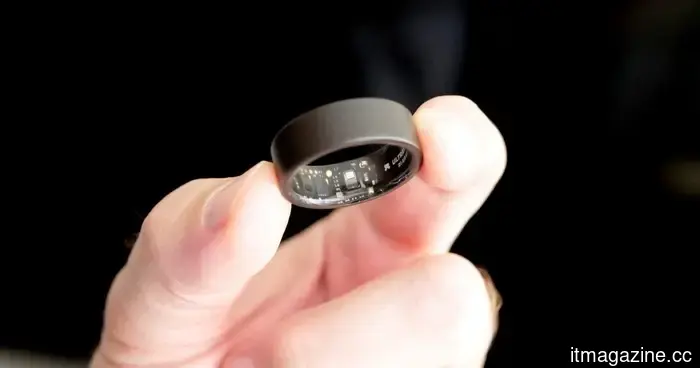 Ultrahuman's most significant update yet replaces charts with real advice.
Ultrahuman's Emerald update revamps the app and introduces UltraSphere, a decision-making engine that transforms the data from your ring into straightforward advice, all without needing an internet connection.
Ultrahuman's most significant update yet replaces charts with real advice.
Ultrahuman's Emerald update revamps the app and introduces UltraSphere, a decision-making engine that transforms the data from your ring into straightforward advice, all without needing an internet connection.
 Ford is transitioning from Google Maps to Apple Maps for its upcoming electric vehicles.
Ford plans to integrate Apple Maps into its upcoming UEV platform, beginning with a $30,000 electric pickup set to launch in 2027, while road data will also enhance the next version of BlueCruise.
Ford is transitioning from Google Maps to Apple Maps for its upcoming electric vehicles.
Ford plans to integrate Apple Maps into its upcoming UEV platform, beginning with a $30,000 electric pickup set to launch in 2027, while road data will also enhance the next version of BlueCruise.
 Samsung ignited the competitive foldable market, but I’m more enthusiastic about an impending unique competitor.
The speculated Mix Fold 5 from Xiaomi may combine wide dimensions similar to the Galaxy Z Fold 8 with its own premium chipset, a 200MP camera, and a significantly larger 6,000mAh battery.
Samsung ignited the competitive foldable market, but I’m more enthusiastic about an impending unique competitor.
The speculated Mix Fold 5 from Xiaomi may combine wide dimensions similar to the Galaxy Z Fold 8 with its own premium chipset, a 200MP camera, and a significantly larger 6,000mAh battery.
 Your preferred Android applications may soon perform more effectively on foldable devices.
Google has launched new tools for Android developers, providing adaptive layout guidance and Wear OS 7 widgets to enhance app compatibility with foldable devices and wearables.
Your preferred Android applications may soon perform more effectively on foldable devices.
Google has launched new tools for Android developers, providing adaptive layout guidance and Wear OS 7 widgets to enhance app compatibility with foldable devices and wearables.
 Cambridge's planet-scale AI model operates on AMD rather than Nvidia.
Cambridge's TESSERA transforms satellite data into reusable AI embeddings for every 10 meters of the Earth's surface, reducing the need for labeled data by 30 times. It operates on AMD hardware instead of Nvidia.
Cambridge's planet-scale AI model operates on AMD rather than Nvidia.
Cambridge's TESSERA transforms satellite data into reusable AI embeddings for every 10 meters of the Earth's surface, reducing the need for labeled data by 30 times. It operates on AMD hardware instead of Nvidia.
 AMD is committing $5 billion to Anthropic and is supplying 2 gigawatts of Helios GPUs for running Claude.
AMD plans to invest as much as $5 billion in Anthropic and will deploy 2GW of MI450 GPUs within Helios racks. Claude will be utilized to enhance ROCm development. The initial gigawatt is set to ship in the first half of 2027.
AMD is committing $5 billion to Anthropic and is supplying 2 gigawatts of Helios GPUs for running Claude.
AMD plans to invest as much as $5 billion in Anthropic and will deploy 2GW of MI450 GPUs within Helios racks. Claude will be utilized to enhance ROCm development. The initial gigawatt is set to ship in the first half of 2027.
Kalanick secures $1.7 billion for Atoms, with an investment from Uber as well.
Travis Kalanick's industrial-AI venture, Atoms, has secured $1.7 billion in funding, with a16z leading the round and Uber, the company that removed him in 2017, also participating as an investor.