
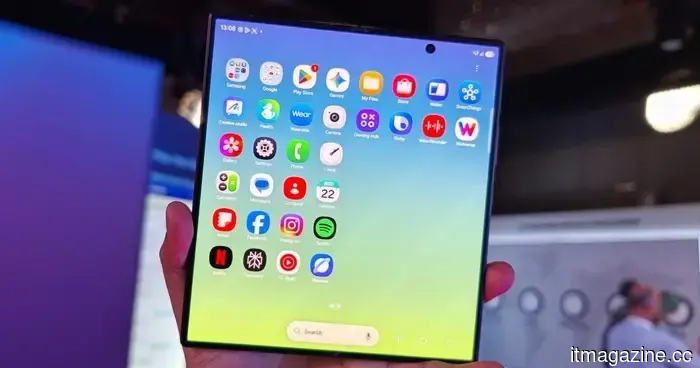
Your preferred Android applications may soon perform more effectively on foldable devices.
Samsung’s recent Galaxy Unpacked event was not solely focused on introducing new hardware. In addition to unveiling the Galaxy Z Fold8, Galaxy Z Flip8, and an updated Galaxy Watch lineup, Google took the opportunity to announce several updates designed for Android developers. These updates aim to encourage the optimization of apps for an increasing variety of foldable devices and wearable formats.
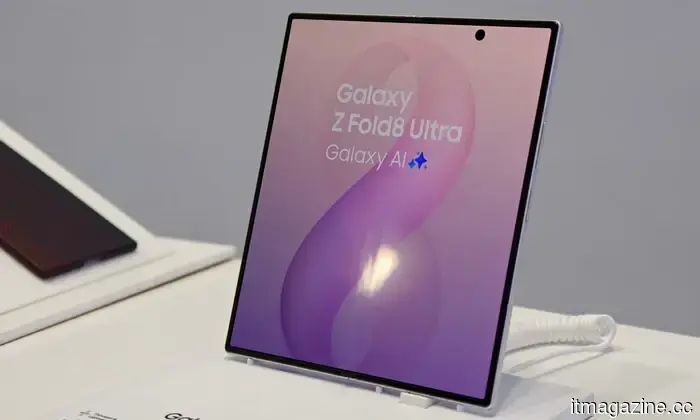
The guidance addresses a challenge that has gained significance with the evolution of foldables: creating apps that function smoothly across various screen sizes, aspect ratios, and device orientations. As the Galaxy Z Fold 8 adopts a wider, landscape-oriented display, Google emphasizes that developers can no longer assume that every Android phone adheres to a standard portrait-first design approach.
The tech giant has also rolled out new tools for camera applications, adaptive layouts, AI-enhanced features, and Wear OS 7 widgets, making this one of its most comprehensive updates for developers regarding Android’s expanding ecosystem of devices.
Google enhances adaptive app development for foldables
The primary focus of this update is Google's strengthened emphasis on adaptive app design. Rather than creating apps around fixed screen sizes, Google encourages developers to design interfaces that automatically adjust according to the window size available. The company suggests utilizing Window Size Classes through the Jetpack WindowManager library to assess the actual screen space an app has, especially when devices are in split-screen or multi-window modes.
Additionally, Google is spotlighting the latest Jetpack Compose release from April 2026 (Compose BOM version 2026.04.01), which brings a new Grid API, FlexBox layout API, and MediaQuery API. Collectively, these tools empower developers to create layouts that adapt to varying screen sizes, folding states, keyboard setups, and device orientations without depending on hardcoded interface directives.
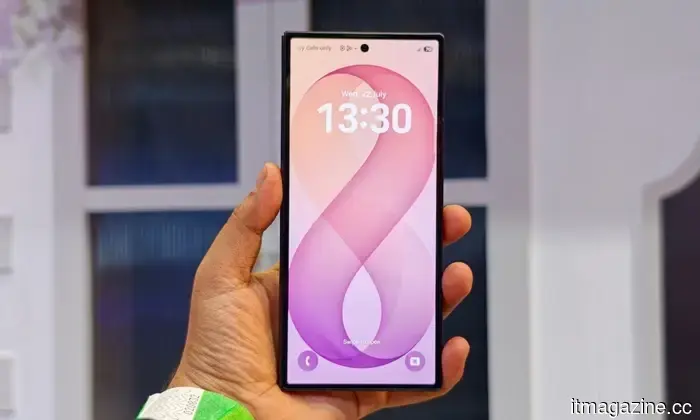
One will only notice the crease when light hits it from an angle. Nadeem Sarwar / Digital Trends
The company also encourages developers to make apps “fold aware” by identifying hinges and fold lines using Jetpack WindowManager. This functionality helps applications prevent important controls from being placed across the fold while preserving app state as users toggle between folded and unfolded states.
Camera applications are also being prioritized. Google advises developers to transition to CameraX, which includes a PreviewView that efficiently handles camera orientation, scaling, and display modifications during folding transitions. For those maintaining Camera2-based apps, the CameraViewfinder library can be utilized to streamline preview management without the need to overhaul their camera framework.
Wear OS 7 and Gemini Nano 4 create new possibilities
The updates are not limited to foldable phones. With Wear OS 7, Google introduces Wear Widgets, enabling developers to craft glanceable widgets using Jetpack Glance and RemoteCompose. These widgets can now exist within multi-widget tiles, granting third-party developers access to features that were once exclusive to Google’s apps.
Nadeem Sarwar / Digital Trends
Google also encourages developers to create on-device AI solutions for Samsung’s latest devices. The new Galaxy foldables come equipped with Gemini Nano 4, which supports over 140 languages and enhanced multimodal capabilities. By leveraging ML Kit’s Prompt API, developers can incorporate structured outputs and reasoning functionalities into their apps without being entirely reliant on cloud-based AI processing.
While these announcements do not introduce new features for end users, they provide insights into Google’s future software priorities. As foldables diversify and wearables continue to evolve, Android developers are urged to design apps that accommodate changing hardware rather than assuming that every device functions like a traditional smartphone.
Other articles
 Four ex-DOGE employees secured $160 million at a valuation of $1.4 billion for an AI-focused military cybersecurity startup.
Cathedral, established by four former DOGE employees, secured $160 million in funding from a16z and Sequoia at a valuation of $1.4 billion. The company develops AI-based offensive and defensive cybersecurity tools for the U.S. military.
Four ex-DOGE employees secured $160 million at a valuation of $1.4 billion for an AI-focused military cybersecurity startup.
Cathedral, established by four former DOGE employees, secured $160 million in funding from a16z and Sequoia at a valuation of $1.4 billion. The company develops AI-based offensive and defensive cybersecurity tools for the U.S. military.
 The postponement of Google's Gemini highlights a more significant issue: employee morale.
Insiders informed Axios that low morale, a disputed Pentagon agreement, and a talent drain are hindering Google's AI models, leading to negative cash flow. Google refutes these claims.
The postponement of Google's Gemini highlights a more significant issue: employee morale.
Insiders informed Axios that low morale, a disputed Pentagon agreement, and a talent drain are hindering Google's AI models, leading to negative cash flow. Google refutes these claims.
 AMD is putting $5 billion into Anthropic and is allocating 2 gigawatts of Helios GPUs to operate Claude.
AMD plans to invest as much as $5 billion in Anthropic and will implement 2GW of MI450 GPUs in Helios racks. Claude will be utilized to enhance ROCm development. The first gigawatt is set to ship in the first half of 2027.
AMD is putting $5 billion into Anthropic and is allocating 2 gigawatts of Helios GPUs to operate Claude.
AMD plans to invest as much as $5 billion in Anthropic and will implement 2GW of MI450 GPUs in Helios racks. Claude will be utilized to enhance ROCm development. The first gigawatt is set to ship in the first half of 2027.
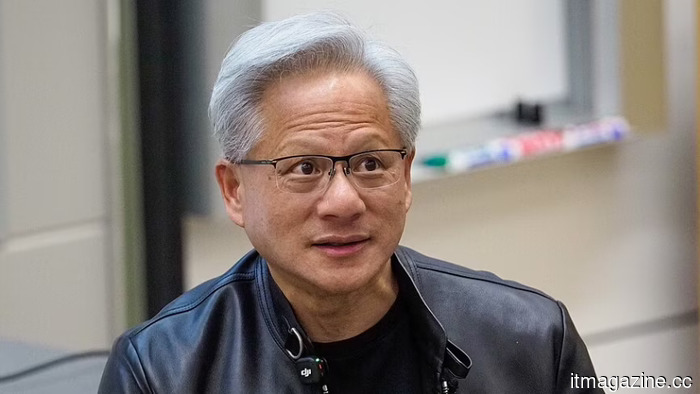 Jensen Huang earned $172 billion from the sale of AI chips. He recently donated $75 million to an art school.
Nvidia's CEO Jensen Huang contributed $75 million to Vanderbilt University for a college focusing on art, architecture, and design in San Francisco. The college is set to launch next year at the previous CCA campus.
Jensen Huang earned $172 billion from the sale of AI chips. He recently donated $75 million to an art school.
Nvidia's CEO Jensen Huang contributed $75 million to Vanderbilt University for a college focusing on art, architecture, and design in San Francisco. The college is set to launch next year at the previous CCA campus.
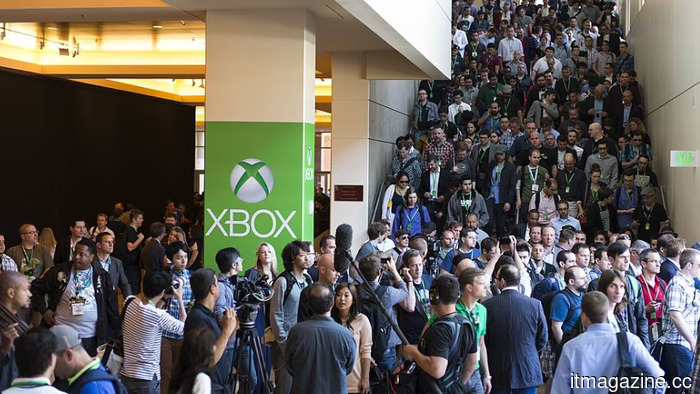 Xbox is experimenting with game streaming that includes advertisements. Amazon is integrating Luna into Prime Video. Both companies acknowledge that cloud gaming has not yet been successful.
Microsoft will experiment with ad-supported cloud gaming streaming. Amazon is integrating Luna into Prime Video. Both companies are exploring new strategies following years of limited user uptake.
Xbox is experimenting with game streaming that includes advertisements. Amazon is integrating Luna into Prime Video. Both companies acknowledge that cloud gaming has not yet been successful.
Microsoft will experiment with ad-supported cloud gaming streaming. Amazon is integrating Luna into Prime Video. Both companies are exploring new strategies following years of limited user uptake.
 The US military acquires its inaugural Nvidia GB300 AI supercomputer.
Nvidia has contributed a DGX GB300 supercomputer to the Naval Postgraduate School, marking a military first, to educate officers on the applications and limitations of AI.
The US military acquires its inaugural Nvidia GB300 AI supercomputer.
Nvidia has contributed a DGX GB300 supercomputer to the Naval Postgraduate School, marking a military first, to educate officers on the applications and limitations of AI.
Your preferred Android applications may soon perform more effectively on foldable devices.
Google has launched new tools for Android developers, providing adaptive layout guidance and Wear OS 7 widgets to enhance app compatibility with foldable devices and wearables.