
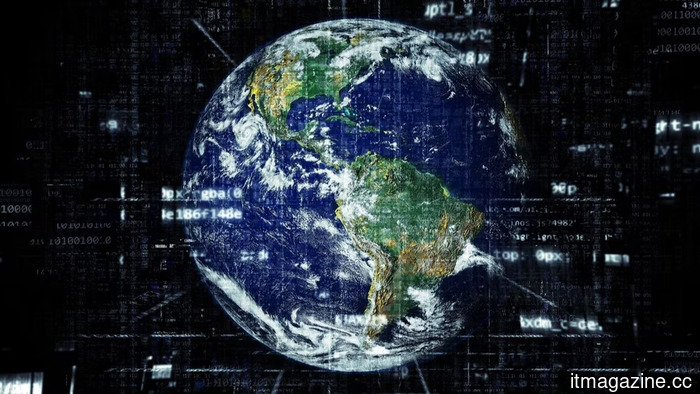
Cambridge's planet-scale AI model operates on AMD rather than Nvidia.
The AI industry is heavily reliant on Nvidia, but a team at the University of Cambridge has demonstrated that's not a necessity. They have created a planetary-scale foundation model for Earth, utilizing only AMD chips for its training and operation.
The model, named TESSERA, takes inspiration from large language models. While LLMs learn from text, TESSERA learns from satellite imagery, absorbing years of data from the European Space Agency’s Sentinel satellites, incorporating both radar and optical images, as announced by the team. It compresses every 10-meter square of land on the planet into a concise 128-number “fingerprint,” or embedding.
This may seem abstract, but its advantages are tangible. Typically, mapping agricultural areas, forests, or floods using satellite data requires developing a custom model and manually labeling thousands of instances for each task. However, with TESSERA’s fingerprints already established, researchers can create these tools with significantly less data, often using just a standard CPU. The team claims it requires roughly 30 times less labeled data compared to starting from raw imagery.
The outcome is a foundational layer for the Earth, made publicly available for anyone to utilize. What's particularly notable is the hardware it operates on.
Planetary AI, without Nvidia
The Energy and Environment group at Cambridge trained TESSERA using 16 AMD Instinct MI300X GPUs, consuming about 6,200 GPU-hours along with AMD’s open ROCm software. While training a model is relatively straightforward, executing it across every 10-meter pixel on Earth—approximately 1.5 trillion pixels annually—is far more challenging.
To tackle this, the team collaborated with Vultr, an independent cloud provider that supplied the necessary computing power via six bare-metal servers, each equipped with eight AMD Instinct MI325X GPUs. Together, these servers produce an estimated three terabytes of compressed data each day, comparable to covering the landmass of Italy daily. Achieving a full year of global coverage requires months of continuous processing.
A foundational layer for the Earth
The emphasis here is on accessibility. Cambridge is releasing the embeddings for free under a Creative Commons license, alongside the comprehensive training methodology. This means any government, researcher, or startup can build upon this work.
Professor Anil Madhavapeddy, who leads the initiative, states that the aim is to “democratize access to planetary-scale environmental monitoring.”
The practical applications are significant. Farmers can monitor crop health and predict yields with 10-meter resolution, which is particularly beneficial for smallholders in developing areas. Conservationists can observe changes in habitats, from tropical forests to the hedgerows in the UK nurturing hedgehogs. Energy planners can identify suitable solar and wind sites to support the transition. All this is made possible using the same shared fingerprints.
TESSERA represents a modest development with profound implications. A public university has created a cutting-edge AI model, made it freely available, and accomplished this using hardware that is typically regarded as unsuitable for serious AI work. The prevailing belief in the field is that serious AI requires Nvidia GPUs and private laboratories. A model that delivers a planet’s worth of embeddings, trained on AMD and offered for free, serves as a subtle challenge to that notion.
Other articles
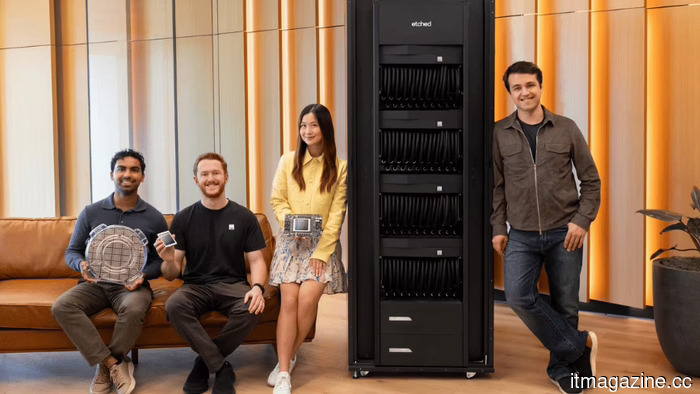 Etched secures $300M with a valuation of $10.3B, with SK Hynix participating.
Nvidia competitor Etched has secured $300 million at a valuation of $10.3 billion, which signifies a doubling of its value in just seven months, and has attracted memory giant SK Hynix as an investor.
Etched secures $300M with a valuation of $10.3B, with SK Hynix participating.
Nvidia competitor Etched has secured $300 million at a valuation of $10.3 billion, which signifies a doubling of its value in just seven months, and has attracted memory giant SK Hynix as an investor.
 Xbox is experimenting with game streaming that includes advertisements. Amazon is integrating Luna with Prime Video. Both companies acknowledge that cloud gaming has not yet succeeded.
Microsoft will trial ad-supported cloud game streaming. Amazon is integrating Luna with Prime Video. Both companies are exploring new strategies following years of minimal adoption.
Xbox is experimenting with game streaming that includes advertisements. Amazon is integrating Luna with Prime Video. Both companies acknowledge that cloud gaming has not yet succeeded.
Microsoft will trial ad-supported cloud game streaming. Amazon is integrating Luna with Prime Video. Both companies are exploring new strategies following years of minimal adoption.
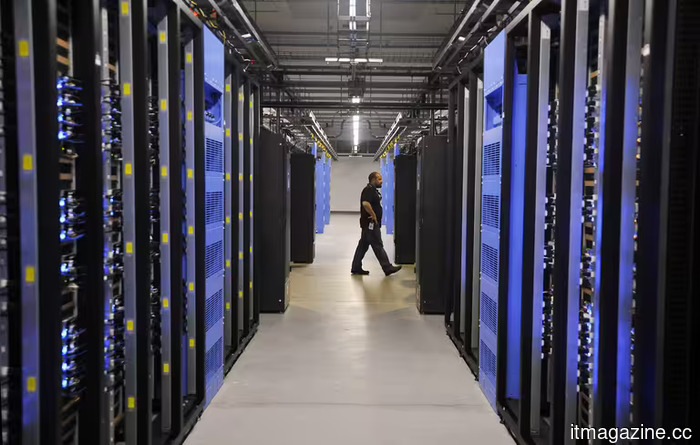 Within the data centers driving the AI surge
An uncommon visit to a server hall in Virginia uncovers the tangible aspects of AI: the loud fans, golden Nvidia racks, and 40 diesel generators, along with the reason for the closed doors.
Within the data centers driving the AI surge
An uncommon visit to a server hall in Virginia uncovers the tangible aspects of AI: the loud fans, golden Nvidia racks, and 40 diesel generators, along with the reason for the closed doors.
 Apple may restrict app access on financed iPhones if payments are not made on time.
Code found in the iOS 27 beta indicates that Apple may have developed a system that can restrict a financed iPhone to just nine apps if payments are overdue.
Apple may restrict app access on financed iPhones if payments are not made on time.
Code found in the iOS 27 beta indicates that Apple may have developed a system that can restrict a financed iPhone to just nine apps if payments are overdue.
 The postponement of Google's Gemini highlights a more significant issue: employee morale.
Insiders informed Axios that low morale, a disputed Pentagon agreement, and a talent drain are hindering Google's AI models, leading to negative cash flow. Google refutes these claims.
The postponement of Google's Gemini highlights a more significant issue: employee morale.
Insiders informed Axios that low morale, a disputed Pentagon agreement, and a talent drain are hindering Google's AI models, leading to negative cash flow. Google refutes these claims.
 Ford is transitioning from Google Maps to Apple Maps for its upcoming electric vehicles.
Ford plans to integrate Apple Maps into its upcoming UEV platform, beginning with a $30,000 electric pickup set to launch in 2027, while road data will also enhance the next version of BlueCruise.
Ford is transitioning from Google Maps to Apple Maps for its upcoming electric vehicles.
Ford plans to integrate Apple Maps into its upcoming UEV platform, beginning with a $30,000 electric pickup set to launch in 2027, while road data will also enhance the next version of BlueCruise.
Cambridge's planet-scale AI model operates on AMD rather than Nvidia.
Cambridge's TESSERA transforms satellite data into reusable AI embeddings for every 10 meters of the Earth's surface, reducing the need for labeled data by 30 times. It operates on AMD hardware instead of Nvidia.