
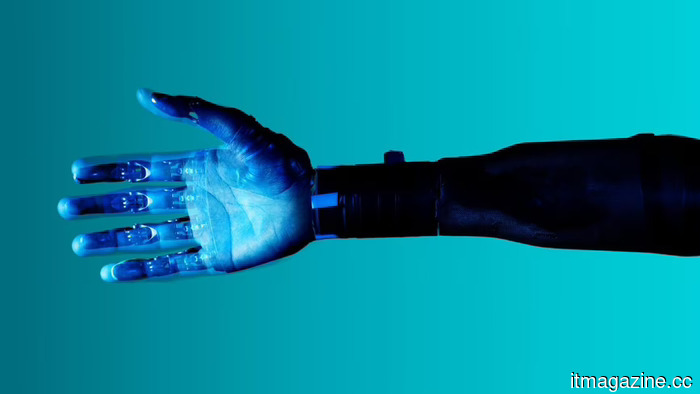
Nvidia's open-source simulator reduces the training time for robots to just 2 minutes.
The challenging aspect of medical robotics lies not in the robot itself, but in the practical application. A surgical system must undergo thousands of trials to master a delicate procedure, and these cannot be conducted on actual patients. Nvidia believes the solution is to enable the robot to practice within a simulated body, millions of times.
The company has introduced an open-source Medical Physics Simulation framework, which is part of its Isaac for Healthcare platform, according to HIT Consultant. This framework simulates the interactions between instruments and anatomy, allowing developers to train and test physical-AI policies without engaging with hardware.
The speed is noteworthy. By utilizing 8,192 training environments simultaneously on GPUs, Nvidia claims to achieve a remarkable acceleration. This reduces the time needed for robotic policy training from over five hours to less than two minutes, marking a shift from an overnight task to a quick coffee break.
However, the more significant aspect is what the simulation yields: evidence. As the framework is open, developers have access to the data, models, and weights they require. They can leverage these resources to establish the verifiable proof that medical authorities expect.
The framework integrates two types of physics. Classical physics, through Nvidia’s Warp and Newton engines, addresses the hard mechanics, including friction, contact, and the resistance of tissues against a catheter or guide wire.
On the other hand, generative AI physics, via a model named Cosmos-H Dreams, forecasts the more complex scenarios, such as the deformation of soft tissue. It can even incorporate simulated fluoroscopy, X-ray, and ultrasound.
Prominent users add credibility to the framework. Surgical robotics companies like Medtronic, Johnson & Johnson MedTech, and CMR Surgical are adopting it for surgical digital twins and endovascular training. Chris Fryer, CTO of CMR Surgical, remarked that open-source models enable companies to "build on shared knowledge, accelerating responsible innovation."
There’s a strategic reasoning behind this generosity. By open-sourcing the tools, Nvidia establishes itself as the foundational infrastructure for the upcoming generation of surgical robots, all of which will operate on Nvidia GPUs.
Nonetheless, a simulation is not a substitute for a patient. A policy that excels in a digital twin must still prove its effectiveness in an operating room, and regulators have yet to clarify how much synthetic evidence they will deem acceptable.
Despite this, the trajectory is noteworthy. The main obstacle in medical AI has been data, rather than concepts, and Nvidia has provided the industry with a free path around it. If regulators determine that a robot trained in a virtual environment can safely function in a real one, the two-minute rehearsal could revolutionize how surgical machines are developed.
Other articles
 The postponement of Google's Gemini reveals a more significant issue: employee morale.
Insiders informed Axios that low morale, a disputed Pentagon agreement, and an exodus of talent are hindering the progress of Google's AI models, as the company's cash flow becomes negative. Google denies these claims.
The postponement of Google's Gemini reveals a more significant issue: employee morale.
Insiders informed Axios that low morale, a disputed Pentagon agreement, and an exodus of talent are hindering the progress of Google's AI models, as the company's cash flow becomes negative. Google denies these claims.
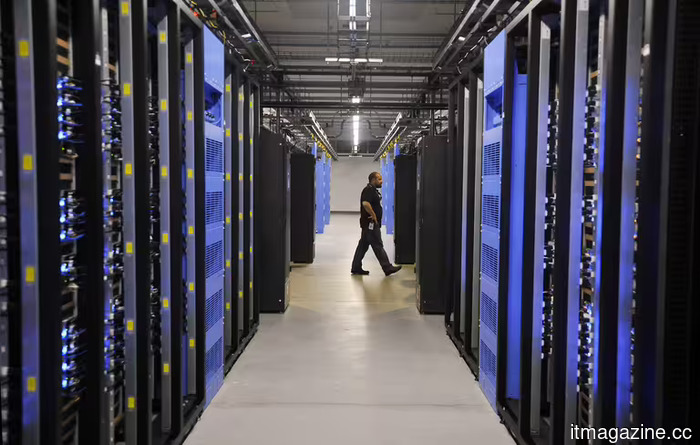 Within the data centers driving the AI surge
An unusual visit to a server hall in Virginia uncovers the tangible existence of AI: the sound of powerful fans, rows of gold Nvidia racks, and 40 diesel generators, along with the reason why the doors remain closed.
Within the data centers driving the AI surge
An unusual visit to a server hall in Virginia uncovers the tangible existence of AI: the sound of powerful fans, rows of gold Nvidia racks, and 40 diesel generators, along with the reason why the doors remain closed.
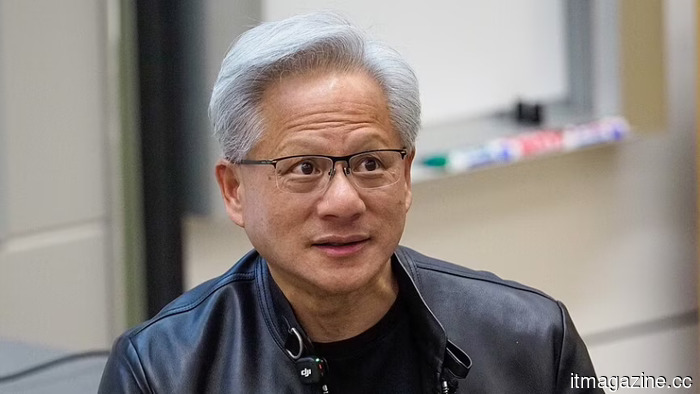 Jensen Huang earned $172 billion from selling AI chips. He has just donated $75 million to an art school.
Nvidia CEO Jensen Huang contributed $75 million to Vanderbilt for a college focused on art, architecture, and design in San Francisco. It is set to open next year at the former CCA campus.
Jensen Huang earned $172 billion from selling AI chips. He has just donated $75 million to an art school.
Nvidia CEO Jensen Huang contributed $75 million to Vanderbilt for a college focused on art, architecture, and design in San Francisco. It is set to open next year at the former CCA campus.
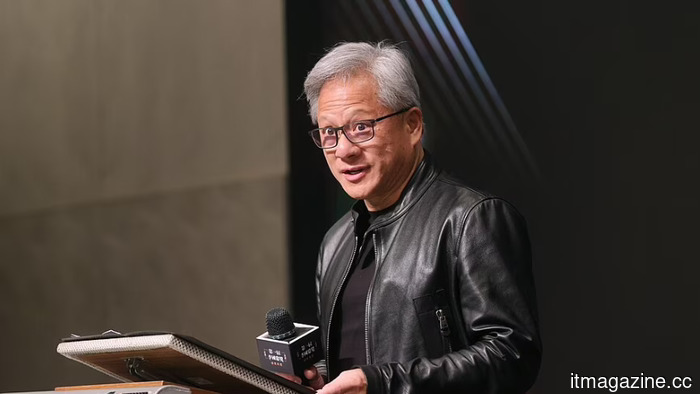 Jensen Huang describes the concern over job losses due to AI as 'utter nonsense.'
Nvidia's Jensen Huang stated to Axios that concerns over widespread job losses due to AI are 'utter nonsense'. He explained that it's important not to confuse your specific tasks with your overall job.
Jensen Huang describes the concern over job losses due to AI as 'utter nonsense.'
Nvidia's Jensen Huang stated to Axios that concerns over widespread job losses due to AI are 'utter nonsense'. He explained that it's important not to confuse your specific tasks with your overall job.
 Reddit might restrict Google’s access to its content due to traffic generated by AI.
Reddit's shares declined by 9% following a report that suggests it might restrict Google's access to its content for AI purposes, as AI Overviews diminish the referral traffic that publishers depend on.
Reddit might restrict Google’s access to its content due to traffic generated by AI.
Reddit's shares declined by 9% following a report that suggests it might restrict Google's access to its content for AI purposes, as AI Overviews diminish the referral traffic that publishers depend on.
 Musk expresses gratitude to Micron for the chips and constructs a factory to take its place.
Elon Musk expressed gratitude to Micron for a 'substantial' memory-chip allocation during Tesla's earnings call, all while he is developing Terafab, a $55 billion chip manufacturing facility for Tesla and SpaceX.
Musk expresses gratitude to Micron for the chips and constructs a factory to take its place.
Elon Musk expressed gratitude to Micron for a 'substantial' memory-chip allocation during Tesla's earnings call, all while he is developing Terafab, a $55 billion chip manufacturing facility for Tesla and SpaceX.
Nvidia's open-source simulator reduces the training time for robots to just 2 minutes.
Nvidia has released a medical-physics simulator as open-source software that reduces the training time for surgical robots from 5 hours to less than 2 minutes. Medtronic and J&J are currently utilizing this technology.