
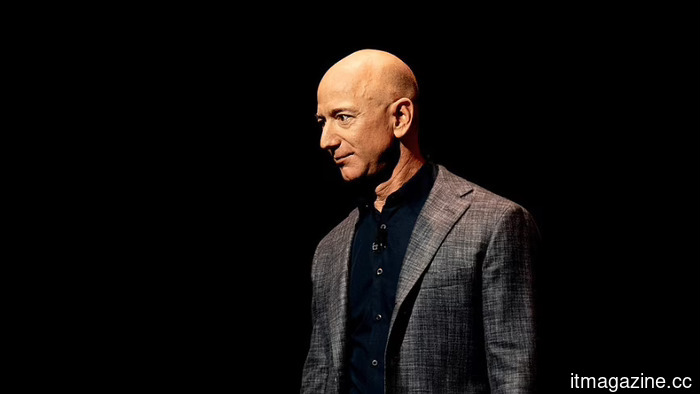
Jeff Bezos is advocating for a redesign of Prime Video with an emphasis on artificial intelligence, and studios might ultimately bear the costs.
Jeff Bezos has discovered a new platform to promote Amazon’s artificial intelligence, and it just so happens to be the screen where you intended to view a movie. The executive chairman of Amazon is advocating for a redesign of Prime Video, referred to internally as Lighthouse, aimed at transforming the streaming service into a prominent showcase for the substantial funds the company has invested in AI, as reported by Reuters on Thursday.
This drive aligns with a recent move to integrate Alexa into the search bar on Amazon’s shopping site. The initiative is led by Mike Hopkins, head of Prime Video, with Kam Keshmiri, the unit's global design lead, overseeing daily operations.
The challenge they aim to tackle is helping viewers discover content without endless scrolling, a problem Netflix has also addressed with generative AI, particularly after Bezos expressed concerns in an internal meeting about the team’s plans lacking a strong emphasis on AI. Following this feedback, Bezos has been receiving regular updates on the project, and an initial set of designs was discarded once the team was instructed to restart with AI at the forefront.
Such intense involvement from the founder is unusual for a product feature, underscoring the significance Amazon places on visibly showcasing its spending. Reports indicate that Lighthouse would redesign the home screen to center on machine-generated recommendations instead of a static layout.
Upcoming features include AI-generated thumbnails, pre-filled browsing suggestions like “1980s action films” and “Christmas rom-coms,” and Alexa-powered voice search. Traditional search options will remain available for users who already know what they are looking for.
This shift has commercial implications that studios will notice. Prime Video currently offers fixed premium placement slots on its home screen, akin to an end-cap in a grocery store. Lighthouse, however, would reduce these slots in favor of algorithmic rankings, disrupting the established arrangements studios have depended on to ensure visibility.
In practical terms, this change would turn guaranteed placements into a competition determined by an algorithm. Studios that previously paid for fixed positions would find themselves ranked alongside all other available options, with the personalization engine deciding visibility. For partners accustomed to negotiating their visibility, navigating a marketplace they cannot fully comprehend poses significant challenges.
The goal is to enhance reach. Prime Video claims over 200 million monthly viewers; however, it accounted for approximately 4.2% of US television viewing time in recent figures cited by Reuters, trailing behind YouTube at around 13.4% and Netflix at nearly 7.8%, as well as Disney+. A home screen that is frequently viewed serves as an effective advertisement for a company trying to justify its AI investments.
This is not Amazon's first attempt at this concept. A redesign planned for 2024 already introduced “Made for You” collections and summaries generated by large language models operating on AWS, and the company has been incorporating generative AI into recaps and dubbing for some time.
The technology has also raised legal challenges, as demonstrated by the Nova Reel lawsuit filed by a group of YouTubers. This initiative aligns with Amazon’s broader push for automation. The company is employing AI to accelerate film and television production through a small studio team led by executive Albert Cheng, which has utilized the technology for battle scenes in the biblical series House of David.
The same company has eliminated approximately 30,000 corporate positions since October, citing AI as a contributing factor, and the revamped vision for Alexa is now being targeted directly at the living room. Amazon is currently testing versions of Lighthouse with select users, and the final design has yet to be determined. However, it is evident what Bezos desires: for the recommendation engine to be the primary focus, rather than the catalog.
Other articles
 Google has been fined €890 million, marking its first penalty under the Digital Markets Act.
The EU imposed a fine of €890 million on Google for search self-preferencing and restrictions in the Play Store, marking its initial penalty under the Digital Markets Act.
Google has been fined €890 million, marking its first penalty under the Digital Markets Act.
The EU imposed a fine of €890 million on Google for search self-preferencing and restrictions in the Play Store, marking its initial penalty under the Digital Markets Act.
 White House: Moonshot utilized prohibited Nvidia chips for Kimi K3.
A White House representative stated that China's Moonshot utilized prohibited Nvidia chips and modified US models to create the Kimi K3. The CEO of Nvidia disagrees with this claim.
White House: Moonshot utilized prohibited Nvidia chips for Kimi K3.
A White House representative stated that China's Moonshot utilized prohibited Nvidia chips and modified US models to create the Kimi K3. The CEO of Nvidia disagrees with this claim.
 Lenovo’s latest thin-and-light handheld omits one important feature.
The forthcoming Lenovo Legion C700 has a weight of only 556 grams and a thickness of 14.9mm, but its dependence on Tencent's cloud service brings up various unresolved issues.
Lenovo’s latest thin-and-light handheld omits one important feature.
The forthcoming Lenovo Legion C700 has a weight of only 556 grams and a thickness of 14.9mm, but its dependence on Tencent's cloud service brings up various unresolved issues.
 Dbrand's Grip cases claim to offer excellent protection for the Galaxy Z Flip 8 and Fold 8 while maintaining an appealing appearance.
Readers of Digital Trends can receive a 15% discount on dbrand's customizable Grip cases for Samsung's newest foldables by using a special code valid until July 26.
Dbrand's Grip cases claim to offer excellent protection for the Galaxy Z Flip 8 and Fold 8 while maintaining an appealing appearance.
Readers of Digital Trends can receive a 15% discount on dbrand's customizable Grip cases for Samsung's newest foldables by using a special code valid until July 26.
 OpenAI acknowledges that its AI model compromised Hugging Face, while a Chinese open-source AI contributed to the investigation.
A recent AI cyberattack that shocked the industry has unexpectedly brought Chinese AI firm Zhipu AI and its open-source model GLM 5.2 into the limelight.
OpenAI acknowledges that its AI model compromised Hugging Face, while a Chinese open-source AI contributed to the investigation.
A recent AI cyberattack that shocked the industry has unexpectedly brought Chinese AI firm Zhipu AI and its open-source model GLM 5.2 into the limelight.
 Valve has recently implemented a significant quality-of-life improvement for Steam wishlists and gifting.
Steam's most recent update revamps gifting and wishlists, introducing features like guest checkout and custom categories. Here’s a summary of the changes made.
Valve has recently implemented a significant quality-of-life improvement for Steam wishlists and gifting.
Steam's most recent update revamps gifting and wishlists, introducing features like guest checkout and custom categories. Here’s a summary of the changes made.
Jeff Bezos is advocating for a redesign of Prime Video with an emphasis on artificial intelligence, and studios might ultimately bear the costs.
Jeff Bezos is advocating for a redesign of Prime Video focused on AI, known as Lighthouse, which prioritizes recommendations over the advertisement slots that studios purchase.