

Google has been fined €890 million, marking its first penalty under the Digital Markets Act.
On Thursday, the European Commission imposed a fine of €890 million on Google for violations of the Digital Markets Act, marking the first instance in which Brussels has penalized the company under the regulatory framework designed to regulate major technology platforms.
The fine is divided into two parts: €460 million pertains to search self-preferencing, where Google prioritized its own shopping, hotel, transport, and sports results over competing services without implementing “transparent, fair and non-discriminatory conditions,” as stated by the Commission. The remaining €430 million relates to anti-steering rules on Google Play, where the company established fees and terms that prevented developers from directing users to more affordable purchasing options outside its store.
“The best products should succeed because they’re superior, not because they are owned by the company operating the search engine,” remarked Teresa Ribera, the Commission’s executive vice-president for competition, while explaining the ruling.
The Commission characterized both behaviors as violations of the gatekeeper responsibilities set forth by the DMA for a select group of platforms considered systemically significant. This represents Google’s first penalty under the DMA; however, other companies have previously faced consequences under this framework. Apple and Meta were fined €500 million and €200 million, respectively, in April 2025, being the first penalties following the full implementation of the law.
Brussels has also urged Google to allow rival AI assistants access to the Android platform according to the same legislation. The case originated in March 2024, when the Commission initiated non-compliance proceedings against Alphabet shortly after the DMA's obligations took effect for designated gatekeepers. Investigators presented initial findings on the search and Google Play practices before finalizing the fine.
According to the ruling, Google has 60 days to stop both practices or face ongoing penalty payments of up to 5% of Alphabet’s average daily global revenue. The DMA stipulates fines of up to 10% of global annual revenue for an initial violation, and 20% for repeat offenses, meaning the €890 million fine is significantly below the maximum potential for a company of Alphabet’s scale.
Complaints primarily arose from price-comparison services, vertical search competitors, and app developers who contended that Google’s ranking practices and fees hindered them from competing fairly. In 2023, Google was designated as a gatekeeper for key services such as Search, Android, Chrome, and Google Play, which triggered the obligations outlined in the ruling.
Google has strongly opposed the decision. Kent Walker, its president of global affairs, argued that the ruling is unjust, labeling it as “product degradation driven by a small group of self-serving complainants” rather than a reflection of true competition. The company contends that the changes demanded by Brussels would detrimentally affect its services for users.
Nevertheless, Google has started testing new search layouts and adjusting its Google Play steering policies, which the Commission acknowledged as “substantial progress” toward compliance. Regulators continue to evaluate how the company’s AI Overviews and AI Mode features align with the obligations, with the Commission indicating it would continue to monitor changes in search and Play before determining their sufficiency.
It was not confirmed whether Google plans to appeal the ruling, although the company has contested every major fine imposed by the European Union in the past decade in court. This DMA penalty is distinct from the EU’s previous antitrust cases. This month, the EU’s highest court upheld a record €4.1 billion fine against Google related to Android, while the company had previously proposed concessions concerning news-search rankings to preempt additional scrutiny under the DMA.
The fine has been reported widely in dollar terms as a “$1 billion” penalty; however, it is fixed in euros at €890 million, which is roughly $1.02 billion at current exchange rates, with U.S. media favoring the more rounded figure.
The timing of this ruling is sensitive, as the Trump administration has consistently portrayed the EU’s digital regulations as a trade barrier and a de facto tax on American companies, while trade commissioner Maroš Šefčovič has spent significant time addressing the resulting tensions. The decision coincides with ongoing negotiations over tariffs between Washington and Brussels, thereby adding a political dimension to what is essentially a technical competition ruling.
Other articles
 White House: Moonshot utilized prohibited Nvidia chips for Kimi K3.
A White House representative stated that China's Moonshot utilized prohibited Nvidia chips and modified US models to create the Kimi K3. The CEO of Nvidia disagrees with this claim.
White House: Moonshot utilized prohibited Nvidia chips for Kimi K3.
A White House representative stated that China's Moonshot utilized prohibited Nvidia chips and modified US models to create the Kimi K3. The CEO of Nvidia disagrees with this claim.
 Valve has recently implemented a significant quality-of-life improvement for Steam wishlists and gifting.
Steam's most recent update revamps gifting and wishlists, introducing features like guest checkout and custom categories. Here’s a summary of the changes made.
Valve has recently implemented a significant quality-of-life improvement for Steam wishlists and gifting.
Steam's most recent update revamps gifting and wishlists, introducing features like guest checkout and custom categories. Here’s a summary of the changes made.
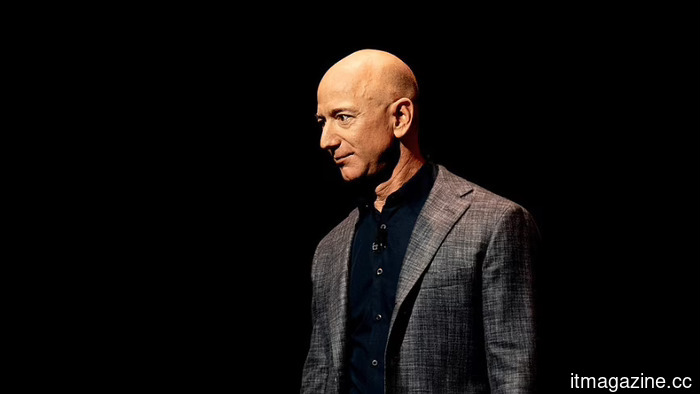 Jeff Bezos is advocating for a redesign of Prime Video with an emphasis on artificial intelligence, and studios might ultimately bear the costs.
Jeff Bezos is advocating for a redesign of Prime Video focused on AI, known as Lighthouse, which prioritizes recommendations over the advertisement slots that studios purchase.
Jeff Bezos is advocating for a redesign of Prime Video with an emphasis on artificial intelligence, and studios might ultimately bear the costs.
Jeff Bezos is advocating for a redesign of Prime Video focused on AI, known as Lighthouse, which prioritizes recommendations over the advertisement slots that studios purchase.
 Dbrand's Grip cases offer excellent protection for the Galaxy Z Flip 8 and Fold 8 while maintaining a stylish appearance.
Readers of Digital Trends can take advantage of a 15% discount on dbrand’s customizable Grip cases for Samsung’s newest foldable devices by using an exclusive code until July 26.
Dbrand's Grip cases offer excellent protection for the Galaxy Z Flip 8 and Fold 8 while maintaining a stylish appearance.
Readers of Digital Trends can take advantage of a 15% discount on dbrand’s customizable Grip cases for Samsung’s newest foldable devices by using an exclusive code until July 26.
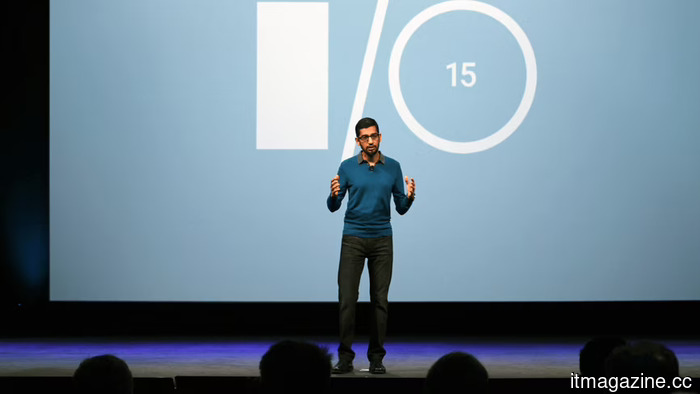 Alphabet raises its capex forecast to $205 billion as Google Cloud surges by 82%.
Alphabet exceeded revenue expectations and reported an 82% growth in Google Cloud, but a record capital expenditure guidance of $205 billion and negative free cash flow caused its shares to drop by approximately 5%.
Alphabet raises its capex forecast to $205 billion as Google Cloud surges by 82%.
Alphabet exceeded revenue expectations and reported an 82% growth in Google Cloud, but a record capital expenditure guidance of $205 billion and negative free cash flow caused its shares to drop by approximately 5%.
 I had the opportunity to try out the Samsung Galaxy Z Fold 8 Ultra. It represents the pinnacle of foldable technology in a classic design.
I dedicated several hours to the Samsung Galaxy Z Fold 8 Ultra, and I believe it's a story of subtle enhancements that you can truly appreciate only upon holding it. While it's not inexpensive and doesn't provide an immediate upgrade, it is undoubtedly Samsung's strongest offering in the realm of foldable devices.
I had the opportunity to try out the Samsung Galaxy Z Fold 8 Ultra. It represents the pinnacle of foldable technology in a classic design.
I dedicated several hours to the Samsung Galaxy Z Fold 8 Ultra, and I believe it's a story of subtle enhancements that you can truly appreciate only upon holding it. While it's not inexpensive and doesn't provide an immediate upgrade, it is undoubtedly Samsung's strongest offering in the realm of foldable devices.
Google has been fined €890 million, marking its first penalty under the Digital Markets Act.
The EU imposed a fine of €890 million on Google for search self-preferencing and restrictions in the Play Store, marking its initial penalty under the Digital Markets Act.