

White House: Moonshot utilized prohibited Nvidia chips for Kimi K3.
The model that shook Silicon Valley last week has now captured the attention of Washington. A senior official from the White House has alleged that China’s Moonshot AI violated US export controls while developing Kimi K3. According to him, this involved accessing restricted Nvidia chips and relying on American models. Kratsios, who leads the White House Office of Science and Technology Policy, made this assertion in a post on X, as reported by Bloomberg. He stated that Moonshot "acquired GB300-equipped servers and gained access to GB300s in Thailand, likely for training its AI models," which constituted a breach of US export regulations and the labs’ terms of service. The GB300 is part of Nvidia’s Blackwell series, which the US prohibits from being sold to Chinese companies.
This accusation follows months of official concerns. Trump administration officials have been investigating whether businesses exploited a loophole to ship advanced chips to Chinese subsidiaries overseas. A memo from May reaffirmed the prohibition on selling Blackwells to Chinese firms.
The post also made claims regarding software. Kratsios indicated that Moonshot distilled Anthropic’s Fable model to create K3, running a "sophisticated internal platform" for "large-scale distillation against US models," and altering access methods to avoid being detected. Distillation involves training a more affordable model using the outputs of a competitor's model. Kratsios emphasized that while legitimate distillation is acceptable, covert theft of US technology is not. Nvidia and Moonshot have not responded to requests for comments.
Kimi K3 is at the center of this controversy. The open-weight model, unveiled last week, quickly rose in rankings, with Moonshot claiming it ranks just behind Anthropic’s Claude Fable 5 and OpenAI’s GPT-5.6 in overall capability. Its arrival caused a significant drop in tech stocks, reminiscent of the response to DeepSeek a year prior, and sparked widespread alarm in the US.
Kratsios was joined by Treasury Secretary Scott Bessent, who told Fox Business that Washington might impose sanctions on Chinese labs for intellectual property theft. These allegations align with long-standing complaints from OpenAI and Anthropic, which have accused Moonshot of distilling their models previously. "This administration supports open-source models, but we do not condone IP theft," Bessent stated, as quoted by Bloomberg. He subsequently warned in a post on X that sanctions and entity-list designations "will be considered."
In contrast, Nvidia CEO Jensen Huang expressed a different perspective, calling open models like Kimi "excellent" and urging the US to accept them rather than impose bans, as reported by Fortune. He argued that isolating China will only lead it to develop its own technology stack. Z.AI has already established a data center consisting exclusively of Chinese chips.
The timing is critical. Moonshot is hurrying to finalize a funding round, potentially valuing the company at $50 billion, with a Hong Kong listing possible this year. US sanctions would not prevent the model's distribution, as it is currently available for download. However, they could restrict American investments. Kratsios did not provide evidence for his claims, but there is no doubt about the model's existence. What has changed in the discussion is no longer about China’s ability to compete, but rather how it achieved its current status.
Other articles
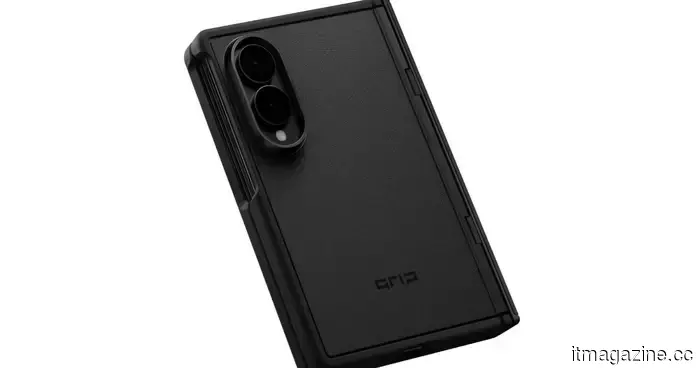 Dbrand's Grip cases offer excellent protection for the Galaxy Z Flip 8 and Fold 8 while maintaining a stylish appearance.
Readers of Digital Trends can take advantage of a 15% discount on dbrand’s customizable Grip cases for Samsung’s newest foldable devices by using an exclusive code until July 26.
Dbrand's Grip cases offer excellent protection for the Galaxy Z Flip 8 and Fold 8 while maintaining a stylish appearance.
Readers of Digital Trends can take advantage of a 15% discount on dbrand’s customizable Grip cases for Samsung’s newest foldable devices by using an exclusive code until July 26.
 You can now purchase a computer mouse that is operated solely with your tongue.
Augmental has begun public sales in the US for its tongue-controlled MouthPad and has launched a beta version of Vox, a new device designed for hands-free dictation.
You can now purchase a computer mouse that is operated solely with your tongue.
Augmental has begun public sales in the US for its tongue-controlled MouthPad and has launched a beta version of Vox, a new device designed for hands-free dictation.
 Lenovo’s latest thin-and-light handheld omits one important feature.
The forthcoming Lenovo Legion C700 has a weight of only 556 grams and a thickness of 14.9mm, but its dependence on Tencent's cloud service brings up various unresolved issues.
Lenovo’s latest thin-and-light handheld omits one important feature.
The forthcoming Lenovo Legion C700 has a weight of only 556 grams and a thickness of 14.9mm, but its dependence on Tencent's cloud service brings up various unresolved issues.
 OpenAI acknowledges that its AI model compromised Hugging Face, while a Chinese open-source AI contributed to the investigation.
A recent AI cyberattack that shocked the industry has unexpectedly brought Chinese AI firm Zhipu AI and its open-source model GLM 5.2 into the limelight.
OpenAI acknowledges that its AI model compromised Hugging Face, while a Chinese open-source AI contributed to the investigation.
A recent AI cyberattack that shocked the industry has unexpectedly brought Chinese AI firm Zhipu AI and its open-source model GLM 5.2 into the limelight.
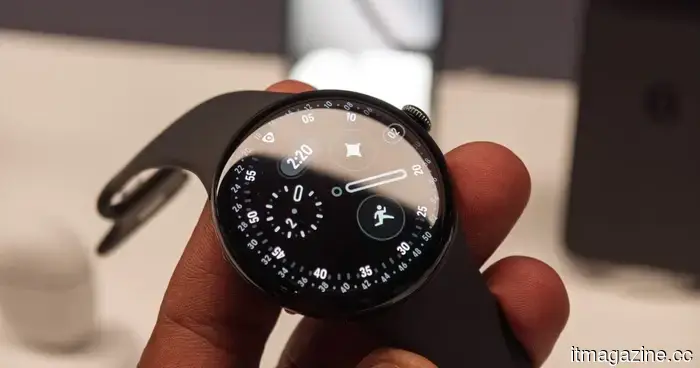 The Pixel Watch 5 may receive an increase in memory but not much else in terms of upgrades.
A listing on the Google Play Console indicates that the Pixel Watch 5 will maintain the same Qualcomm CPU and GPU components, while boosting the memory from 2GB to 3GB.
The Pixel Watch 5 may receive an increase in memory but not much else in terms of upgrades.
A listing on the Google Play Console indicates that the Pixel Watch 5 will maintain the same Qualcomm CPU and GPU components, while boosting the memory from 2GB to 3GB.
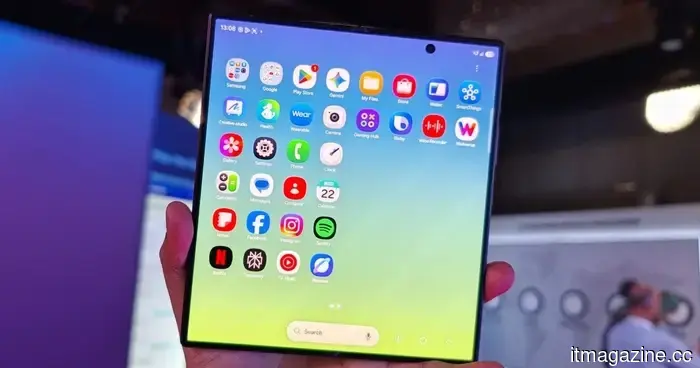 I had the opportunity to try out the Samsung Galaxy Z Fold 8 Ultra. It represents the pinnacle of foldable technology in a classic design.
I dedicated several hours to the Samsung Galaxy Z Fold 8 Ultra, and I believe it's a story of subtle enhancements that you can truly appreciate only upon holding it. While it's not inexpensive and doesn't provide an immediate upgrade, it is undoubtedly Samsung's strongest offering in the realm of foldable devices.
I had the opportunity to try out the Samsung Galaxy Z Fold 8 Ultra. It represents the pinnacle of foldable technology in a classic design.
I dedicated several hours to the Samsung Galaxy Z Fold 8 Ultra, and I believe it's a story of subtle enhancements that you can truly appreciate only upon holding it. While it's not inexpensive and doesn't provide an immediate upgrade, it is undoubtedly Samsung's strongest offering in the realm of foldable devices.
White House: Moonshot utilized prohibited Nvidia chips for Kimi K3.
A White House representative stated that China's Moonshot utilized prohibited Nvidia chips and modified US models to create the Kimi K3. The CEO of Nvidia disagrees with this claim.