

Amazon is revamping Prime Video with increased AI features, but will it address the issues that annoy viewers?
For years, Prime Video's home screen has remained unchanged, featuring rows of tiles that seldom align with what viewers truly want to watch. Amazon is counting on AI to alter this, with Jeff Bezos personally overseeing the initiative.
According to Reuters, Bezos has instructed Prime Video head Mike Hopkins to revamp the streaming service by placing AI at the forefront. This project, dubbed Lighthouse internally, is already influencing the app's functionality.
What updates are coming to Prime Video?
The redesign aims to restructure the homepage around AI-generated recommendations rather than the static grid currently visible to all subscribers. One proposed version discussed by Prime Video executives features tiles based on prompts such as “action movies from the 1980s” or “Christmas rom-coms,” tailored to individual viewing habits.
Additionally, Amazon is considering integrating its Alexa voice assistant into the search function, allowing users to voice their preferences rather than typing. Traditional search options will still be available, with the upper part of the screen set to highlight features like Thursday Night Football, the NFL game exclusive to Amazon.
What has sparked Bezos’s push for AI?
The Lighthouse initiative did not emerge as a routine product update. Reports from Reuters indicate that it started following a tense meeting last fall, during which Bezos criticized Prime Video executives for not incorporating AI and personalization effectively enough. The team scrapped their initial plan and began anew under global design lead Kam Keshmiri. Since then, Bezos has remained personally involved in the project, which is noteworthy considering he has stepped back from day-to-day Amazon operations since 2021.
Blue Origin
There is also a broader context behind the redesign of Prime Video. Amazon has pledged nearly $200 billion in capital expenditures this year, predominantly connected to AI, following a $23 billion investment shared between OpenAI and Anthropic.
Lighthouse is a part of Amazon's strategy to enhance its AI reputation while competitors continue to advance swiftly. Currently, Prime Video accounts for only 4.2% of television viewing in the U.S., trailing behind YouTube, Netflix, and Disney+, which provides Amazon with ample motivation to succeed in this endeavor. However, Amazon's other significant AI initiative, a revamped version of Alexa, has yielded mixed outcomes thus far, and it is reportedly still operating at a loss.
Does increased AI actually benefit viewers?
Like most major streaming platforms, Prime Video allows studios to pay for prominent placements on its home screen. If personalized rankings start to replace some of that paid visibility, what appears first could be more influenced by user preferences rather than payment amounts. This would represent a significant shift towards more genuine recommendations, which would benefit viewers.
Nonetheless, some skepticism remains. Netflix has already attempted similar AI solutions to combat scrolling fatigue, yet many viewers still express frustration over finding engaging content. It is also uncertain whether Prime Video's AI-driven redesign will entirely eliminate paid placements or merely incorporate them into the algorithm, which may not greatly benefit viewers.
At present, Amazon is testing early versions with a select group of users, and feedback could still modify the final design. Whether Lighthouse will alleviate scrolling fatigue or simply offer a new look remains to be seen once it becomes available on users' screens.


Other articles
 Ultrahuman’s most significant update to date replaces charts with real advice.
Ultrahuman's Emerald update revamps the app and introduces UltraSphere, a decision-making engine that converts your ring's data into straightforward recommendations, even in the absence of internet connectivity.
Ultrahuman’s most significant update to date replaces charts with real advice.
Ultrahuman's Emerald update revamps the app and introduces UltraSphere, a decision-making engine that converts your ring's data into straightforward recommendations, even in the absence of internet connectivity.
 Reddit might restrict Google's access to its content due to traffic generated by AI.
Reddit's shares dropped by 9% following a report suggesting it might restrict Google's access to its content for AI purposes, as AI Overviews significantly reduce the referral traffic that publishers depend on.
Reddit might restrict Google's access to its content due to traffic generated by AI.
Reddit's shares dropped by 9% following a report suggesting it might restrict Google's access to its content for AI purposes, as AI Overviews significantly reduce the referral traffic that publishers depend on.
 AMD is putting $5 billion into Anthropic and is allocating 2 gigawatts of Helios GPUs to operate Claude.
AMD plans to invest as much as $5 billion in Anthropic and will implement 2GW of MI450 GPUs in Helios racks. Claude will be utilized to enhance ROCm development. The first gigawatt is set to ship in the first half of 2027.
AMD is putting $5 billion into Anthropic and is allocating 2 gigawatts of Helios GPUs to operate Claude.
AMD plans to invest as much as $5 billion in Anthropic and will implement 2GW of MI450 GPUs in Helios racks. Claude will be utilized to enhance ROCm development. The first gigawatt is set to ship in the first half of 2027.
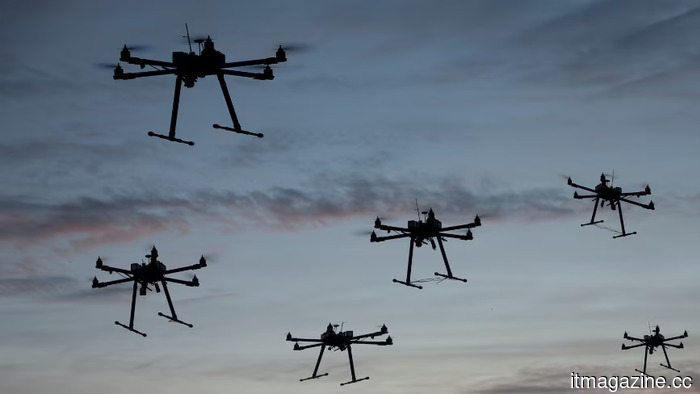 Drone manufacturers compete to develop navigation systems that can withstand jamming in war zones.
Q-CTRL relies on quantum measurements, ASIO utilizes camera vision, and ANELLO has created a laser gyro the size of a matchbook. All these technologies are designed to ensure drones remain on course when GPS signals are blocked.
Drone manufacturers compete to develop navigation systems that can withstand jamming in war zones.
Q-CTRL relies on quantum measurements, ASIO utilizes camera vision, and ANELLO has created a laser gyro the size of a matchbook. All these technologies are designed to ensure drones remain on course when GPS signals are blocked.
 Four ex-DOGE employees secured $160 million in funding at a valuation of $1.4 billion for a startup focused on AI in military cybersecurity.
Cathedral, established by four former DOGE employees, secured $160M in funding from a16z and Sequoia at a valuation of $1.4B. The company develops AI-powered offensive and defensive cyber capabilities for the US military.
Four ex-DOGE employees secured $160 million in funding at a valuation of $1.4 billion for a startup focused on AI in military cybersecurity.
Cathedral, established by four former DOGE employees, secured $160M in funding from a16z and Sequoia at a valuation of $1.4B. The company develops AI-powered offensive and defensive cyber capabilities for the US military.
 Cambridge's planet-scale AI model operates on AMD rather than Nvidia.
Cambridge's TESSERA transforms satellite data into reusable AI embeddings for every 10 meters of the Earth's surface, reducing the need for labeled data by 30 times. It operates on AMD hardware instead of Nvidia.
Cambridge's planet-scale AI model operates on AMD rather than Nvidia.
Cambridge's TESSERA transforms satellite data into reusable AI embeddings for every 10 meters of the Earth's surface, reducing the need for labeled data by 30 times. It operates on AMD hardware instead of Nvidia.
Amazon is revamping Prime Video with increased AI features, but will it address the issues that annoy viewers?
Amazon is experimenting with a redesign of Prime Video that utilizes AI, which may lead to a shift in paid studio placements to be based on algorithm-driven rankings. This has raised concerns about whether the recommendations for viewers will genuinely enhance their experience.