
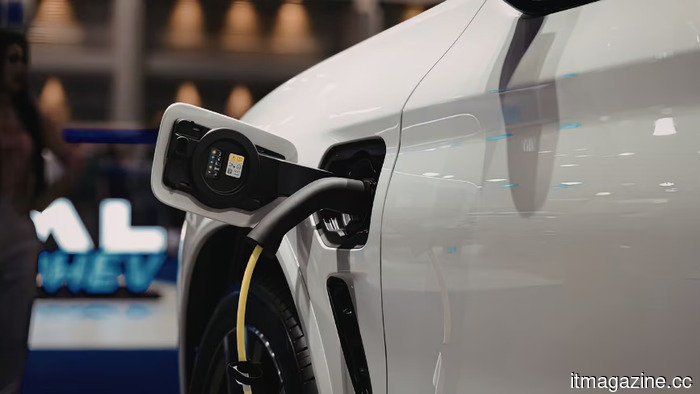
In June, electric vehicle sales in Europe jumped by nearly 40 percent, with their market share exceeding 25 percent.
TL;DR European battery-electric vehicle (BEV) registrations reached 275,060 in June, marking an increase of almost 40 percent, which pushed their market share above 25 percent and first-half sales over 1,240,000.
In June 2026, battery-electric registrations in 17 European markets reached 275,060, representing a nearly 40 percent rise compared to the same month in the previous year, as reported by the E-Mobility Europe bulletin from New AutoMotive. This milestone indicates that EVs surpassed 25 percent of all new car sales in these markets for the first time. Additionally, it concluded the strongest first half on record, with over 1,240,000 battery-electric vehicles registered from January to June, reflecting an increase of more than a third from the same timeframe in 2025.
This growth is fueled by momentum that started earlier this year when oil price surges over $100 a barrel led to a significant shift towards electric vehicles, with March registrations rising 51 percent in 14 key markets. The data from June suggests that this momentum remains strong even as fuel prices have partially declined.
Germany was the leader in registration numbers, with 84,057 battery-electric vehicles in June, resulting in EVs making up more than 28 percent of new car sales in the country. For the first half of the year, German EV registrations rose to 367,388, a nearly 50 percent increase from the same period last year. France saw even more significant proportional growth, with 55,831 EVs registered in June, achieving a record market share of nearly 30 percent, and more than 60 percent year-on-year growth for first-half volumes.
The data also highlighted that different countries are progressing at varying rates. Norway has nearly completed its transition, with EVs representing over 96 percent of new sales in June and almost 98 percent for the first half; however, growth has plateaued as combustion engine vehicles have been nearly entirely eliminated. Ireland reached the 50 percent mark in June for the first time, while Belgium, Denmark, Portugal, Finland, Spain, Slovenia, and Czechia all reported record monthly figures.
Not every market experienced growth; the Netherlands saw first-half registrations drop by nearly 20 percent, a consequence of preemptive purchases ahead of upcoming tax incentive changes at the end of 2025, and Sweden experienced a decline of nearly 11 percent. Although Italy nearly doubled its EV registrations, it remained under seven percent of total sales, reflecting challenges like limited charging infrastructure and a predominance of diesel vehicles.
This growth trend is influenced by multiple supporting factors, including tightening EU CO2 fleet targets through 2027 and the introduction of competitively priced vehicles from Chinese brands. BYD is currently establishing its first European factory in Hungary and is looking for a second production site, indicating that Chinese manufacturers view European EV demand as a long-term opportunity rather than a temporary trend. The competitive landscape is intensifying, with Tesla and BYD vying for global EV leadership, as both traditional European automakers and new Chinese entrants race to capture the growing market.
The key question for Europe’s automotive sector is no longer if electric vehicles will dominate new car sales, but rather who will manufacture them and where. At the present growth rate, battery-electric vehicles are set to make up more than a third of new car sales in Europe by the end of 2027, a milestone that appeared distant as recently as early 2025.
Other articles
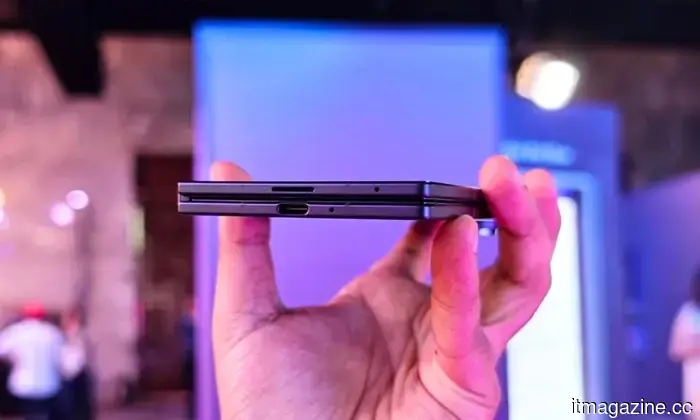 The Galaxy Z Fold 8 Ultra arrives featuring an improved display, a larger battery, and a $100 increase in price.
The new Galaxy Z Fold 8 Ultra from Samsung begins at $2,099.99 and features a clearer display, a larger battery, and an enhanced ultrawide camera, all within a marginally slimmer design.
The Galaxy Z Fold 8 Ultra arrives featuring an improved display, a larger battery, and a $100 increase in price.
The new Galaxy Z Fold 8 Ultra from Samsung begins at $2,099.99 and features a clearer display, a larger battery, and an enhanced ultrawide camera, all within a marginally slimmer design.
 NEURA is constructing gyms to prepare robots for real-world applications.
NEURA Robotics is launching a network of 'gyms' where robots can train in real-world conditions. Their belief is that the main limitation of Physical AI lies in experience rather than intelligence.
NEURA is constructing gyms to prepare robots for real-world applications.
NEURA Robotics is launching a network of 'gyms' where robots can train in real-world conditions. Their belief is that the main limitation of Physical AI lies in experience rather than intelligence.
 OpenAI's Brockman comments that Kimi K3 is "quite good," but does not confirm the distillation process.
Brockman recognized the quality of Kimi K3 in a Bloomberg interview but indicated that it is premature to determine if Moonshot was derived from OpenAI's models.
OpenAI's Brockman comments that Kimi K3 is "quite good," but does not confirm the distillation process.
Brockman recognized the quality of Kimi K3 in a Bloomberg interview but indicated that it is premature to determine if Moonshot was derived from OpenAI's models.
 Revolut reaches a valuation of $115 billion and receives a banking license in Australia.
A secondary share sale has valued Revolut at $115 billion, which is a 53% increase since November, as it secures the first Australian banking license for a global fintech.
Revolut reaches a valuation of $115 billion and receives a banking license in Australia.
A secondary share sale has valued Revolut at $115 billion, which is a 53% increase since November, as it secures the first Australian banking license for a global fintech.
 The White House allocates $5 billion for AI research in the largest federal science reform in 80 years.
Federal agencies have dedicated more than $5 billion to the Genesis Mission, an initiative led by the Energy Department aimed at utilizing AI to speed up research across 278 projects.
The White House allocates $5 billion for AI research in the largest federal science reform in 80 years.
Federal agencies have dedicated more than $5 billion to the Genesis Mission, an initiative led by the Energy Department aimed at utilizing AI to speed up research across 278 projects.
 OpenAI's Brockman describes Kimi K3 as 'quite good' but does not verify the distillation process.
Brockman recognized the quality of Kimi K3 during a Bloomberg interview but mentioned that it is premature to determine if Moonshot is derived from OpenAI's models.
OpenAI's Brockman describes Kimi K3 as 'quite good' but does not verify the distillation process.
Brockman recognized the quality of Kimi K3 during a Bloomberg interview but mentioned that it is premature to determine if Moonshot is derived from OpenAI's models.
In June, electric vehicle sales in Europe jumped by nearly 40 percent, with their market share exceeding 25 percent.
In June, battery-electric vehicle registrations reached 275,060 in 17 European markets, leading to first-half sales exceeding 1,240,000 and a market share surpassing 25 percent.