

The White House allocates $5 billion for AI research in the largest federal science reform in 80 years.
**TL;DR** Federal agencies have allocated over $5 billion to the Genesis Mission, which focuses on funding 278 AI-driven science projects chosen from over 5,000 applications.
Federal agencies have pledged more than $5 billion to the Genesis Mission, an initiative led by the Energy Department aimed at utilizing artificial intelligence to enhance scientific research, as announced by White House science adviser Michael Kratsios on Wednesday. Energy Secretary Chris Wright stated at a summit in Washington that 278 projects were selected from a pool of more than 5,000 applications. More than 15 federal agencies are providing research awards, financial support, datasets, and facilities for this initiative.
Launched under a November 2025 executive order, the Genesis Mission is part of what the administration refers to as the largest mobilization of federal scientific resources since the Apollo program. Dario Gil, Under Secretary for Science and the initiative's director for the Energy Department, noted that the mission unites leading researchers, institutions, and technology partners to cultivate what he described as the next generation of scientific capabilities. According to Gil, the DOE experienced the highest response rate for any program in its history.
The largest individual award amounts to $60 million for a three-year project named Prometheus, which will leverage AI to assist in designing, licensing, manufacturing, and operating nuclear reactors. The project team has secured over $200 million in industry contributions and $30 million in private funding, in addition to the federal investment. Other funded domains encompass biomedical research, energy grid reliability, national security, quantum computing, and manufacturing in microelectronics.
In conjunction with the Genesis Mission announcement, Kratsios presented a report to President Trump titled “Science: A New Golden Age,” which the White House described as the first thorough reassessment of the US science landscape in over 80 years. The report advocates for a shift in federal research funding towards AI-powered research systems and individual scientists, moving away from the historical focus on universities, which have traditionally received the bulk of federally funded research. Agencies with at least $3 billion in research authority must submit implementation plans within 90 days.
This funding shift signifies a strategic initiative to transform approximately $200 billion in annual federal research expenditures. The report references the NIH Director’s Pioneer Award, which grants selected researchers up to $700,000 annually for five years without mandating a detailed experimental plan, as a model for the flexible, investigator-driven funding that the administration seeks to expand. Additionally, the blueprint outlines national missions such as developing commercial fusion power and returning Americans to the Moon by 2028.
This announcement comes amidst escalating competition in AI between the US and China, with a Stanford 2026 AI Index revealing that the performance gap between the leading American and Chinese AI models has narrowed to below three percent, despite the US investing 23 times more in private AI. The Genesis Mission is part of a wider array of recent federal AI initiatives, which includes billions in export financing for US-produced AI infrastructure and executive orders regarding quantum computing, all aimed at sustaining American technological dominance through public funding rather than relying solely on export controls.
Other articles
 Arrakis surfaces from stealth mode with $38 million to integrate AI into factories and supply chains.
Arrakis, based in London, has secured $38 million to develop an AI operating system aimed at industrial firms, believing that factories require AI technology more than office environments do.
Arrakis surfaces from stealth mode with $38 million to integrate AI into factories and supply chains.
Arrakis, based in London, has secured $38 million to develop an AI operating system aimed at industrial firms, believing that factories require AI technology more than office environments do.
 IBM lowers its full-year sales projections following a 42 percent decline in mainframe demand in the second quarter.
IBM reduced its revenue growth projection to four to five percent, down from over five percent, following a 42 percent decline in mainframe sales during the second quarter.
IBM lowers its full-year sales projections following a 42 percent decline in mainframe demand in the second quarter.
IBM reduced its revenue growth projection to four to five percent, down from over five percent, following a 42 percent decline in mainframe sales during the second quarter.
 IBM lowers its full-year revenue forecast following a 42 percent decline in mainframe demand in the second quarter.
IBM has revised its revenue growth outlook to a range of four to five percent, down from over five percent, following a 42 percent decline in mainframe sales during the second quarter.
Cisco's small open-weight AI detects bugs, outperforming Gemini.
Cisco’s open-weight Antares models identify code bugs on your machines. The company asserts that they outperform Gemini and GPT-class systems, being faster and significantly more cost-effective.
IBM lowers its full-year revenue forecast following a 42 percent decline in mainframe demand in the second quarter.
IBM has revised its revenue growth outlook to a range of four to five percent, down from over five percent, following a 42 percent decline in mainframe sales during the second quarter.
Cisco's small open-weight AI detects bugs, outperforming Gemini.
Cisco’s open-weight Antares models identify code bugs on your machines. The company asserts that they outperform Gemini and GPT-class systems, being faster and significantly more cost-effective.
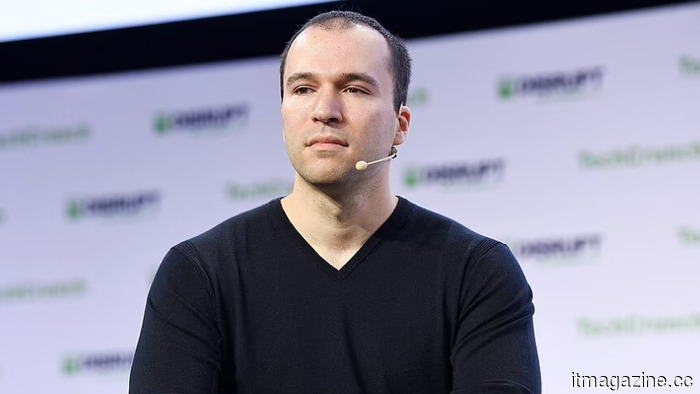 OpenAI's Brockman describes Kimi K3 as 'quite good' but does not verify the distillation process.
Brockman recognized the quality of Kimi K3 during a Bloomberg interview but mentioned that it is premature to determine if Moonshot is derived from OpenAI's models.
OpenAI's Brockman describes Kimi K3 as 'quite good' but does not verify the distillation process.
Brockman recognized the quality of Kimi K3 during a Bloomberg interview but mentioned that it is premature to determine if Moonshot is derived from OpenAI's models.
 AppLovin Supports Velocity As The AI Sector Searches For Growth Beyond Subscriptions
Velocity, supported by AppLovin and a $27 million seed funding round, is developing ad-monetization infrastructure for AI applications, claiming that intent-based advertising can provide funding for free access when subscriptions are inadequate.
AppLovin Supports Velocity As The AI Sector Searches For Growth Beyond Subscriptions
Velocity, supported by AppLovin and a $27 million seed funding round, is developing ad-monetization infrastructure for AI applications, claiming that intent-based advertising can provide funding for free access when subscriptions are inadequate.
The White House allocates $5 billion for AI research in the largest federal science reform in 80 years.
Federal agencies have dedicated more than $5 billion to the Genesis Mission, an initiative led by the Energy Department aimed at utilizing AI to speed up research across 278 projects.