
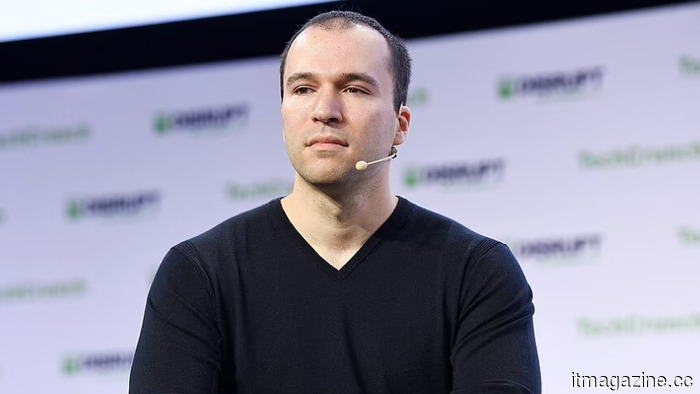
OpenAI's Brockman describes Kimi K3 as 'quite good' but does not verify the distillation process.
In a Bloomberg interview on Tuesday, OpenAI president Greg Brockman referred to Moonshot AI’s Kimi K3 as “pretty good,” marking a rare acknowledgment from a U.S. frontier lab regarding a Chinese competitor developing a comparable model. However, Brockman noted that it is “too early” to decide if K3 was trained by distilling outputs from OpenAI's systems, a practice the company has consistently accused Chinese labs of. His cautious approach contrasted sharply with the White House's earlier allegations against the Chinese startup.
OSTP Director Michael Kratsios accused Moonshot of obtaining banned Nvidia chips via intermediaries in Thailand and conducting large-scale distillation of American AI models, as reported by Bloomberg. This accusation coincided with Treasury Secretary Scott Bessent's statements about the administration's intent to examine Chinese open-source models for potential intellectual property theft, with possible sanctions looming in the coming weeks. Nvidia CEO Jensen Huang countered the concerns, labeling Chinese open models as “excellent” and advocating for American companies to have access to them.
The distillation allegations have been accumulating over recent months. In February, Anthropic claimed that Moonshot, DeepSeek, and MiniMax had conducted around 16 million transactions through approximately 24,000 fake accounts to extract insights from its Claude models. OpenAI has raised similar complaints, and the White House is now reportedly viewing these allegations as a national security issue rather than just a commercial rival dispute.
Brockman positioned OpenAI’s stance around its infrastructure investments, asserting that the U.S. holds a significant advantage due to the billions invested in computing power. He argued that open-weight models like K3 aren't genuinely free, as operating them at scale necessitates expensive hardware, challenging the idea that Chinese labs can easily provide top-tier AI solutions. He estimated that China lags about four months behind the U.S. in overall model development.
K3, which Moonshot released on July 16, boasts nearly three trillion parameters and has caused considerable concern in Washington and Wall Street by matching or surpassing the best American systems on multiple benchmarks. Within 24 hours of its launch, K3 topped Arena’s frontend coding leaderboard, outperforming both Anthropic and OpenAI’s leading models. Moonshot's pricing for K3 is significantly lower than that of U.S. labs, accelerating the commoditization of model layers that investors have warned about since DeepSeek's price reductions earlier this year.
Brockman, who has contributed to a Trump-aligned super PAC, refrained from engaging in the discussion about banning Chinese models. Instead, he emphasized OpenAI’s belief in the importance of open models for “democratizing access to AI,” a view that aligns him more closely with Huang than with the White House officials advocating for sanctions.
Other articles
 Meta escapes a second trial concerning social media addiction as the teenage plaintiff withdraws the lawsuit.
A teenager in Florida dropped his addiction lawsuit against Meta just days before the trial, following settlements with YouTube, TikTok, and Snap, which left Meta as the only defendant.
Monday.com is reducing its workforce by 20 percent as it shifts towards an AI-focused work platform.
Monday.com plans to cut approximately 620 jobs and simplify its management hierarchy as the project management firm pursues what it refers to as the AI Work Platform.
Meta escapes a second trial concerning social media addiction as the teenage plaintiff withdraws the lawsuit.
A teenager in Florida dropped his addiction lawsuit against Meta just days before the trial, following settlements with YouTube, TikTok, and Snap, which left Meta as the only defendant.
Monday.com is reducing its workforce by 20 percent as it shifts towards an AI-focused work platform.
Monday.com plans to cut approximately 620 jobs and simplify its management hierarchy as the project management firm pursues what it refers to as the AI Work Platform.
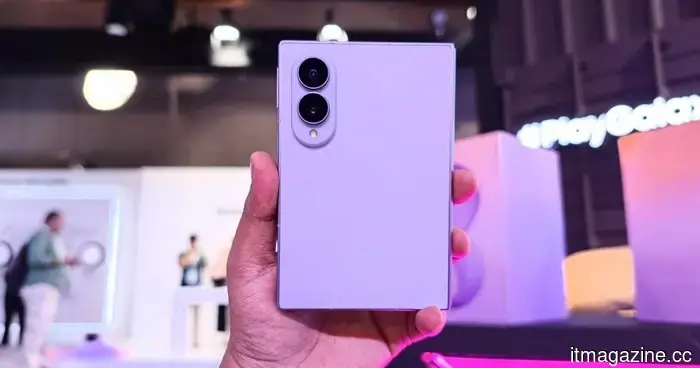 Samsung's Galaxy Z Fold 8 adopts a wider and lighter design to establish a fresh identity for foldable smartphones.
The Galaxy Z Fold 8 marks Samsung's initial wide foldable, designed to be both lighter and more durable than previous models, with a starting price of $1,899.99. Here’s all the latest information.
Samsung's Galaxy Z Fold 8 adopts a wider and lighter design to establish a fresh identity for foldable smartphones.
The Galaxy Z Fold 8 marks Samsung's initial wide foldable, designed to be both lighter and more durable than previous models, with a starting price of $1,899.99. Here’s all the latest information.
 The Galaxy Watch 9 features a new processor, larger batteries, One UI 9 Watch, and a $30 increase in price.
The Galaxy Watch 9 replaces Samsung's Exynos chip with the Snapdragon Wear Elite, introduces FDA-approved health features, and has a starting price of $379.99, which is an increase of $30 compared to the Watch 8.
The Galaxy Watch 9 features a new processor, larger batteries, One UI 9 Watch, and a $30 increase in price.
The Galaxy Watch 9 replaces Samsung's Exynos chip with the Snapdragon Wear Elite, introduces FDA-approved health features, and has a starting price of $379.99, which is an increase of $30 compared to the Watch 8.
 Americans are more opposed to AI data centers than to any other type of building.
A Redfin survey reveals that 53% of Americans are against having an AI data center in their vicinity, more than any other type of construction. However, in Virginia, they are discreetly financing educational institutions.
Americans are more opposed to AI data centers than to any other type of building.
A Redfin survey reveals that 53% of Americans are against having an AI data center in their vicinity, more than any other type of construction. However, in Virginia, they are discreetly financing educational institutions.
OpenAI's Brockman describes Kimi K3 as 'quite good' but does not verify the distillation process.
Brockman recognized the quality of Kimi K3 during a Bloomberg interview but mentioned that it is premature to determine if Moonshot is derived from OpenAI's models.