

BCIs may lead to a new kind of digital divide, one based on biological differences.
As brain-computer interfaces (BCIs) transition from laboratory settings to commercial applications, Herbert Sim, the founder of Neurochip.com, cautions that unequal access could divide individuals not only by wealth or connectivity but also by their physical and cognitive abilities. During the 2026 World Artificial Intelligence Conference in Shanghai, Chinese President Xi Jinping emphasized that advancements in technology must not result in “new historical injustices.” He advocated for a more open and inclusive approach to AI, especially for the Global South, while encouraging governments to ensure that technology remains “secure and controllable.”
While this warning was primarily aimed at artificial intelligence, it may be even more pertinent to technologies that could eventually link AI directly to the human nervous system. BCIs translate neural activity into commands for computers, prosthetics, communication devices, and other technologies. In March, China approved a commercially available implant created by Neuracle Medical Technology for certain patients with spinal cord injuries, a significant step forward for BCIs as they move from experimental testing to real-world healthcare applications.
For Herbert Sim, this advancement raises an often overlooked question: who will have access to this technology? He states, “The initial phase of brain-computer interfaces is medical. The second phase is productivity. The third phase is national competitiveness.” This progression could yield tremendous benefits, such as aiding individuals in regaining movement, facilitating communication post-neurological injury, controlling assistive devices, or interacting with AI more seamlessly. However, it could also establish a hierarchy based on who can utilize neurotechnology for recovery, who can afford enhancements, and who is excluded from both.
The initial digital divide differentiated those with internet access from those without. The AI divide increasingly isolates organizations and countries with advanced technologies, infrastructure, data, and financial resources from those lacking these advantages. The BCI divide could deepen this disparity, impacting learning speed, work, communication, and machine control.
The ethical difference between restoration and enhancement seems straightforward until the same device can achieve both. A neural interface initially designed for rehabilitation could later assist a healthy employee in utilizing software more efficiently. A headset aimed at monitoring fatigue might evolve into a system that ranks productivity. Attention-training devices utilized in educational settings could offer affluent students an additional edge. Employers may subsidize BCIs for valuable staff and expect other employees to compete without such advantages.
This divide will not only be financial; it will also encompass geography, healthcare systems, insurance coverage, regulatory measures, language, disability policies, and access to high-quality neural datasets, all determining who stands to benefit. Sim argues that non-invasive systems could diminish some of these barriers. Neurochip.com currently emphasizes wearable solutions instead of surgical options. Non-invasive BCIs eliminate the need for surgical electrode implantation, although they may encounter challenges regarding signal quality, spatial accuracy, and practical implementation.
Removing the surgical barrier does not inherently create equality, as affordable non-invasive options may still be out of reach. Many valuable features could remain locked behind paywalls. Furthermore, neural data could still be acquired by employers, insurers, governments, or technology companies. An accessible interface risks turning into a tool for surveillance rather than empowerment.
Sim has gained recognition as a thought leader in transhumanism, a belief in the potential of technology to restore or enhance human capabilities. He highlights his longstanding portfolio in this area: Transhumanism.com, founded in 1997; Neurochip.com established in 1999; and GeneticsTechnology.com created in 2002. Records confirm the early inception of Transhumanism.com. His journey into neurotechnology also includes interests in economics through PoliticalEconomics.com, which he founded in 2002 to explore how power is distributed among governments, markets, and institutions. In 2011, he established CounterEconomics.com to focus on economic activities outside conventional state-controlled frameworks, which helped him develop expertise in Bitcoin and cryptocurrency.
He later established the Bitcoin Man® identity through TheBitcoinMan.com. What began as a cryptocurrency persona has evolved into a venture-capital endeavor in 2019, with Sim’s fund now focusing on investments related to BCI research and other transhumanist technologies. This intersection is significant, as access to transformative technologies fundamentally ties into economic issues: who finances it, who owns the supporting infrastructure, who gathers the data, who receives treatment first, and whether the market prioritizes medical necessity or the highest-paying customer.
Sim's influence reaches beyond investment spheres; his @TheBitcoinMan YouTube channel has garnered over 10 million subscribers and earned YouTube’s Diamond Play Button, giving him a broad platform for content spanning cryptocurrency, AI-driven media, and future-oriented topics. “Crypto altered the concept of money,” Sim remarks. “AI is transforming intelligence. Brain-computer interfaces may redefine what it means to be human.”
To prevent a BCI divide, it is imperative to establish regulations before widespread adoption occurs. The protection of neural data may require more stringent safeguards than those typically applied to personal data. Experts have already indicated that merging neurotechnology with
Other articles
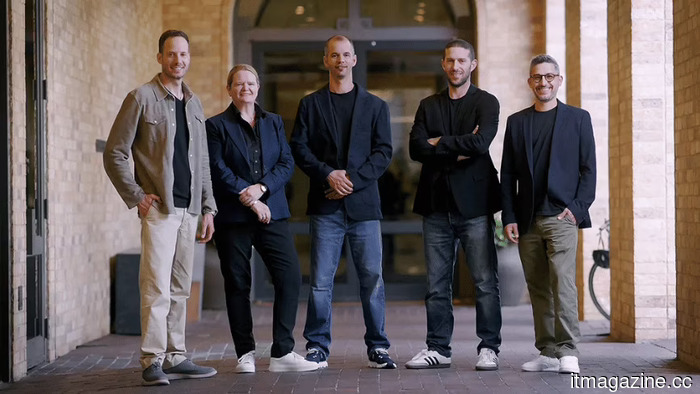 Glow, founded by a former Meta executive, has secured $180 million for its AI-driven endpoint security solutions.
Glow, established by the former Meta VP who developed the Onavo surveillance app, has emerged from stealth mode with a valuation of $1.2 billion to prevent risky software using AI.
Glow, founded by a former Meta executive, has secured $180 million for its AI-driven endpoint security solutions.
Glow, established by the former Meta VP who developed the Onavo surveillance app, has emerged from stealth mode with a valuation of $1.2 billion to prevent risky software using AI.
 Pope Leo's texts confirmed their human authorship by utilizing AI detection tools.
To verify the authenticity of the anti-AI Pope’s statements as human-produced, Proudly Human in Australia authenticated his writings using a set of AI detectors developed from AI technology itself.
Substack incorporates AI detection to combat ‘Claudefishing’.
Substack has teamed up with the detector Pangram, allowing readers to check posts for the proportion of content created by humans compared to AI. This practice is referred to as Claudefishing.
Pope Leo's texts confirmed their human authorship by utilizing AI detection tools.
To verify the authenticity of the anti-AI Pope’s statements as human-produced, Proudly Human in Australia authenticated his writings using a set of AI detectors developed from AI technology itself.
Substack incorporates AI detection to combat ‘Claudefishing’.
Substack has teamed up with the detector Pangram, allowing readers to check posts for the proportion of content created by humans compared to AI. This practice is referred to as Claudefishing.
 Jack Dorsey's Block is challenging Slack by introducing Buzz.
Block’s Buzz is a free and open-source alternative to Slack, where both humans and AI agents collaborate in the same workspace, with each agent having its own portable identity.
Jack Dorsey's Block is challenging Slack by introducing Buzz.
Block’s Buzz is a free and open-source alternative to Slack, where both humans and AI agents collaborate in the same workspace, with each agent having its own portable identity.
 Arrakis unveils $38 million in funding to introduce AI to manufacturing and supply chain operations.
Arrakis, based in London, has secured $38 million to create an AI operating system aimed at industrial firms, believing that factories have a greater need for AI than office workers.
Arrakis unveils $38 million in funding to introduce AI to manufacturing and supply chain operations.
Arrakis, based in London, has secured $38 million to create an AI operating system aimed at industrial firms, believing that factories have a greater need for AI than office workers.
 OpenAI appoints two banking CEOs to its board in anticipation of an upcoming IPO.
OpenAI has appointed Nubank's David Vélez and BNY's Robin Vince to its boards, enhancing its Wall Street credentials as it considers a potential stock market launch in 2027.
OpenAI appoints two banking CEOs to its board in anticipation of an upcoming IPO.
OpenAI has appointed Nubank's David Vélez and BNY's Robin Vince to its boards, enhancing its Wall Street credentials as it considers a potential stock market launch in 2027.
BCIs may lead to a new kind of digital divide, one based on biological differences.
As BCIs transition from research settings to commercial applications, disparities in access may divide individuals not just by their income or connectivity, but also by their physical and cognitive abilities.