
Substack incorporates AI detection to combat ‘Claudefishing’.
Substack has coined a term for the moment when you discover that a post you once appreciated for its authentic voice actually originated from a bot: Claudefishing. In response, it is now providing readers with a button to identify such posts, utilizing the AI detector Pangram.
The newsletter platform has introduced a feature for detecting AI content. In a deliberate post titled “Against Claudefishing,” CEO Chris Best announced that readers can now analyze posts, notes, replies, and comments. The tool assesses the proportion of the text that was written by a person compared to what was generated with AI support.
The scanning feature operates on texts longer than 100 words published from today onward, and results are shown only to those who request them. It is currently available on the web and iOS, with an Android version in development.
Understanding Claudefishing
Best clarifies that the issue does not lie with AI itself. Substack employs AI for developing software and product features and many writers utilize it thoughtfully. The real concern is the disconnect: readers engaging with material that lacks genuine human input. “Claude has much to offer,” he noted. “But when I seek Claude's perspective, I will ask Claude.”
The urgency is increasing. Pangram estimates that nearly 40% of text on certain social platforms is now generated by AI. Substack, which positions itself as a trust-based economic engine for culture, aims to prevent its platform from devolving into that form of content.
Not a ban
The tools are beneficial for both sides. Writers can check their own drafts with the detector prior to publication, include a statement on their creative process, and contest any scan results they believe to be inaccurate. Substack presents this initiative around a straightforward premise: individuals should be aware of what they are accessing.
This is a notably bold move in a landscape overwhelmed with AI-generated content. The post even criticized LinkedIn, seen by many as the epicenter of machine-produced sincerity.
The catch
However, AI detection is not an exact science. While Pangram is reliable, it’s not infallible, and The Atlantic has cautioned that excessive reliance on it could lead to a frenzy of unfounded accusations. Substack recognizes that the tool is unable to discern whether genuine effort was exerted in creating a piece; it can only verify if AI played a role in crafting the text.
Critics take it further. Developer Perry Metzger contended that any detector allows for fine-tuning of AI to bypass it, indicating that such tools may not be sustainable. Researcher Mor Naaman labelled detection as a futile endeavor: if readers utilize scanning tools, writers will adapt and work around them. As one commenter on Substack mentioned, the existence of AI does not inherently mean that human involvement is absent.
A very human business
At its core lies a gamble. As Peter Kafka from Business Insider noted, if AI comes to dominate, “crafted by humans” could become a highly valuable market. Substack is betting that evidence of human contribution will become the rare and marketable commodity. That this debate is unfolding in the realm of newsletters illustrates just how broad and significant the issue has become.
Other articles
 Galaxy Z Fold 8 vs. Galaxy Z Fold 8 Ultra: Is it worth spending an additional $200 for the Ultra model?
The Samsung Fold 8 and Fold 8 Ultra utilize the same chip and storage options, but they differ significantly in terms of camera hardware, screen size, and battery.
Galaxy Z Fold 8 vs. Galaxy Z Fold 8 Ultra: Is it worth spending an additional $200 for the Ultra model?
The Samsung Fold 8 and Fold 8 Ultra utilize the same chip and storage options, but they differ significantly in terms of camera hardware, screen size, and battery.
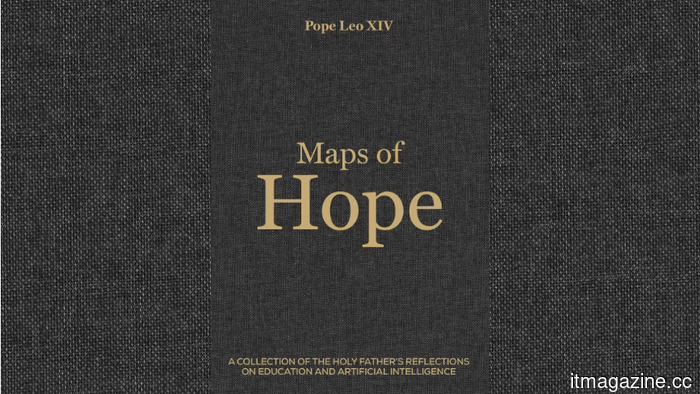 Pope Leo's texts were verified as human by AI detection tools.
To demonstrate that the anti-AI Pope’s statements were composed by a human, Australia’s Proudly Human verified his writings with a set of the AI detectors that have emerged from AI technology.
Pope Leo's texts were verified as human by AI detection tools.
To demonstrate that the anti-AI Pope’s statements were composed by a human, Australia’s Proudly Human verified his writings with a set of the AI detectors that have emerged from AI technology.
 Jack Dorsey's Block is challenging Slack by introducing Buzz.
Block’s Buzz is a free and open-source alternative to Slack, where both humans and AI agents collaborate in the same workspace, with each agent having its own portable identity.
Jack Dorsey's Block is challenging Slack by introducing Buzz.
Block’s Buzz is a free and open-source alternative to Slack, where both humans and AI agents collaborate in the same workspace, with each agent having its own portable identity.
 The Galaxy Watch 9 features a new processor, larger batteries, One UI 9 Watch, and a $30 increase in price.
The Galaxy Watch 9 replaces Samsung's Exynos chip with the Snapdragon Wear Elite, introduces FDA-approved health features, and has a starting price of $379.99, which is an increase of $30 compared to the Watch 8.
The Galaxy Watch 9 features a new processor, larger batteries, One UI 9 Watch, and a $30 increase in price.
The Galaxy Watch 9 replaces Samsung's Exynos chip with the Snapdragon Wear Elite, introduces FDA-approved health features, and has a starting price of $379.99, which is an increase of $30 compared to the Watch 8.
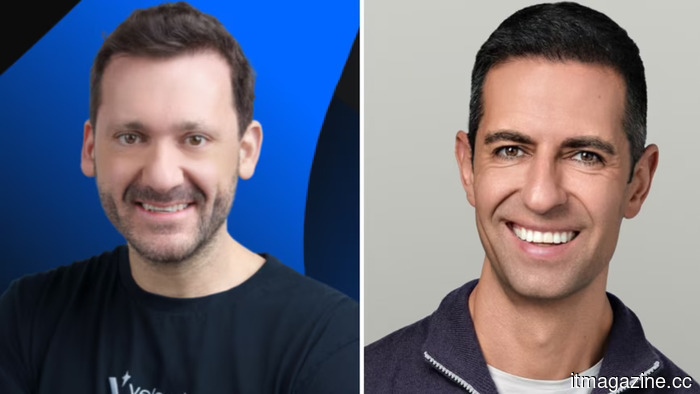 AppLovin Supports Velocity As The AI Sector Searches For Growth Beyond Subscriptions
Velocity, supported by AppLovin and a $27 million seed funding round, is developing ad-monetization infrastructure for AI applications, claiming that intent-based advertising can provide funding for free access when subscriptions are inadequate.
AppLovin Supports Velocity As The AI Sector Searches For Growth Beyond Subscriptions
Velocity, supported by AppLovin and a $27 million seed funding round, is developing ad-monetization infrastructure for AI applications, claiming that intent-based advertising can provide funding for free access when subscriptions are inadequate.
 The Galaxy Z Fold 8 Ultra arrives featuring a more enhanced display, a larger battery, and a $100 increase in price.
The new Galaxy Z Fold 8 Ultra from Samsung begins at a price of $2,099.99 and features a clearer display, larger battery, and enhanced ultrawide camera, all within a slightly thinner design.
The Galaxy Z Fold 8 Ultra arrives featuring a more enhanced display, a larger battery, and a $100 increase in price.
The new Galaxy Z Fold 8 Ultra from Samsung begins at a price of $2,099.99 and features a clearer display, larger battery, and enhanced ultrawide camera, all within a slightly thinner design.
Substack incorporates AI detection to combat ‘Claudefishing’.
Substack has teamed up with the detector Pangram, allowing readers to check posts for the proportion of content created by humans compared to AI. This practice is referred to as Claudefishing.