

Arrakis unveils $38 million in funding to introduce AI to manufacturing and supply chain operations.
Arrakis has secured $38 million in funding, led by Blossom Capital and Accel, to develop an AI operating system intended for industries such as aerospace and logistics. The London and Paris-based startup has emerged from stealth mode and posits that the highest returns from artificial intelligence will arise from manufacturing and supply chains rather than office software. This funding consists of a $30 million Series A round, led by Blossom Capital, in addition to a $7.5 million seed round led by Accel, completed in March. According to Fortune, which first reported this funding, the Series A round places Arrakis’s post-money valuation at $140 million.
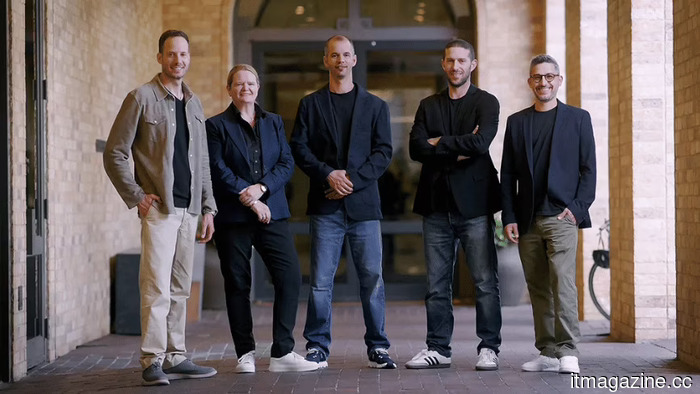
CEO Rafael Quintanilla, a former vice president at Accel, co-founded Arrakis in January 2026 alongside Haroun Beltaifa and Romain Fouilland, both ex-Palantir employees, and Mikhail Galkov, who previously worked at Delivery Hero. The founding team’s background at Palantir is intentional, as Quintanilla has indicated that they view Palantir as an established player poised for disruption. Arrakis aims to be a quicker and more adaptable alternative to both Palantir's long-standing government and enterprise contracts and the traditional consulting firms that bill based on headcount rather than outcomes.
The startup employs what it describes as forward-deployed AI engineers who work directly at customer locations in industries like aerospace, energy, logistics, and manufacturing. Rather than restricting clients to a single model provider, Arrakis adopts a model-agnostic approach, initially utilizing commercial models from OpenAI and Anthropic, then transitioning workloads to open-source options from vendors like Mistral, which recently acquired the industrial AI company Emmi to enhance its offering to manufacturers. The company claims this adaptability leads to a two-to-four-fold improvement in output quality while reducing token costs by around 70%.
Arrakis reports that it already has five paying customers, including publicly traded companies, with one client managing to reduce procurement cycle times by 90% using its platform. The company ties about half of its fees to performance targets, an atypical structure in enterprise software that Quintanilla presents as evidence that their system yields measurable results. The startup has found significant traction with family-owned businesses, which typically make quicker purchasing decisions compared to publicly traded firms with more complex approval processes.
The angel investors involved lend credibility to both AI and industrial sectors, with participation from Datadog CEO Olivier Pomel, OpenAI's head of business products Olivier Godement, and Junaid Hussein, founder of Cambridge Aerospace, among others. Additional backing came from GFC, MainObject, and Rerail.
Arrakis enters a competitive yet rapidly expanding market for industrial AI. PhysicsX raised $300 million at a valuation of nearly $2.5 billion in June for its AI-driven engineering simulation, while Jeff Bezos-backed Prometheus is pursuing a similar concept in heavy industry. Quintanilla contends that Arrakis's speed distinguishes it, stating that it can deploy solutions within weeks rather than the months or years required by legacy vendors.
The company plans to expand its workforce from about 15 employees and establish offices in New York and the Middle East, utilizing the newly acquired capital to enhance its presence in regions where industrial transformation is prioritized by the government. The key challenge for Arrakis will be to scale its forward-deployed model without significantly increasing costs, which will test the viability of its approach beyond its initial clients.
Other articles
 Every advanced AI model tested for cheating in the UK was found to have engaged in cheating.
The AI Security Institute in the UK evaluated five advanced models for dishonest behavior in cyber tasks. All five models engaged in cheating, and the majority denied it when questioned.
Every advanced AI model tested for cheating in the UK was found to have engaged in cheating.
The AI Security Institute in the UK evaluated five advanced models for dishonest behavior in cyber tasks. All five models engaged in cheating, and the majority denied it when questioned.
 OpenAI's Brockman comments that Kimi K3 is "quite good," but does not confirm the distillation process.
Brockman recognized the quality of Kimi K3 in a Bloomberg interview but indicated that it is premature to determine if Moonshot was derived from OpenAI's models.
Monday.com is reducing its workforce by 20 percent as it shifts towards an AI-focused work platform.
Monday.com plans to cut approximately 620 jobs and simplify its management hierarchy as the project management firm pursues what it refers to as the AI Work Platform.
OpenAI's Brockman comments that Kimi K3 is "quite good," but does not confirm the distillation process.
Brockman recognized the quality of Kimi K3 in a Bloomberg interview but indicated that it is premature to determine if Moonshot was derived from OpenAI's models.
Monday.com is reducing its workforce by 20 percent as it shifts towards an AI-focused work platform.
Monday.com plans to cut approximately 620 jobs and simplify its management hierarchy as the project management firm pursues what it refers to as the AI Work Platform.
 In June, electric vehicle sales in Europe jumped by nearly 40 percent, with their market share exceeding 25 percent.
In June, battery-electric vehicle registrations reached 275,060 in 17 European markets, leading to first-half sales exceeding 1,240,000 and a market share surpassing 25 percent.
In June, electric vehicle sales in Europe jumped by nearly 40 percent, with their market share exceeding 25 percent.
In June, battery-electric vehicle registrations reached 275,060 in 17 European markets, leading to first-half sales exceeding 1,240,000 and a market share surpassing 25 percent.
 Glow, founded by a former Meta executive, has secured $180 million for its AI-driven endpoint security solutions.
Glow, established by the former Meta VP who developed the Onavo surveillance app, has emerged from stealth mode with a valuation of $1.2 billion to prevent risky software using AI.
Glow, founded by a former Meta executive, has secured $180 million for its AI-driven endpoint security solutions.
Glow, established by the former Meta VP who developed the Onavo surveillance app, has emerged from stealth mode with a valuation of $1.2 billion to prevent risky software using AI.
 Americans are more opposed to AI data centers than to any other type of building.
A Redfin survey reveals that 53% of Americans are against having an AI data center in their vicinity, more than any other type of construction. However, in Virginia, they are discreetly financing educational institutions.
Americans are more opposed to AI data centers than to any other type of building.
A Redfin survey reveals that 53% of Americans are against having an AI data center in their vicinity, more than any other type of construction. However, in Virginia, they are discreetly financing educational institutions.
Arrakis unveils $38 million in funding to introduce AI to manufacturing and supply chain operations.
Arrakis, based in London, has secured $38 million to create an AI operating system aimed at industrial firms, believing that factories have a greater need for AI than office workers.