
IQE is counting on the demand for AI data centers to propel a 20% increase in sales by 2026.
IQE, the Cardiff-based manufacturer of compound semiconductor wafers, anticipates revenue growth exceeding 20% by 2026, banking on the rising demand from AI data centers for its light-carrying materials to help it recover from a challenging year.
This outlook was shared on July 21 alongside full-year results that highlighted the company's significant challenges. Revenue for 2025 dropped 18% to £97.3 million, down from £118.0 million, with adjusted EBITDA decreasing 60% to £3.2 million, translating to a margin of about 3%.
The prospect of recovery is largely dependent on indium phosphide, the substrate crucial for optical transceivers that connect AI clusters, along with escalating Chinese export restrictions that have made IQE's Western supply more difficult to replace.
The performance within the company showed a stark contrast. Revenue from photonics, covering data-center networking and defense projects, increased 15% to £57.1 million, while the wireless sector, which provides chips for smartphone sensors, plummeted 40% to £40.1 million due to weak handset demand and customers depleting their inventories.
A considerable portion of the growth in photonics originated from the US, where expedited military and defense funding boosted orders throughout the year. The same optical components responsible for transferring data between servers also support sensing and communications equipment for aerospace clients, a market IQE has relied on amidst fluctuating consumer demand.
This demand is structural rather than temporary, linked to the scale of AI clusters being established globally and the fiber connections necessary to sustain them.
The downturn in the wireless sector, partly influenced by US tariffs and a stagnant mobile market, primarily accounts for the revenue decline. IQE's pretax loss remained relatively stable at £37.0 million, compared to £36.9 million the previous year, although operating cash flow improved significantly to £8.1 million from £1.3 million due to reduced capital expenditures.
For 2026, the company projected adjusted EBITDA in the high-single to low-double-digit millions, a deliberately broad range dependent on how swiftly photonics orders are fulfilled. Chief executive Jutta Meier indicated that IQE is “uniquely positioned as a critical enabler of the world’s fastest-growing technology ecosystems” and noted the “growing demand” for its indium phosphide offerings.
These materials have become significant in themselves, as shortages and Beijing's restrictions on indium and gallium exports have driven up raw material costs. Meier mentioned that the firm is collaborating with customers to “share the pain of that pricing” instead of fully transferring the cost increases.
This acknowledgment reflects the reality that the very shortages boosting demand for IQE's products are also impacting its production costs.
The market reacted cautiously to the update, with shares dropping around 5% on the day results were announced to roughly 48p, following a rally that has seen IQE become one of the top-performing stocks in London in 2026, soaring nearly 900% since January. Essentially, investors had already anticipated the recovery the guidance suggests.
Supporting this growth is an £81 million fundraise completed in April, which included £45 million from US chip maker Macom Technology Solutions, which invested through £30 million in equity and £15 million in convertible notes, along with signing long-term supply agreements.
This funding provides IQE—whose wafers are also integrated into the Face ID sensors of Apple’s iPhones—the financial flexibility to increase capacity as orders rise without relying on its lenders. This is particularly significant after a year in which the company had to secure a covenant waiver to stay compliant with its bank.
Moreover, it solidifies the company's standing among the few European producers of these specialized materials at a time when governments on both sides of the Atlantic view semiconductor supply as a strategic priority. This positioning contributes to the stock's strong performance.
Whether the anticipated 20% growth materializes will depend on the wireless sector stabilizing rather than continuing to decline and on data center customers maintaining their order schedules. For now, this projection is more a testament to confidence in demand rather than a return to the profits IQE enjoyed before the downturn.
Other articles
 South Korea is investing $540 billion in a southwestern chip hub that the current power grid is not equipped to support.
South Korea's $540 billion Honam chip cluster offers the potential for AI-era scale, but the rural southwest lacks sufficient power and water resources to support it.
South Korea is investing $540 billion in a southwestern chip hub that the current power grid is not equipped to support.
South Korea's $540 billion Honam chip cluster offers the potential for AI-era scale, but the rural southwest lacks sufficient power and water resources to support it.
 IQE is counting on the demand for AI data centers to propel a 20% increase in sales by 2026.
UK chip manufacturer IQE projected over 20% revenue growth in 2026, driven by rising AI data-center demand for its indium phosphide wafers, which balanced out a 40% decline in the wireless sector.
IQE is counting on the demand for AI data centers to propel a 20% increase in sales by 2026.
UK chip manufacturer IQE projected over 20% revenue growth in 2026, driven by rising AI data-center demand for its indium phosphide wafers, which balanced out a 40% decline in the wireless sector.
 Volvo is launching Apple Music for more than 2 million vehicles through a straightforward OTA update.
Volvo is introducing native support for Apple Music to more than 2 million vehicles, featuring Spatial Audio in certain models and providing free subscription deals.
Volvo is launching Apple Music for more than 2 million vehicles through a straightforward OTA update.
Volvo is introducing native support for Apple Music to more than 2 million vehicles, featuring Spatial Audio in certain models and providing free subscription deals.
 According to the Financial Times, China is considering implementing export restrictions on its artificial intelligence models and chips.
According to the Financial Times, China is reportedly considering imposing export restrictions on its AI models and the chips that power them, although no decisions have been made yet.
According to the Financial Times, China is considering implementing export restrictions on its artificial intelligence models and chips.
According to the Financial Times, China is reportedly considering imposing export restrictions on its AI models and the chips that power them, although no decisions have been made yet.
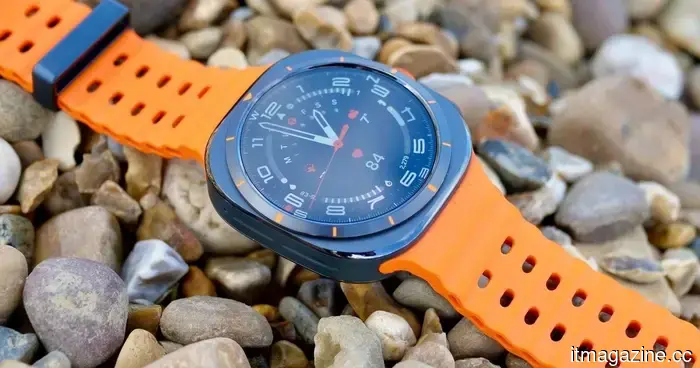 The Galaxy Watch Ultra 2 is set to take the plunge, and the Watch 9 40mm is equipped with a larger battery.
A new leak regarding the Galaxy Watch clarifies a previous assertion about the battery and indicates that the Galaxy Watch Ultra 2 might finally be appropriate for freediving and scuba diving.
The Galaxy Watch Ultra 2 is set to take the plunge, and the Watch 9 40mm is equipped with a larger battery.
A new leak regarding the Galaxy Watch clarifies a previous assertion about the battery and indicates that the Galaxy Watch Ultra 2 might finally be appropriate for freediving and scuba diving.
 I discovered an iPhone app that creates a skincare regimen based on a 30-second facial scan.
This independent iPhone application develops a skincare routine for the morning and evening based on a facial scan, and it adjusts the routine as your scores fluctuate.
I discovered an iPhone app that creates a skincare regimen based on a 30-second facial scan.
This independent iPhone application develops a skincare routine for the morning and evening based on a facial scan, and it adjusts the routine as your scores fluctuate.
IQE is counting on the demand for AI data centers to propel a 20% increase in sales by 2026.
UK chip manufacturer IQE projected over 20% revenue growth in 2026, as demand for its indium phosphide wafers in AI data centers compensates for a 40% decline in the wireless sector.