
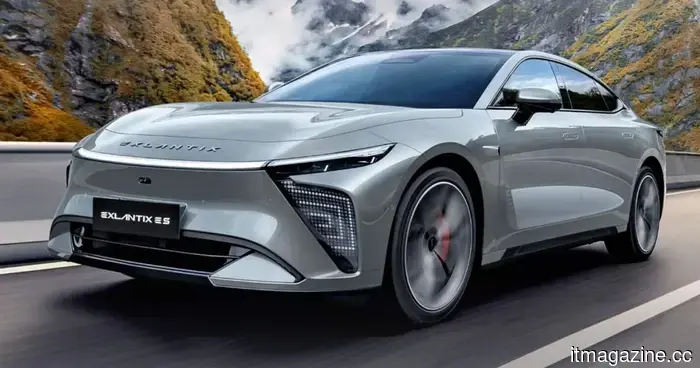
Chery's newest electric vehicle features top-tier technology at the cost of a basic Tesla, but it's not available for purchase.
Here’s everything included in Exeed's 2027 Exlantix ES: an autonomous driving suite with 27 sensors, an impressive 860 km range, all starting at under $31,000.
Chery's premium division has just released a sedan that raises the question of why American electric vehicles are priced at double for far less technology.
The 2027 Exlantix ES features a driver-assist system known as Falcon 700, powered by an Nvidia Orin-Y chip and an extensive suite of sensors.
So, what makes Falcon 700 noteworthy?
It includes 11 cameras, 12 ultrasonic radars, one LiDAR sensor, and three millimeter-wave radars, all working together to facilitate full Navigate on Autopilot for both city and highway driving.
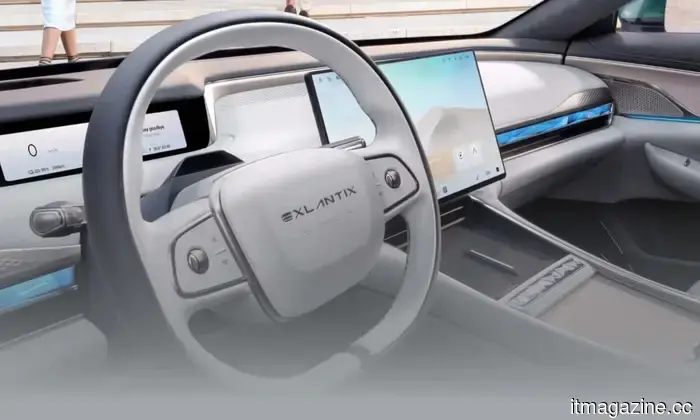
Additionally, it is complemented by a Qualcomm Snapdragon 8295P cockpit chip utilizing Chery’s Carmind AI model, ensuring the cabin's voice assistant is significantly more responsive than typical systems found in vehicles at this price range.
Pricing ranges from 179,900 to 209,900 yuan, roughly translating to $26,500 to $30,900. This allows buyers to choose between extended-range EREV and pure BEV configurations. For comparison, the least expensive Tesla Model 3 in the U.S. starts at about $39,000 before incentives.
What do you actually get for under $31,000?
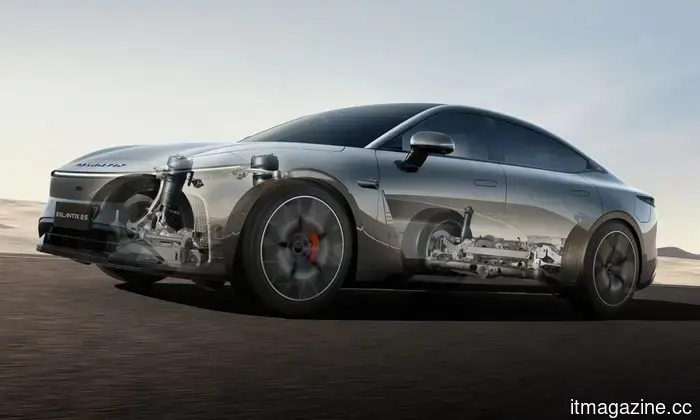
The EREV Max generates 305 horsepower and offers a 188-mile all-electric range, while the AWD EREV Ultra increases output to 463 horsepower. Conversely, the BEV Max delivers an impressive range of 534 miles from a 100.2 kWh battery.
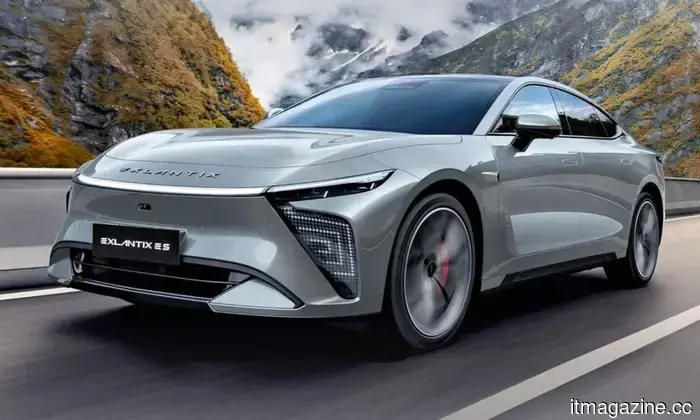
With the gasoline engine, EREV models can achieve a total range exceeding 994 miles. The design features a fastback shape and frameless doors, along with two new paint colors and an optional Shadow sport kit that includes interactive headlights and an electric spoiler.
It remains uncertain whether the Exlantix ES will reach markets outside of China anytime soon, but if it does, U.S. consumers are likely to be interested.
What stands out is not just the specifications but that Chery offers this sensor suite as standard across the entire lineup, rather than limiting it to higher-end trims. This strategy, common among Chinese automakers competing primarily on value, continues to challenge established brands.
For over five years, Shikhar has continuously clarified advancements in consumer technology.
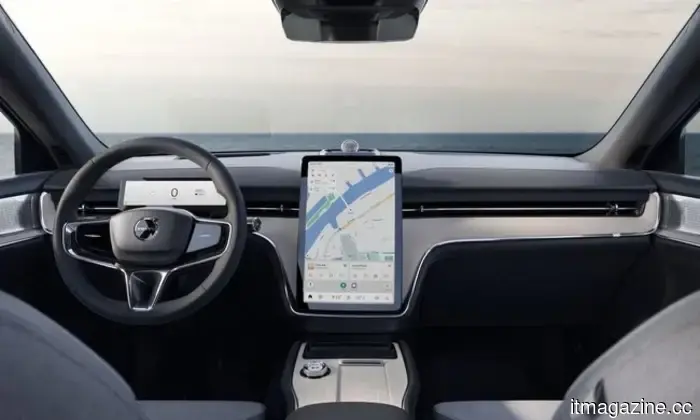
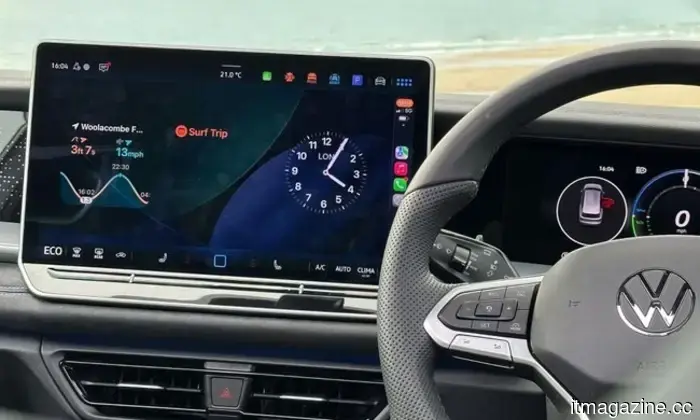
Volvo is introducing Apple Music to over 2 million vehicles through a straightforward OTA update.
Your Volvo might soon be able to access Apple Music without the need for CarPlay.
The distinction between your smartphone and car continues to diminish. Volvo has announced an over-the-air software update that will integrate Apple Music into the infotainment systems of over 2 million vehicles globally. Instead of depending on Apple CarPlay or connecting to an iPhone, qualified drivers will be able to stream music directly through their car's native system, with Apple Music becoming another feature of Volvo's software experience.
The update will be available for a variety of Volvo models, including the EX90, ES90, XC90, S90, V90, XC60, S60, V60, XC40, EX40, and EC40, covering models from the year 2020 onwards. However, availability might differ by vehicle.
A new AI model aims to teach self-driving cars to consider before making abrupt maneuvers.
This self-driving AI actually demonstrates its reasoning instead of playing guessing games.
Self-driving vehicles have improved significantly in their driving capabilities. The more complex challenge is training them to operate safely in unforeseen circumstances. There have been alarming accounts of self-driving cars acting unpredictably in emergencies, sometimes hindering first responders from reaching affected areas.
Researchers at Seoul National University, led by Professor Jun Won Choi from the Department of Electrical and Computer Engineering, believe they have made strides in solving part of this issue with a new AI model named SafeDrive. This research was recently recognized as a highlight paper at CVPR 2026, an honor granted to only about 3% of submitted papers.
Your next car could receive software updates like your smartphone, but this brings potential cybersecurity risks.
Modern vehicles are no longer static machines after leaving the showroom. They are increasingly becoming software-defined, receiving new features, bug fixes, and security updates wirelessly, similarly to smartphones. While over-the-air (OTA) updates have simplified vehicle maintenance and reduced costs, cybersecurity experts warn that this same technology may pose significant security threats to the automotive industry.
Researchers and policymakers are advocating for more stringent regulations as connected vehicles rely more on remote software updates. Their worries extend beyond hackers accessing personal data to the possibility of someone interfering with a vehicle's operation while it is in motion.


Other articles
 A vulnerability in the Shark vacuum that hasn't been fixed could jeopardize the security of your smart home.
A recently revealed vulnerability in SharkNinja devices may allow attackers to gain access to robot vacuum cameras, home mapping data, and Wi-Fi passwords due to an unaddressed cloud security issue that impacts millions of units.
A vulnerability in the Shark vacuum that hasn't been fixed could jeopardize the security of your smart home.
A recently revealed vulnerability in SharkNinja devices may allow attackers to gain access to robot vacuum cameras, home mapping data, and Wi-Fi passwords due to an unaddressed cloud security issue that impacts millions of units.
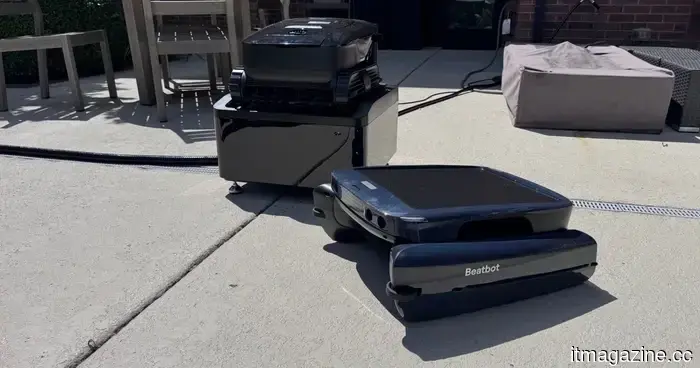 Beatbot AquaSense X review: The pool cleaner for those who enjoy a touch of luxury.
Equipped with a self-cleaning dock and AI navigation, the Beatbot AquaSense X is the pinnacle of luxury pool cleaners, assuming you're willing to spend a significant amount for the ease it provides.
Beatbot AquaSense X review: The pool cleaner for those who enjoy a touch of luxury.
Equipped with a self-cleaning dock and AI navigation, the Beatbot AquaSense X is the pinnacle of luxury pool cleaners, assuming you're willing to spend a significant amount for the ease it provides.
 NVIDIA's latest AI technology can identify deepfake videos in only 22 milliseconds.
NVIDIA has launched the Synthetic Video Detector, an AI tool capable of identifying AI-generated videos with an accuracy of up to 92% within milliseconds.
NVIDIA's latest AI technology can identify deepfake videos in only 22 milliseconds.
NVIDIA has launched the Synthetic Video Detector, an AI tool capable of identifying AI-generated videos with an accuracy of up to 92% within milliseconds.
 The surge in AI game development has a negative aspect: it results in fewer employment opportunities for newcomers.
AI tools are assisting independent game developers in creating and launching games more rapidly; however, writers, artists, and junior programmers are encountering a decline in opportunities in a progressively competitive field.
The surge in AI game development has a negative aspect: it results in fewer employment opportunities for newcomers.
AI tools are assisting independent game developers in creating and launching games more rapidly; however, writers, artists, and junior programmers are encountering a decline in opportunities in a progressively competitive field.
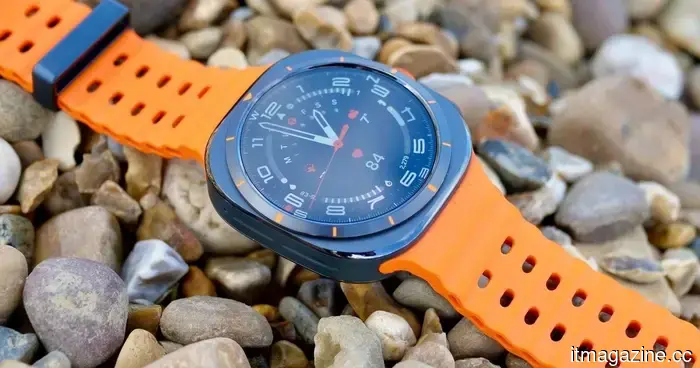 The Galaxy Watch Ultra 2 is set to take the plunge, and the Watch 9 40mm is equipped with a larger battery.
A new leak regarding the Galaxy Watch clarifies a previous assertion about the battery and indicates that the Galaxy Watch Ultra 2 might finally be appropriate for freediving and scuba diving.
The Galaxy Watch Ultra 2 is set to take the plunge, and the Watch 9 40mm is equipped with a larger battery.
A new leak regarding the Galaxy Watch clarifies a previous assertion about the battery and indicates that the Galaxy Watch Ultra 2 might finally be appropriate for freediving and scuba diving.
 A vulnerability in the Shark vacuum that hasn't been fixed may jeopardize your smart home security.
A recently revealed vulnerability in SharkNinja may allow attackers to gain access to robot vacuum cameras, home layouts, and Wi-Fi passwords due to an unaddressed cloud security issue impacting millions of devices.
A vulnerability in the Shark vacuum that hasn't been fixed may jeopardize your smart home security.
A recently revealed vulnerability in SharkNinja may allow attackers to gain access to robot vacuum cameras, home layouts, and Wi-Fi passwords due to an unaddressed cloud security issue impacting millions of devices.
Chery's newest electric vehicle features top-tier technology at the cost of a basic Tesla, but it's not available for purchase.
Chery's Exeed has introduced the 2027 Exlantix ES, featuring a Falcon 700 driving system powered by Nvidia hardware, along with EREV and BEV options, and a starting price of approximately $26,500.