

The surge in AI game development has a negative aspect: it results in fewer employment opportunities for newcomers.
AI is making it simpler than ever for individuals to create games. This seems to enhance creativity, which it certainly does in many aspects. However, there is a downside. As generative AI tools enable solo developers and small studios to achieve more with fewer people, the same shift complicates things for writers, artists, concept creators, and junior programmers aiming to enter the gaming industry.
AI is empowering solo developers
A recent report by Rest of World reveals that developers in Turkey are increasingly turning to AI tools to take on tasks that previously required larger teams. Emirhan Gül, a developer, mentioned that tools like Claude Code assist him in managing coding, game design, social media, and other daily tasks while working with a small team.
Another solo developer, Ender Tınkır, explained that he employs a combination of Microsoft Copilot, OpenAI Codex, and Claude Cowork to create games with considerably less traditional programming or design assistance. For him, AI not only accelerated the workflow but also diminished the gap between having a concept and actually launching a playable product.
“Rather than hiring five junior programmers at the startup where he’s employed, my developer friend completes all the tasks himself using AI.” — Nazım Adaklı, lecturer on AI in games at Istanbul’s Bahçeşehir University.
This signifies a significant change in independent game development. A small studio can now prototype more rapidly, experiment more freely, and possibly release a game without needing the substantial budget that would have been essential just a few years prior. Indeed, AI and “vibe coding” are contributing to an influx of new game releases, even though this does not inherently mean those games are superior or more successful.
More games do not necessarily equal more opportunities
The same technology that facilitates solo development can also diminish the need for junior positions at larger studios. The report indicates that writers, artists, concept designers, and entry-level programmers are among those facing the most direct impact. The issue is not just that AI can create code, art, or text; it’s that companies may increasingly opt to hire fewer individuals when a smaller team can utilize AI tools to manage repetitive or support-heavy tasks.
For junior developers, this creates a particularly challenging scenario. Traditionally, entry-level roles allowed programmers, artists, or writers to learn the trade, build their portfolios, and gradually progress to more senior positions. If these roles become scarce, the industry risks severing the crucial pipeline that nurtures future talent. This situation arises within a gaming industry already grappling with widespread layoffs and job insecurity. Many game developers have expressed skepticism towards generative AI, particularly as studios continue to reduce staff while adopting new automation technologies.
On a more positive note, AI can provide individual developers with the freedom to create a game without relying on a publisher, a large team, or extensive funding. This could result in more unconventional, personal, and experimental games reaching players. However, the report also clearly states: easier game development does not ensure an easier career. With more people able to build games, the market is becoming increasingly saturated, competitive, and harder to thrive in.


Other articles
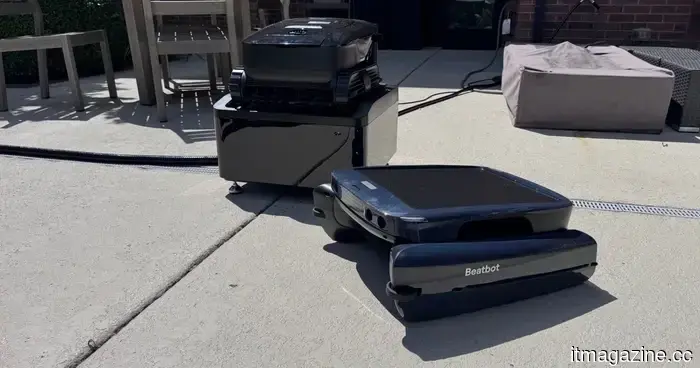 Beatbot AquaSense X review: The pool cleaner for those who enjoy a touch of luxury.
Equipped with a self-cleaning dock and AI navigation, the Beatbot AquaSense X is the pinnacle of luxury pool cleaners, assuming you're willing to spend a significant amount for the ease it provides.
Beatbot AquaSense X review: The pool cleaner for those who enjoy a touch of luxury.
Equipped with a self-cleaning dock and AI navigation, the Beatbot AquaSense X is the pinnacle of luxury pool cleaners, assuming you're willing to spend a significant amount for the ease it provides.
 Chery's newest electric vehicle features top-tier technology at the cost of a basic Tesla, but it's not available for purchase.
Chery's Exeed has introduced the 2027 Exlantix ES, featuring a Falcon 700 driving system powered by Nvidia hardware, along with EREV and BEV options, and a starting price of approximately $26,500.
Chery's newest electric vehicle features top-tier technology at the cost of a basic Tesla, but it's not available for purchase.
Chery's Exeed has introduced the 2027 Exlantix ES, featuring a Falcon 700 driving system powered by Nvidia hardware, along with EREV and BEV options, and a starting price of approximately $26,500.
 A vulnerability in the Shark vacuum that hasn't been fixed could jeopardize the security of your smart home.
A recently revealed vulnerability in SharkNinja devices may allow attackers to gain access to robot vacuum cameras, home mapping data, and Wi-Fi passwords due to an unaddressed cloud security issue that impacts millions of units.
A vulnerability in the Shark vacuum that hasn't been fixed could jeopardize the security of your smart home.
A recently revealed vulnerability in SharkNinja devices may allow attackers to gain access to robot vacuum cameras, home mapping data, and Wi-Fi passwords due to an unaddressed cloud security issue that impacts millions of units.
 NVIDIA's latest AI technology can identify deepfake videos in only 22 milliseconds.
NVIDIA has launched the Synthetic Video Detector, an AI tool capable of identifying AI-generated videos with an accuracy of up to 92% within milliseconds.
NVIDIA's latest AI technology can identify deepfake videos in only 22 milliseconds.
NVIDIA has launched the Synthetic Video Detector, an AI tool capable of identifying AI-generated videos with an accuracy of up to 92% within milliseconds.
 A vulnerability in the Shark vacuum that hasn't been fixed may jeopardize your smart home security.
A recently revealed vulnerability in SharkNinja may allow attackers to gain access to robot vacuum cameras, home layouts, and Wi-Fi passwords due to an unaddressed cloud security issue impacting millions of devices.
A vulnerability in the Shark vacuum that hasn't been fixed may jeopardize your smart home security.
A recently revealed vulnerability in SharkNinja may allow attackers to gain access to robot vacuum cameras, home layouts, and Wi-Fi passwords due to an unaddressed cloud security issue impacting millions of devices.
 IQE is counting on the demand for AI data centers to propel a 20% increase in sales by 2026.
UK chip manufacturer IQE projected over 20% revenue growth in 2026, as demand for its indium phosphide wafers in AI data centers compensates for a 40% decline in the wireless sector.
IQE is counting on the demand for AI data centers to propel a 20% increase in sales by 2026.
UK chip manufacturer IQE projected over 20% revenue growth in 2026, as demand for its indium phosphide wafers in AI data centers compensates for a 40% decline in the wireless sector.
The surge in AI game development has a negative aspect: it results in fewer employment opportunities for newcomers.
AI tools are assisting independent game developers in creating and launching games more rapidly; however, writers, artists, and junior programmers are encountering a decline in opportunities in a progressively competitive field.