
NVIDIA's latest AI technology can identify deepfake videos in only 22 milliseconds.
As generative AI advances to create videos that closely resemble real footage, the challenge has shifted from merely producing synthetic media to detecting it prior to its dissemination.
During SIGGRAPH 2026, NVIDIA introduced the Synthetic Video Detector, an innovative AI-driven tool designed to swiftly and accurately identify AI-generated videos. According to the company, this technology is not meant to replace conventional fact-checking or forensic analysis but to provide newsrooms, broadcasters, and enterprises with an added level of assurance before synthetic videos are made public.
This announcement coincides with the growing realism of deepfake videos, complicating the ability of individuals and automated systems to discern authenticity. From distorted political speeches to AI-created celebrity videos and fabricated news segments, synthetic media has swiftly transformed from a mere internet novelty into a significant obstacle for journalism, cybersecurity, and public trust.
NVIDIA aims to utilize AI to combat AI-generated misinformation.
The Synthetic Video Detector is being rolled out as part of NVIDIA’s NIM microservices, enabling organizations to incorporate AI-powered video verification into their current workflows instead of constructing entirely new moderation platforms.
This system analyzes videos frame by frame and assigns a probability score to indicate whether the footage has been generated or altered by AI. NVIDIA claims the detector can process a 1080p video in as little as 22 milliseconds on RTX systems, facilitating real-time or nearly real-time analysis in production settings.
Performance is another key feature highlighted. NVIDIA asserts that the detector achieves up to 92% accuracy on uncompressed videos, with accuracy decreasing to 87% for videos compressed by 15% and 82% for 50% compression. Compression poses a significant challenge for deepfake detection since platforms like YouTube, TikTok, and Instagram commonly compress uploaded videos, often eliminating subtle visual cues that detection models depend on.
The company also notes that the latest version ranks at the top of the AI GVD Bench, a benchmark for assessing synthetic media detection systems, indicating its competitive performance against current open-source and commercial alternatives. The benchmark chart presented by NVIDIA shows the detector outperforming many established models from various AI video generators.
Detecting deepfakes is becoming as crucial as generating them.
This launch signifies a broader transition within the AI sector. In the last two years, companies have heavily invested in video generation models that can create photorealistic clips from simple text prompts.
While these systems offer new creative avenues for filmmaking, advertising, and education, they have also significantly reduced the effort required to produce believable misinformation.
For news organizations, the situation is particularly pressing. A single fake video shared online during an election, natural disaster, or geopolitical upheaval can spread worldwide before human fact-checkers can authenticate it. This is why verification tools are now regarded as equally important as the generative models they aim to identify.
NVIDIA admits that its detector is not a comprehensive solution. The company emphasizes that the system is designed to support existing editorial verification processes rather than replace them. Human oversight, source verification, and contextual reporting will still be vital, especially as generative AI models continue to enhance.
Looking ahead, NVIDIA intends to integrate the Synthetic Video Detector into Wowza’s Intelligence Video Framework, expanding the technology's availability across over 35,000 deployments in 170 countries.
As generating AI-produced videos becomes more affordable, quicker, and more convincing, the fight against misinformation is transitioning into a new phase. Developing better AI represents only half of the solution; the other half may involve creating AI systems capable of alerting us when we shouldn’t trust what we see.


Other articles
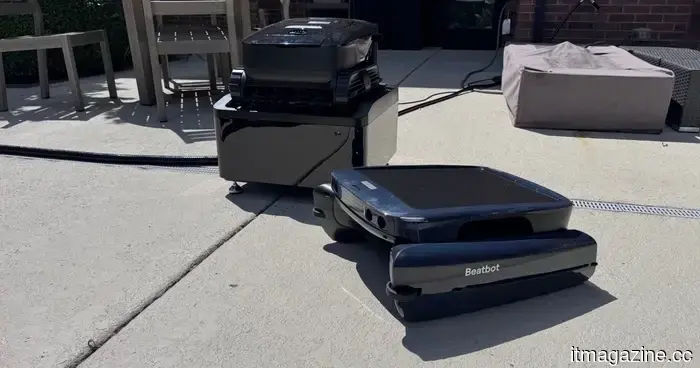 Beatbot AquaSense X review: The pool cleaner for those seeking a luxurious experience.
Equipped with a self-cleaning dock and AI navigation, the Beatbot AquaSense X is the pinnacle of luxury in pool cleaning, provided you're willing to spend significantly for that convenience.
Beatbot AquaSense X review: The pool cleaner for those seeking a luxurious experience.
Equipped with a self-cleaning dock and AI navigation, the Beatbot AquaSense X is the pinnacle of luxury in pool cleaning, provided you're willing to spend significantly for that convenience.
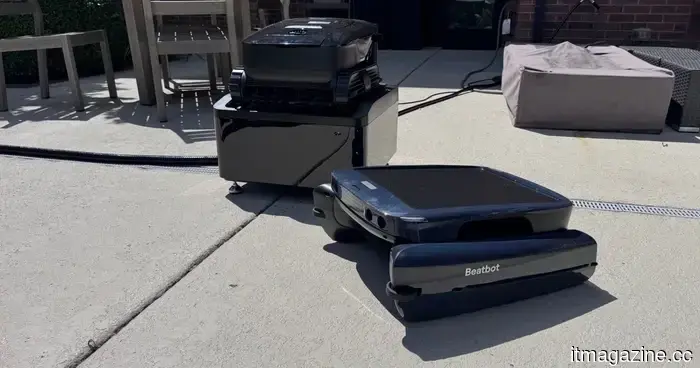 Beatbot AquaSense X review: The pool cleaner for those who enjoy a touch of luxury.
Equipped with a self-cleaning dock and AI navigation, the Beatbot AquaSense X is the pinnacle of luxury pool cleaners, assuming you're willing to spend a significant amount for the ease it provides.
Beatbot AquaSense X review: The pool cleaner for those who enjoy a touch of luxury.
Equipped with a self-cleaning dock and AI navigation, the Beatbot AquaSense X is the pinnacle of luxury pool cleaners, assuming you're willing to spend a significant amount for the ease it provides.
 New YouTube guidelines aim to eliminate poorly made AI content and clickbait tactics.
In a significant step to safeguard viewer engagement and advertiser investments, YouTube has revised its monetization policies to cut off revenue from subpar, AI-generated content. The streaming powerhouse is adjusting the regulations surrounding its profitable YouTube Partner Program (YPP) to specifically address “inauthentic content” that is created solely for low-effort content farming. Instead of prohibiting artificial intelligence […]
New YouTube guidelines aim to eliminate poorly made AI content and clickbait tactics.
In a significant step to safeguard viewer engagement and advertiser investments, YouTube has revised its monetization policies to cut off revenue from subpar, AI-generated content. The streaming powerhouse is adjusting the regulations surrounding its profitable YouTube Partner Program (YPP) to specifically address “inauthentic content” that is created solely for low-effort content farming. Instead of prohibiting artificial intelligence […]
 Call of Duty: NEXT has returned, and it will launch the beta for Modern Warfare 4.
Activision has announced that Call of Duty: NEXT will be back on August 21, launching the beta for Modern Warfare 4 along with new multiplayer gameplay, announcements, and insights from developers.
Call of Duty: NEXT has returned, and it will launch the beta for Modern Warfare 4.
Activision has announced that Call of Duty: NEXT will be back on August 21, launching the beta for Modern Warfare 4 along with new multiplayer gameplay, announcements, and insights from developers.
 The Galaxy Watch Ultra 2 is set to take the plunge, and the Watch 9 40mm is equipped with a larger battery.
A new leak regarding the Galaxy Watch clarifies a previous assertion about the battery and indicates that the Galaxy Watch Ultra 2 might finally be appropriate for freediving and scuba diving.
The Galaxy Watch Ultra 2 is set to take the plunge, and the Watch 9 40mm is equipped with a larger battery.
A new leak regarding the Galaxy Watch clarifies a previous assertion about the battery and indicates that the Galaxy Watch Ultra 2 might finally be appropriate for freediving and scuba diving.
 The latest handheld from ONEXPLAYER features the AMD Ryzen AI Max+ 388 and liquid cooling, priced quite steeply.
ONEXPLAYER has begun selling the X2 Mini Pro directly, featuring up to 64GB of RAM, an AMD Ryzen AI Max+ 388 processor, optional liquid cooling, with prices going up to $3,229.
The latest handheld from ONEXPLAYER features the AMD Ryzen AI Max+ 388 and liquid cooling, priced quite steeply.
ONEXPLAYER has begun selling the X2 Mini Pro directly, featuring up to 64GB of RAM, an AMD Ryzen AI Max+ 388 processor, optional liquid cooling, with prices going up to $3,229.
NVIDIA's latest AI technology can identify deepfake videos in only 22 milliseconds.
NVIDIA has launched the Synthetic Video Detector, an AI tool capable of identifying AI-generated videos with an accuracy of up to 92% within milliseconds.