
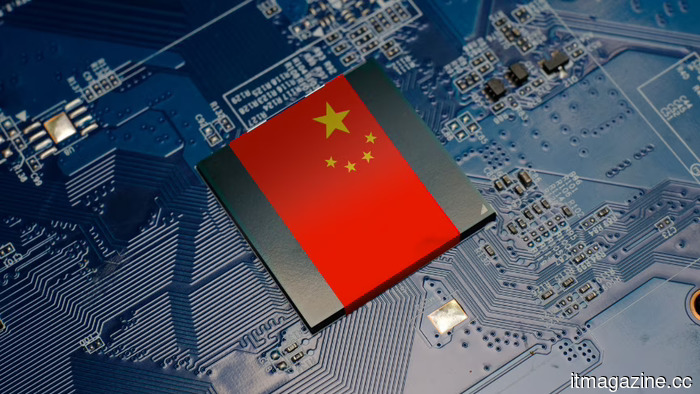
According to the Financial Times, China is considering implementing export restrictions on its own AI models and chips.
China is contemplating stricter export controls on its domestically developed artificial intelligence models and the associated chips that operate them, as reported by the Financial Times. This would elevate Beijing's technological defenses beyond the raw materials and equipment it currently protects.
The newspaper, referencing two sources involved in the discussions, mentioned that regulators from the Ministry of Commerce have been in consultation with prominent domestic AI and chip manufacturing companies regarding potential safeguards. No decisions have been made yet, and it remains uncertain if or when any measures would be implemented.
This dialogue indicates that the world's second-largest economy is beginning to view its most advanced AI as an asset to safeguard rather than share, reflecting the American restrictions that originally pushed Chinese companies towards custom ASICs.
As per the FT, officials are considering revising the export lists for AI- and chip-related products, establishing clearer licensing criteria, increasing checks on end users, and imposing stricter requirements for transferring technology abroad. The intended goal, according to the report, is to prevent China’s most sophisticated systems and rapidly growing startups from being acquired by Western entities.
The chip aspect is a newer development. While Beijing already limits exports of rare earth elements and certain semiconductor materials, including finished AI accelerators and their trained models in a formal licensing framework would signify a significant shift in its industrial policy approach.
Much of the groundwork for these discussions was laid earlier this month. Reuters reported that the commerce ministry had engaged with Alibaba, ByteDance, and the startup Z.ai regarding restricting international access to their premier systems, including Alibaba’s Qwen, ByteDance’s Doubao, and Z.ai’s GLM-5.2.
According to Reuters, these discussions addressed both closed and open-weight models and proposed a tiered review system that could keep advanced systems entirely within China.
For now, specific details are scarce. The sources cited by the FT did not clarify which chips would be affected, what performance standards might be set, or how open-source releases would be managed, and the ministry has yet to release a draft.
China’s commerce ministry has not publicly commented on the report, nor have the companies mentioned in the earlier talks confirmed the discussions. This silence is noteworthy, as Beijing typically does not signal export policy shifts before they are finalized, and officials have indicated to Reuters that any restrictions might only pertain to future models.
This situation unfolds against the backdrop of a chip conflict that has intensified over recent years. Washington has progressively tightened its own regulations, most recently addressing the loophole that allowed Nvidia's top chips to reach Chinese buyers through overseas subsidiaries, while urging allies to restrict access to chip-making equipment.
Beijing has responded with restrictions on rare earths and antitrust investigations and now appears to be exploring its own regulatory tools.
If China establishes an AI export regime, the repercussions would extend beyond the United States. As noted by The Decoder, European developers and smaller firms that had started relying on China's freely available models as an economical alternative to American services may find that option becoming less accessible.
The next steps, if any are forthcoming, involve a licensing framework and the specifics that would outline it. Analysts anticipate that any regulations would concentrate on high-performance systems and future model generations rather than existing software currently in use, although the FT's sources warned that these plans could still evolve or be postponed.
There is also a bargaining aspect to consider. Some analysts interpret the current maneuvering as leverage for a broader trade agreement, particularly since Beijing has independently urged Washington to ease its chip restrictions.
For a country that has spent the last decade opposing export controls aimed at it, developing its own would represent a significant shift. Whether this approach solidifies into a strict barrier or remains a bargaining tool is still uncertain, as suggested by the report, which emphasizes that clarity may not emerge until officials formalize their intentions in writing.
Other articles
 I discovered an iPhone app that creates a skincare regimen based on a 30-second facial scan.
This independent iPhone application develops a skincare routine for the morning and evening based on a facial scan, and it adjusts the routine as your scores fluctuate.
I discovered an iPhone app that creates a skincare regimen based on a 30-second facial scan.
This independent iPhone application develops a skincare routine for the morning and evening based on a facial scan, and it adjusts the routine as your scores fluctuate.
 France edges closer to prohibiting social media access for those under 15.
A cross-party committee has endorsed France's legislation to prohibit those under 15 from using social media, setting the stage for a final vote ahead of the summer break.
France edges closer to prohibiting social media access for those under 15.
A cross-party committee has endorsed France's legislation to prohibit those under 15 from using social media, setting the stage for a final vote ahead of the summer break.
 Samsung introduces its inaugural credit card in the US in partnership with Barclays, marking its most significant step into the financial sector to date.
Samsung's inaugural credit card in the US, the Galaxy Card issued by Barclays, offers up to 5% cash back when used within Samsung Wallet. Here's how it functions and what's on the horizon.
Samsung introduces its inaugural credit card in the US in partnership with Barclays, marking its most significant step into the financial sector to date.
Samsung's inaugural credit card in the US, the Galaxy Card issued by Barclays, offers up to 5% cash back when used within Samsung Wallet. Here's how it functions and what's on the horizon.
 Google Photos introduces a convenient switch between AI and traditional search.
Individuals who have chosen to use Ask Photos can now toggle between results powered by Gemini and standard search results directly from the results page.
Google Photos introduces a convenient switch between AI and traditional search.
Individuals who have chosen to use Ask Photos can now toggle between results powered by Gemini and standard search results directly from the results page.
 After months of anticipation, WhatsApp’s Liquid Glass redesign is finally set to arrive on Mac.
WhatsApp has started implementing its redesign for Mac, inspired by Liquid Glass, which features an updated interface, enhanced navigation, and specific sections for Locked Chats and Communities.
After months of anticipation, WhatsApp’s Liquid Glass redesign is finally set to arrive on Mac.
WhatsApp has started implementing its redesign for Mac, inspired by Liquid Glass, which features an updated interface, enhanced navigation, and specific sections for Locked Chats and Communities.
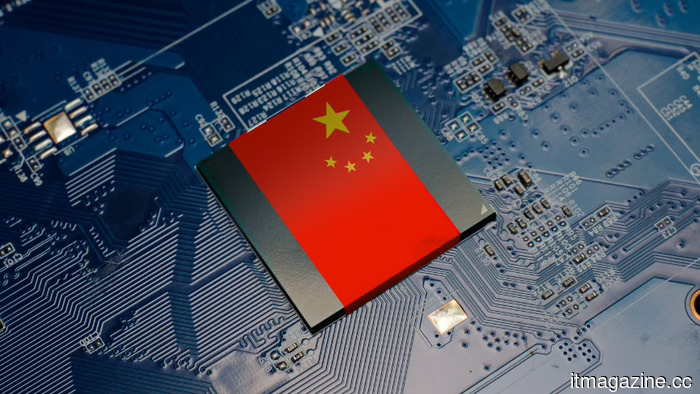 According to a report by the Financial Times, China is considering implementing export restrictions on its AI models and chips.
According to the Financial Times, China is reportedly considering imposing export restrictions on its AI models and the chips that power them, although no decisions have been made yet.
According to a report by the Financial Times, China is considering implementing export restrictions on its AI models and chips.
According to the Financial Times, China is reportedly considering imposing export restrictions on its AI models and the chips that power them, although no decisions have been made yet.
According to the Financial Times, China is considering implementing export restrictions on its own AI models and chips.
According to the Financial Times, China is reportedly considering imposing export restrictions on its AI models and the chips that support them, although no decisions have been made yet.