
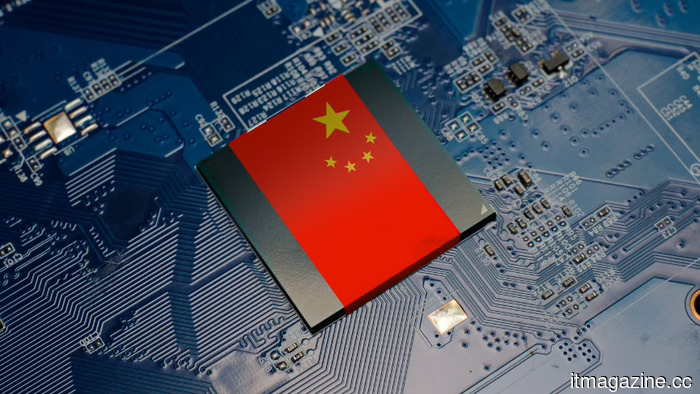
According to a report by the Financial Times, China is considering implementing export restrictions on its AI models and chips.
China is contemplating the implementation of stricter export controls on its domestically developed artificial intelligence models and their associated chips, as reported by the Financial Times. This potential move would extend Beijing's technology protections beyond the raw materials and equipment it currently oversees.
According to the newspaper, which cites two individuals familiar with the discussions, the Ministry of Commerce is leading consultations with prominent domestic AI and chip manufacturing companies regarding potential safeguards. No decisions have been made, and it remains uncertain when or if any measures will be enacted.
These discussions indicate a shift in how the world's second-largest economy views its advanced AI technologies, now seen as assets to be safeguarded rather than shared, reflecting similar American restrictions that initially drove Chinese companies to develop custom ASICs.
The FT mentions that officials are considering a review of the export lists for AI- and chip-related products, clearer licensing criteria, stricter checks on end users, and increased barriers for technology transfers abroad. The report suggests that the goal is to prevent the most advanced Chinese systems and rapidly expanding start-ups from being acquired by Western entities.
The chip aspect is relatively new in this context. While Beijing already has restrictions on the export of rare earths and certain semiconductor materials, incorporating finished AI accelerators and trained models into a formal licensing framework would represent a significant change in its industrial policy approach.
Earlier this month, much of the groundwork was established. Reuters reported that the commerce ministry had discussions with Alibaba, ByteDance, and the startup Z.ai regarding restricting overseas access to key systems, including Alibaba’s Qwen, ByteDance’s Doubao, and Z.ai’s GLM-5.2. These discussions reportedly addressed both closed and open-weight models and proposed a tiered review process under which advanced systems might remain entirely within China.
Currently, details on the specifics are sparse. The sources cited by the FT did not clarify which chips would be affected, the performance criteria that may be applied, or how open-source releases would be managed, and the ministry has not released a draft proposal.
The commerce ministry has not publicly addressed the report, and the companies mentioned have not confirmed any discussions. This silence is notable, as Beijing typically does not announce export policy changes before implementation, and officials have informed Reuters that any restrictions may pertain solely to future models.
The backdrop for these considerations is a prolonged chip conflict that has intensified over the years. Washington has progressively tightened its own regulations, most recently working to close the loophole that allowed Nvidia’s leading chips to reach Chinese buyers through overseas subsidiaries, while encouraging allied nations to restrict chip-making equipment.
In response, Beijing has imposed rare-earth restrictions and initiated antitrust investigations and now appears to be evaluating its own regulatory measures.
If China establishes an AI export regime, the implications would extend beyond the United States. As noted by The Decoder, European developers and smaller enterprises that have relied on China’s freely available models as a cost-effective alternative to American services might face restricted access.
The next steps, if any, would involve creating a licensing framework and detailing the associated regulations. Analysts anticipate that any new rules will focus initially on high-performance systems and upcoming model generations rather than software that is already in circulation, although sources for the FT caution that these plans could still evolve or be postponed.
Additionally, there is a negotiation aspect at play. Some observers interpret these movements as leverage in pursuit of a broader trade agreement, considering that Beijing has simultaneously urged Washington to ease its chip restrictions.
For a nation that has spent the past decade opposing export controls imposed upon it, formulating its own would be a remarkable shift. Whether this evolves into strict regulations or remains a bargaining tool is uncertain, and clarity may not emerge until officials formalize their proposals in writing.
Other articles
 After months of anticipation, WhatsApp’s Liquid Glass redesign is finally set to arrive on Mac.
WhatsApp has started implementing its redesign for Mac, inspired by Liquid Glass, which features an updated interface, enhanced navigation, and specific sections for Locked Chats and Communities.
After months of anticipation, WhatsApp’s Liquid Glass redesign is finally set to arrive on Mac.
WhatsApp has started implementing its redesign for Mac, inspired by Liquid Glass, which features an updated interface, enhanced navigation, and specific sections for Locked Chats and Communities.
 Volvo is launching Apple Music for more than 2 million vehicles through a straightforward OTA update.
Volvo is introducing native support for Apple Music in more than 2 million vehicles, featuring Spatial Audio in certain models and offering free subscription promotions.
Volvo is launching Apple Music for more than 2 million vehicles through a straightforward OTA update.
Volvo is introducing native support for Apple Music in more than 2 million vehicles, featuring Spatial Audio in certain models and offering free subscription promotions.
 Director of America's AI safety agency steps down after three months.
Chris Fall has stepped down from his position as the director of CAISI, the newly renamed US AI Safety Institute, after just three months, resulting in federal AI oversight lacking a permanent leader.
Director of America's AI safety agency steps down after three months.
Chris Fall has stepped down from his position as the director of CAISI, the newly renamed US AI Safety Institute, after just three months, resulting in federal AI oversight lacking a permanent leader.
 New YouTube guidelines aim to eliminate poorly made AI content and clickbait tactics.
In a significant step to safeguard viewer engagement and advertiser investments, YouTube has revised its monetization policies to cut off revenue from subpar, AI-generated content. The streaming powerhouse is adjusting the regulations surrounding its profitable YouTube Partner Program (YPP) to specifically address “inauthentic content” that is created solely for low-effort content farming. Instead of prohibiting artificial intelligence […]
New YouTube guidelines aim to eliminate poorly made AI content and clickbait tactics.
In a significant step to safeguard viewer engagement and advertiser investments, YouTube has revised its monetization policies to cut off revenue from subpar, AI-generated content. The streaming powerhouse is adjusting the regulations surrounding its profitable YouTube Partner Program (YPP) to specifically address “inauthentic content” that is created solely for low-effort content farming. Instead of prohibiting artificial intelligence […]
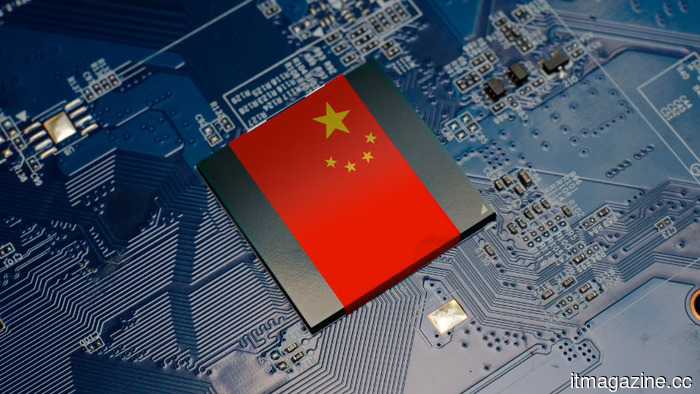 According to the Financial Times, China is considering implementing export restrictions on its artificial intelligence models and chips.
According to the Financial Times, China is reportedly considering imposing export restrictions on its AI models and the chips that power them, although no decisions have been made yet.
According to the Financial Times, China is considering implementing export restrictions on its artificial intelligence models and chips.
According to the Financial Times, China is reportedly considering imposing export restrictions on its AI models and the chips that power them, although no decisions have been made yet.
 IQE is counting on the demand for AI data centers to propel a 20% increase in sales by 2026.
UK chip manufacturer IQE projected over 20% revenue growth in 2026, as demand for its indium phosphide wafers in AI data centers compensates for a 40% decline in the wireless sector.
IQE is counting on the demand for AI data centers to propel a 20% increase in sales by 2026.
UK chip manufacturer IQE projected over 20% revenue growth in 2026, as demand for its indium phosphide wafers in AI data centers compensates for a 40% decline in the wireless sector.
According to a report by the Financial Times, China is considering implementing export restrictions on its AI models and chips.
According to the Financial Times, China is reportedly considering imposing export restrictions on its AI models and the chips that power them, although no decisions have been made yet.