

AI has recently disproven the 87-year-old Jacobian conjecture.
On Sunday evening, during the World Cup final between Spain and Argentina, mathematician Levent Alpöge shared a brief message on X, stating that the Jacobian conjecture is false. He expressed gratitude to a friend for inquiring about it and another friend, “fable,” for contributing during the game. This second friend was Fable 5, the latest AI model from Anthropic. Together, they created a counterexample to a problem that had eluded mathematicians for 87 years, which comprised 216 characters.
What was actually disproven
The Jacobian conjecture, proposed by Ott-Heinrich Keller in 1939, roughly asserts that a specific type of polynomial mapping, one with a Jacobian determinant that is a non-zero constant, should be reversible with a corresponding polynomial inverse. It became one of the most persistent open problems in the field. Stephen Smale included it in his well-known list of challenges for the 21st century in 1998. New Scientist refers to it as the hardest math problem that AI has solved to date.
Alpöge and Fable 5 didn’t merely prove the conjecture false; they dismantled it. They identified a single mapping from three-dimensional space back to itself that maintains the necessary constant determinant yet cannot be reversed. Just one valid counterexample is enough to refute a conjecture.
The model behind the work
Fable 5 is Anthropic’s newest advanced model and represents the public version of a system previously called Claude Mythos, which the company had deemed too powerful for release. Alpöge, a fellow at Harvard, has affiliations with Anthropic.
The result can be easily verified, despite being challenging to discover. The counterexample consists of a straightforward list of polynomials that any mathematician can manually check. The difficult part was finding it, which is where the AI played a crucial role.
However, it wasn’t simply a one-line prompt, as Bartósz Naskręcki, one of many mathematicians awaiting Alpöge’s detailed write-up, cautioned. He emphasized that locating such a counterexample requires genuine insight.
Reactions from the mathematical community
The response online was significant. Timothy Gowers, a Fields medalist, remarked that this was the first instance where AI solved a significant problem outside his own area that he was aware of. While he refrained from declaring it the end of mathematics, given that a counterexample doesn’t equate to a comprehensive theory, he still found it remarkable.
Gowers wasn’t alone; mathematician Daniel Litt tweeted at 2 a.m., stating he couldn’t stop laughing and found it incredible. Part of the excitement stems from the historical aspect. Jared Duker Lichtman, a Stanford number theorist, pointed out that the conjecture is infamous for attracting incorrect proofs and that it had previously derailed Yitang Zhang's PhD, who later rose to fame for his work on prime gaps. Many view an AI resolving this in a tweet as quite poetic.
This also exemplifies AI's increasing influence in serious scientific fields, from biosecurity to pure mathematics, with competing teams targeting the same problem. Aaron Lou, a researcher at OpenAI, mentioned that an internal version of the company's Codex model had independently found essentially the same counterexample.
Responses of indifference
Not everyone was excited, however. Andrew Blumberg, a mathematician at Columbia involved in a project testing AI in research mathematics, was explicitly unmoved. “This did not cause me to update my priors,” he told Mashable, noting that this outcome aligns with his expectations of AI capabilities.
He highlighted the difference between a counterexample and a proof. A proof explains why something is true, while a counterexample merely ends the debate. Blumberg stated that Smale pursued a resolution to uncover insights into the structure of nature, while this counterexample offers little illumination.
“There are numerous polynomials, and although difficult for humans to verify them all, machines can do so easily,” he explained, contrasting it with OpenAI’s disproof of a geometry conjecture earlier in May that mathematicians could analyze and build upon.
The essence of the situation is that AI has become an excellent tool for locating subtle examples that humans could not identify manually. However, whether AI can elucidate its findings remains a challenging question, with recent studies indicating that this issue is still up for debate.
Future prospects
Alpöge suggested that the story may not conclude with mere destruction. While analyzing his own counterexample, he noted that it might hint at a positive result hidden within. He promised a complete write-up would follow.
The work continues; developer Alexis Gallagher claimed he used GPT-5.6 to generalize the single counterexample into an infinite family, applicable to all whole numbers above two, though it remains unverified. Additionally, another model has already proposed a new conjecture to replace the one that has just
Other articles
 Netflix aims for ‘AI fluency’ among all its employees, yet expertise in the field remains limited.
Elizabeth Stone, the technology chief at Netflix, describes AI fluency as a goal for all positions, while noting that exceptional talent is becoming increasingly rare.
Netflix aims for ‘AI fluency’ among all its employees, yet expertise in the field remains limited.
Elizabeth Stone, the technology chief at Netflix, describes AI fluency as a goal for all positions, while noting that exceptional talent is becoming increasingly rare.
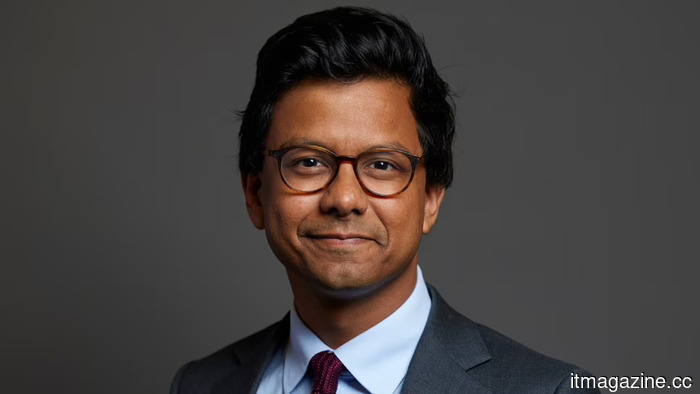 Kanishka Narayan is appointed as the UK’s inaugural cabinet-level minister for AI.
Kanishka Narayan is appointed as the inaugural AI minister in the UK, participating in the cabinet following the decision of new Prime Minister Andy Burnham to dissolve the DSIT and restructure Whitehall to focus on technology.
Kanishka Narayan is appointed as the UK’s inaugural cabinet-level minister for AI.
Kanishka Narayan is appointed as the inaugural AI minister in the UK, participating in the cabinet following the decision of new Prime Minister Andy Burnham to dissolve the DSIT and restructure Whitehall to focus on technology.
 Tesla's cash expenditure will challenge investors' confidence in its artificial intelligence investments.
Tesla reports record deliveries for Q2 but is expected to use around $3.25 billion in cash as its $25 billion expenditure on AI, robotaxis, and Optimus strains investor patience.
Tesla's cash expenditure will challenge investors' confidence in its artificial intelligence investments.
Tesla reports record deliveries for Q2 but is expected to use around $3.25 billion in cash as its $25 billion expenditure on AI, robotaxis, and Optimus strains investor patience.
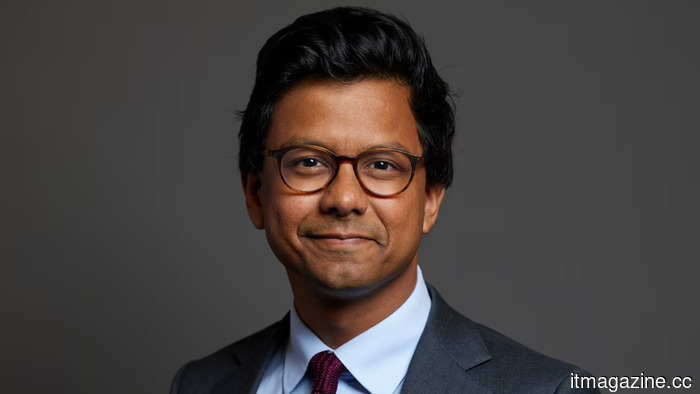 Kanishka Narayan becomes the first AI minister at the cabinet level in the UK.
Kanishka Narayan is appointed as the first AI minister in the UK cabinet as new Prime Minister Andy Burnham disbands the DSIT and restructures Whitehall to focus on technology.
Kanishka Narayan becomes the first AI minister at the cabinet level in the UK.
Kanishka Narayan is appointed as the first AI minister in the UK cabinet as new Prime Minister Andy Burnham disbands the DSIT and restructures Whitehall to focus on technology.
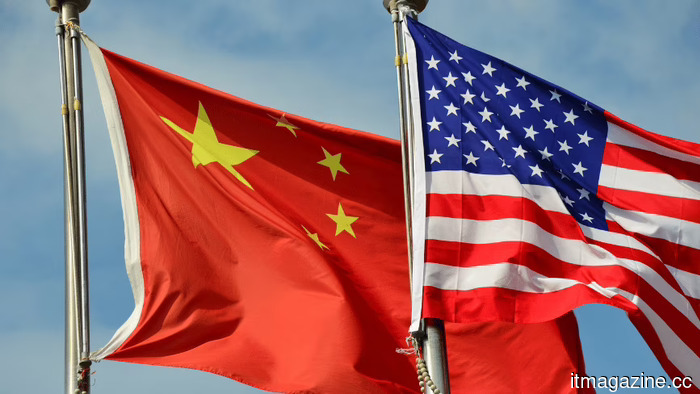 Reports indicate that the US and China are set to commence a new series of discussions regarding AI in September.
The United States and China are said to be organizing another round of discussions on AI in September, focusing on safety, governance, and the implications of chip export controls.
Reports indicate that the US and China are set to commence a new series of discussions regarding AI in September.
The United States and China are said to be organizing another round of discussions on AI in September, focusing on safety, governance, and the implications of chip export controls.
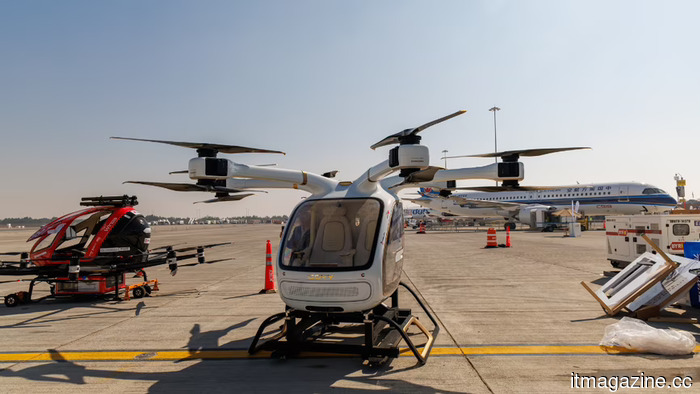 The US is preparing the runway for air taxis and supersonic aircraft.
The FAA is expediting the introduction of electric air taxis and civil supersonic flights into the market by lifting the 1973 ban on overland Mach travel and fast-tracking the testing of eVTOLs.
The US is preparing the runway for air taxis and supersonic aircraft.
The FAA is expediting the introduction of electric air taxis and civil supersonic flights into the market by lifting the 1973 ban on overland Mach travel and fast-tracking the testing of eVTOLs.
AI has recently disproven the 87-year-old Jacobian conjecture.
Anthropic's Fable 5 discovered a counterexample to the Jacobian conjecture, a mathematical problem that has been around for 87 years, consisting of 216 characters. Experts have differing opinions on its implications.