
A judge has approved Anthropic's $1.5 billion settlement regarding book piracy, marking the largest such settlement in US copyright history.
A federal judge in San Francisco has approved Anthropic's $1.5 billion settlement with authors who alleged that the company trained its Claude models using pirated books, marking what lawyers from both sides call the largest copyright recovery in U.S. history. Judge Araceli Martínez-Olguín granted final approval on July 20, following earlier concerns where she pressed the plaintiffs' attorneys for a clearer explanation of their fees.
The settlement addresses Bartz v. Anthropic, a class action lawsuit initiated in 2024 by authors Andrea Bartz, Charles Graeber, and non-fiction writer Kirk Wallace Johnson on behalf of approximately half a million works. At about $3,000 per book, the payout significantly surpasses the usual amounts seen in most AI copyright disputes, and it comes at a time when similar cases against Meta, Google, and OpenAI are ongoing.
The case revolved around a unique split. In a June 2025 decision, Judge William Alsup ruled that training an AI model on legally purchased books qualified as fair use, marking a significant win for the industry. However, he determined that Anthropic’s practice of downloading millions of titles from shadow libraries like LibGen and Pirate Library Mirror was not fair use. This ruling left the company vulnerable to substantial statutory damages that could have posed a severe threat to its finances, potentially reaching hundreds of billions of dollars had the outcome been unfavorable.
Instead of risking a jury’s decision on the piracy issue, Anthropic opted to settle in September 2025. Since this is a settlement and not a judgment, it does not establish a binding precedent, a distinction that the company has been careful to emphasize. “We reached this settlement in 2025, following the court’s landmark ruling that training AI on books is fair use under copyright law, which remains in effect,” stated Aparna Sridhar, Anthropic’s deputy general counsel.
Martínez-Olguín, who took over the approval process from Alsup, appeared more focused on the fairness of the deal to the authors than the fair use ruling itself. She remarked that the $1.5 billion settlement offers significant benefits to the class considering the unprecedented claims made, noting that “success at trial was not guaranteed, and a loss would have left the class without recourse.”
Her earlier apprehension largely centered on payment distribution and amounts. She sought a comprehensive assessment of class counsel fees, established a multimillion-dollar reserve for expenses, and reviewed the service awards designated for the three named plaintiffs before she signed off on the order. In granting approval, she reduced the attorneys’ fee request by around $86 million, as reported by Law.com.
The framing from the plaintiffs was notably more charged than the judge's. Their complaint accused Anthropic of “attempting to steal the fire of Prometheus” by “strip-mining the human expression and ingenuity” represented in those works. For authors, the main issue remaining pertains to paperwork. Rightsholders whose titles were sourced from LibGen and PiLiMi were requested to file claims earlier this year, with the standard trade split allocating half of each book's payment to the publisher and half to the author unless stated otherwise in a contract, according to the Authors Guild.
With final approval now granted, payments can commence for eligible rightsholders. The broader industry will focus more on the substantial amount than the reasoning behind it. A $1.5 billion figure captures attention in a sector that has historically viewed extensive scraping as part of doing business, coinciding with publishers taking action against Meta and newspapers suing OpenAI for similar practices. None of those cases have yet produced Alsup's clear differentiation between lawful training and unlawful acquisition, suggesting that the next defendant facing a jury might not be afforded the opportunity for such a contained settlement. Anthropic, for its part, retains the fair use ruling it sought while compensating for the library it should not have accessed.
Other articles
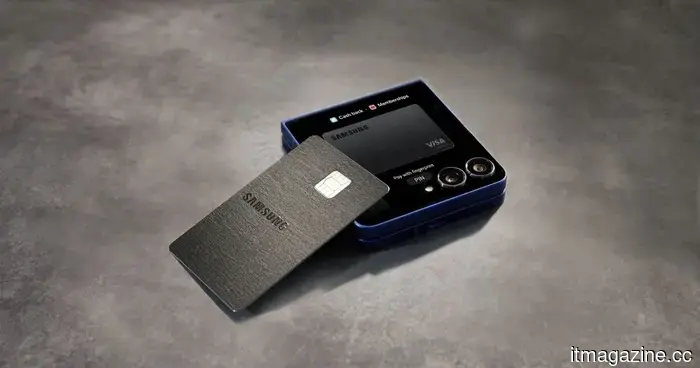 Samsung introduces Galaxy credit card prior to Galaxy Unpacked event.
Samsung has introduced the Galaxy Card, which provides up to 5 percent cashback on qualifying Samsung purchases just before its Galaxy Unpacked event.
Samsung introduces Galaxy credit card prior to Galaxy Unpacked event.
Samsung has introduced the Galaxy Card, which provides up to 5 percent cashback on qualifying Samsung purchases just before its Galaxy Unpacked event.
 The surge in AI game development has a negative aspect: it results in fewer employment opportunities for newcomers.
AI tools are assisting independent game developers in creating and launching games more rapidly; however, writers, artists, and junior programmers are encountering a decline in opportunities in a progressively competitive field.
The surge in AI game development has a negative aspect: it results in fewer employment opportunities for newcomers.
AI tools are assisting independent game developers in creating and launching games more rapidly; however, writers, artists, and junior programmers are encountering a decline in opportunities in a progressively competitive field.
 According to a report by the Financial Times, China is considering implementing export restrictions on its AI models and chips.
According to the Financial Times, China is reportedly considering imposing export restrictions on its AI models and the chips that power them, although no decisions have been made yet.
According to a report by the Financial Times, China is considering implementing export restrictions on its AI models and chips.
According to the Financial Times, China is reportedly considering imposing export restrictions on its AI models and the chips that power them, although no decisions have been made yet.
 South Korea is investing $540 billion in a southwestern chip hub that the current power grid is not equipped to support.
South Korea's $540 billion Honam chip cluster offers the potential for AI-era scale, but the rural southwest lacks sufficient power and water resources to support it.
South Korea is investing $540 billion in a southwestern chip hub that the current power grid is not equipped to support.
South Korea's $540 billion Honam chip cluster offers the potential for AI-era scale, but the rural southwest lacks sufficient power and water resources to support it.
 New YouTube guidelines aim to eliminate poorly made AI content and clickbait tactics.
In a significant step to safeguard viewer engagement and advertiser investments, YouTube has revised its monetization policies to cut off revenue from subpar, AI-generated content. The streaming powerhouse is adjusting the regulations surrounding its profitable YouTube Partner Program (YPP) to specifically address “inauthentic content” that is created solely for low-effort content farming. Instead of prohibiting artificial intelligence […]
New YouTube guidelines aim to eliminate poorly made AI content and clickbait tactics.
In a significant step to safeguard viewer engagement and advertiser investments, YouTube has revised its monetization policies to cut off revenue from subpar, AI-generated content. The streaming powerhouse is adjusting the regulations surrounding its profitable YouTube Partner Program (YPP) to specifically address “inauthentic content” that is created solely for low-effort content farming. Instead of prohibiting artificial intelligence […]
 Tennessee puts Instagram's compelling design under scrutiny as Meta engages in a jury trial lasting seven weeks.
The seven-week trial in Tennessee regarding allegations that Instagram was designed to be addictive for teenagers has now reached a jury in Nashville, marking a new challenge for Meta.
Tennessee puts Instagram's compelling design under scrutiny as Meta engages in a jury trial lasting seven weeks.
The seven-week trial in Tennessee regarding allegations that Instagram was designed to be addictive for teenagers has now reached a jury in Nashville, marking a new challenge for Meta.
A judge has approved Anthropic's $1.5 billion settlement regarding book piracy, marking the largest such settlement in US copyright history.
A federal judge has given final approval to Anthropic's $1.5 billion settlement with authors regarding pirated books, marking the largest copyright recovery in the history of the United States.