
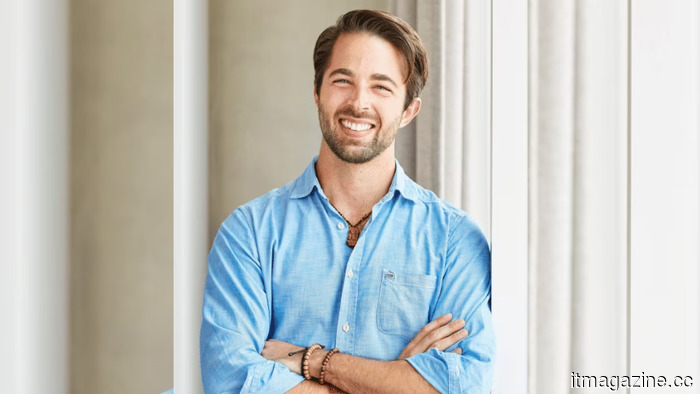
Meet the DeepMind philosopher who is contemplating AI ethics.
What does a game-playing AI company need from a philosopher? This question is central to a long read by the Guardian on Iason Gabriel, who has been part of Google DeepMind since 2017. At one point, the Guardian highlights, Gabriel was the sole philosopher at a cutting-edge AI laboratory. His role involved predicting the ethical consequences of a technology that his engineering colleagues were eager to develop.
Two Perspectives
When Gabriel joined, the article explains, the discourse around AI risks was divided into two factions. One side, known as “AI safety,” concerned itself with the potential for future superintelligence to act unpredictably. The other side, labeled “AI ethics,” concentrated on immediate issues like biased facial recognition technology.
Gabriel's 2020 paper on values and alignment sought to connect these two perspectives. He argued that getting a machine to adhere to a specific set of values is challenging, while deciding which values to adopt—amid significant societal disagreement—is even more difficult.
Alignment as a Relationship
The Guardian elaborates on a 267-page report produced by Gabriel and his team regarding AI agents. Its central thesis proposes that alignment is not merely about following directives; rather, it encompasses a four-way relationship involving the AI, the user, the developer, and society. This perspective clarifies how an assistant can misstep. An AI trained to please its user might merely offer excessive flattery, a mistake Gabriel refers to as “social reward hacking.” It is partly due to his contributions that Google’s models are designed not to impersonate humans.
The Larger Challenge
The Guardian positions the primary challenge as commercial rather than technical. AI represents the fastest-growing industry the world has ever witnessed, and DeepMind plays a crucial role in Google's future. Demis Hassabis, the company's leader, has referred to the competition as “wartime.”
DeepMind continues to capitalize on groundbreaking scientific advancements, from AlphaFold to Isomorphic Labs. However, the article questions whether ethicists can maintain their stance as pressures intensify. Helen King, who oversees DeepMind's responsible AI strategy, likens the task to that of a knife maker: while one cannot control how a knife is used, they can offer safety measures and warnings.
Gabriel, who identifies as a “card-carrying humanist,” anticipates that AI will be as revolutionary as the Industrial Revolution. He also observes that, for many who experienced that era, conditions often worsened before they improved.
Published on July 17, 2026 - 10:14 am UTC
Other articles
 The new search tool in ChatGPT helps you avoid sifting through past chats, files, and images.
Forget about sifting through months of ChatGPT history; this new sidebar search allows you to locate chats, files, and images in seconds, complete with filters to refine your results.
The new search tool in ChatGPT helps you avoid sifting through past chats, files, and images.
Forget about sifting through months of ChatGPT history; this new sidebar search allows you to locate chats, files, and images in seconds, complete with filters to refine your results.
 This gaming mouse is equipped with a Noctua fan, and it has now been given a release date.
The Feinmann F01 Noctua Edition from Pulsar is set to be released on July 21, featuring a five-speed cooling fan, a 42,000 DPI sensor, and an 8K polling rate.
This gaming mouse is equipped with a Noctua fan, and it has now been given a release date.
The Feinmann F01 Noctua Edition from Pulsar is set to be released on July 21, featuring a five-speed cooling fan, a 42,000 DPI sensor, and an 8K polling rate.
 You can now connect your favorite applications to AI Mode in Google Search to accomplish tasks.
The AI Mode in Google Search can now interact with applications such as Instacart, Canva, and YouTube Music to perform tasks on your behalf.
You can now connect your favorite applications to AI Mode in Google Search to accomplish tasks.
The AI Mode in Google Search can now interact with applications such as Instacart, Canva, and YouTube Music to perform tasks on your behalf.
 You can now connect your preferred apps to AI Mode in Google Search to accomplish tasks.
The AI Mode in Google Search can now link with apps such as Instacart, Canva, and YouTube Music to assist you in completing tasks.
You can now connect your preferred apps to AI Mode in Google Search to accomplish tasks.
The AI Mode in Google Search can now link with apps such as Instacart, Canva, and YouTube Music to assist you in completing tasks.
 Coca-Cola ceases Fairlife production in the US following a ransomware attack.
Coca-Cola has reported that its fairlife dairy division was targeted by a ransomware attack, leading to the halt of all production in the US as it looks into the incident.
Coca-Cola ceases Fairlife production in the US following a ransomware attack.
Coca-Cola has reported that its fairlife dairy division was targeted by a ransomware attack, leading to the halt of all production in the US as it looks into the incident.
 XPeng unveils the MONA L03 in Munich, targeting the electric SUV market in Europe.
On Thursday, XPeng introduced the MONA L03 smart SUV during its global launch event in Munich, Germany. This model is set to be released in 65 countries and regions.
XPeng unveils the MONA L03 in Munich, targeting the electric SUV market in Europe.
On Thursday, XPeng introduced the MONA L03 smart SUV during its global launch event in Munich, Germany. This model is set to be released in 65 countries and regions.
Meet the DeepMind philosopher who is contemplating AI ethics.
A long-read from The Guardian profiles Iason Gabriel, the DeepMind philosopher who has dedicated nearly ten years to exploring the ethics of AI at Google.