
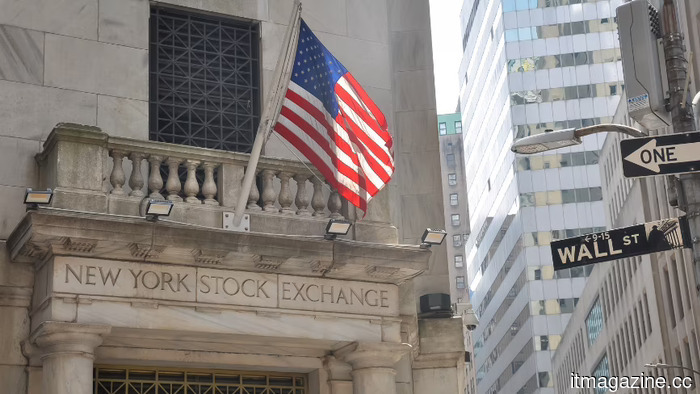
Wall Street recently experienced its strongest quarter for investment banking in years, and it is referring to AI as a supercycle.
Goldman Sachs recorded $3.4 billion in investment banking fees in the second quarter, marking a record increase of 55% compared to the same period last year. The CEO, David Solomon, attributed this surge to an ongoing AI CapEx super cycle, which has created financing demands across every financial instrument, in all regions, and across various industries. He shared his insights during the earnings call on July 14.
Within this total, equity underwriting saw a significant increase of 130%, reaching $985 million, while debt underwriting surged 75% to a new high of $1.03 billion. This demand also contributed to eight banks participating in SoftBank's $40 billion loan for OpenAI.
Other banks demonstrated similar trends; JPMorgan reported $3.3 billion in investment banking fees, a 30% rise and its best performance since 2021. Morgan Stanley's fees increased by 58% to $2.44 billion, Bank of America’s rose 50% to $2.14 billion, and Citigroup's increased 44% to $1.55 billion, although Citi changed its reporting from fees to revenues this quarter, making its figures less comparable with its counterparts.
Morgan Stanley's CEO, Ted Pick, estimated the current phase of the investment cycle at about 10% to 15% complete. He referenced research predicting capital expenditure for data centers to reach approximately $850 billion this year, $1.3 trillion by 2027, and potentially $1.5 trillion by 2028. However, he emphasized the uncertainty of these projections, underscoring the need for humility regarding future developments.
Jamie Dimon acknowledged AI's role in JPMorgan's results, highlighting "AI-driven capital investment, fiscal stimulus, and the advantages of more efficient regulation" as significant factors supporting the strong US economy. In a more subdued tone during the call, he remarked on the robust environment, noting, "It’s getting close to as good as it gets," while expressing uncertainty about its longevity.
At Citigroup, Jane Fraser described how AI is increasingly dominating discussions, noting that sectors such as technology, data centers, energy, and defense are witnessing accelerated capital expenditures. She observed significant activity in addressing bottlenecks within the energy power computing memory ecosystem, citing SK hynix's $26.5 billion American depositary receipt offering on July 9 as an example.
A notable comment from JPMorgan CFO Jeremy Barnum focused on the deals the bank chose not to pursue. He stated, "We passed on some deals," pointing out concerns surrounding power supply and tenant considerations in the data center sector, which led to decisions to abstain from certain transactions.
No bank disclosed specific figures related to their exposure to data center lending or AI infrastructure, including JPMorgan, Goldman Sachs, Morgan Stanley, Citi, or Bank of America. When asked about AI's impact on Goldman’s results, Solomon declined to quantify it, stating, “I’m not sure that I can do that in a way where I give you a good answer.”
The combined net income of the five largest US banks reached roughly $49 billion, a 39% increase year on year. Although underwriting significantly outpaced advisory work—Goldman's advisory fees rose 17%, while Citi's fell by 4%—the primary financial growth stemmed from placing securities.
Solomon also provided an important perspective, mentioning that IPO volumes were "kind of at or below the 10-year average," despite the record fee figures. Regarding the eventual outcome of the current trend, he anticipated a period of "recalibration, a reset, a drawdown, and then a further acceleration."
As financing volumes continue to expand, the structures are becoming more complex. Meta secured $27.3 billion in a private placement with Blue Owl and Pimco for a single campus in Louisiana, part of over $40 billion raised in that market since November. ICE is developing futures contracts related to computing, and CoreWeave is working to hedge memory chips, which currently lack a marketplace. Goldman will report its results again in October, with Barnum's critical questions regarding power and tenants remaining pivotal as the situation develops.
Other articles
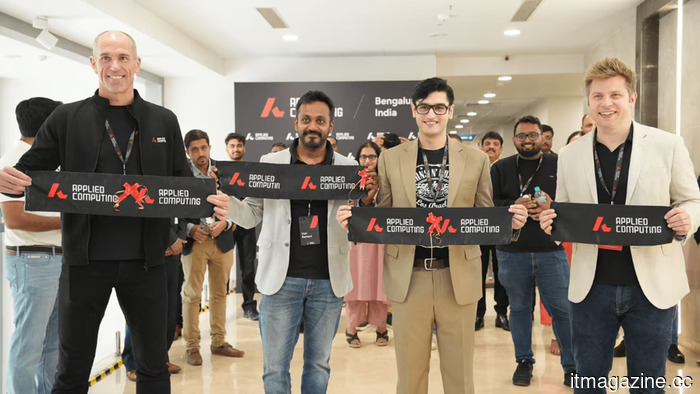 Applied Computing secures $20 million to develop a foundational model for the refinery.
The London-based startup reports that its plants utilize less than 8% of the data they gather. Its Orbital model integrates time series, physics, and language. KBR spearheaded the $20 million funding round.
Applied Computing secures $20 million to develop a foundational model for the refinery.
The London-based startup reports that its plants utilize less than 8% of the data they gather. Its Orbital model integrates time series, physics, and language. KBR spearheaded the $20 million funding round.
 An F1 aerodynamicist has secured $55 million in funding to train factory robots by utilizing videos of individuals performing household tasks.
Microagi secured $55 million in funding, with Hummingbird at the forefront. Its data division compensates 20,000 individuals across 15 nations to record themselves while working. Robots lack internet access for learning.
An F1 aerodynamicist has secured $55 million in funding to train factory robots by utilizing videos of individuals performing household tasks.
Microagi secured $55 million in funding, with Hummingbird at the forefront. Its data division compensates 20,000 individuals across 15 nations to record themselves while working. Robots lack internet access for learning.
 5 Questions Every CIO Must Consider Before Introducing Another Software Tool
In 2023, the typical tech stack comprised 291 applications, resulting in significant software expenditures. By 2026, numerous enterprise tech stacks have evolved to be even more intricate as companies keep integrating AI features into their processes. As vibe coding becomes more widespread and the number of SaaS platforms increases, how can a leader determine which [...]
5 Questions Every CIO Must Consider Before Introducing Another Software Tool
In 2023, the typical tech stack comprised 291 applications, resulting in significant software expenditures. By 2026, numerous enterprise tech stacks have evolved to be even more intricate as companies keep integrating AI features into their processes. As vibe coding becomes more widespread and the number of SaaS platforms increases, how can a leader determine which [...]
 Wall Street recently experienced its strongest quarter in investment banking in years, claiming that AI has initiated a super cycle.
Goldman recorded an all-time high of $3.4 billion in investment banking fees, representing a 55% increase. The CEO refers to it as an AI capex super cycle. Meanwhile, JPMorgan's CFO is opting out of data center transactions.
Wall Street recently experienced its strongest quarter in investment banking in years, claiming that AI has initiated a super cycle.
Goldman recorded an all-time high of $3.4 billion in investment banking fees, representing a 55% increase. The CEO refers to it as an AI capex super cycle. Meanwhile, JPMorgan's CFO is opting out of data center transactions.
 Ofcom launches an investigation into child safety regarding TikTok.
Ofcom is looking into TikTok's ability to identify child users and assess if it effectively shields them from harmful content. Penalties may amount to 10% of the company's worldwide revenue.
Ofcom launches an investigation into child safety regarding TikTok.
Ofcom is looking into TikTok's ability to identify child users and assess if it effectively shields them from harmful content. Penalties may amount to 10% of the company's worldwide revenue.
 Europe's strongest earnings quarter in three years is attributed to energy rather than AI.
Profits for the STOXX 600 are expected to increase by 15.3% in the second quarter, marking the highest growth since 2022. Excluding the energy sector, the growth is projected at 6%, compared to 19.6% in the United States.
Europe's strongest earnings quarter in three years is attributed to energy rather than AI.
Profits for the STOXX 600 are expected to increase by 15.3% in the second quarter, marking the highest growth since 2022. Excluding the energy sector, the growth is projected at 6%, compared to 19.6% in the United States.
Wall Street recently experienced its strongest quarter for investment banking in years, and it is referring to AI as a supercycle.
Goldman recorded a historic $3.4 billion in investment banking fees, an increase of 55%. The CEO describes it as an AI capital expenditure super cycle. Meanwhile, JPMorgan's CFO is opting out of data center agreements.