
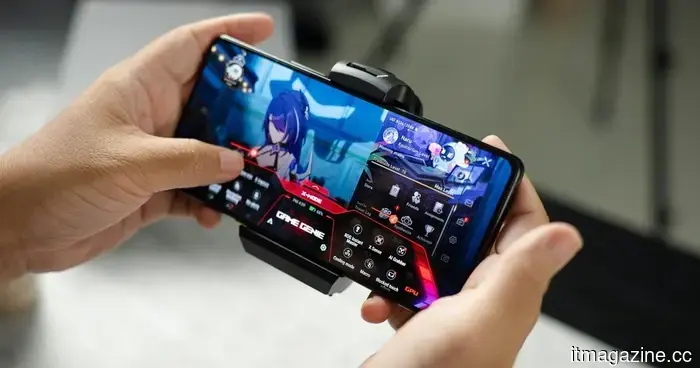
Playing against AI might boost your confidence when teaming up with real players.
Artificial intelligence is frequently criticized for diminishing social interactions among people. Whether it's due to AI taking over conversations, decreasing teamwork, or making gaming experiences feel less personal, the discourse has remained relatively constant. However, a recent study indicates that the opposite may also be the case. In fact, AI could be subtly motivating individuals to spend more time with their friends.
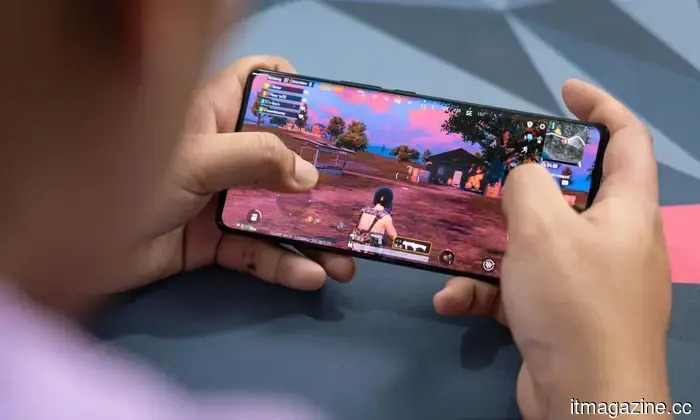
Researchers examining PUBG: Battlegrounds found that the inclusion of AI-controlled adversaries in multiplayer games did not lead to player isolation. Instead, it increased players' confidence, encouraged longer play sessions, and led to more frequent collaboration with friends. The results, which will be published in the journal Information Systems Research, provide a compelling viewpoint on how AI can enhance user experiences rather than just automating them.
AI opponents as a source of confidence
Since its launch in 2017, PUBG quickly became one of the largest multiplayer games globally. However, like many competitive online games, it soon faced a common challenge: veteran players became so skilled that new players found it hard to enjoy the game.
Liangfei Qiu, a professor at the University of Florida’s Warrington College of Business and co-author of the study, noted that seasoned players inadvertently create a barrier for newcomers. “During the peak of the game, there are many experienced players, making it discouraging for new players to join since they are often defeated,” Qiu explained.
To tackle this issue, PUBG developer Krafton introduced AI-controlled opponents into select matches in 2020. These bots were not meant to overpower players but were designed to perform slightly below the typical human competitor, thereby allowing newer players a fair chance to learn the game, endure longer, and achieve victories. The clever element was that players were aware of the bots' presence in matches but could not distinguish which opponents were AI and which were actual players. This uncertainty made every win feel authentic, regardless of who was being defeated.
Increased confidence fostering better teamwork
The effects were greater than many anticipated. After the introduction of AI opponents, researchers noticed that players spent approximately 50 percent more time in PUBG and participated in significantly more matches. More importantly, they were not just accumulating easy wins against bots.
Team collaboration rose by 28 percent, suggesting that players who gained confidence from early successes were more inclined to team up with friends instead of playing alone. The researchers believe that the hidden AI adversaries improved a concept in psychology known as self-efficacy, or the belief in one's ability to succeed. As players started to feel more capable, they became increasingly comfortable engaging in team-oriented matches and taking responsibility for their teammates' success.
Qiu believes this notion extends far beyond gaming. Instead of viewing AI purely as a substitute for human workers, he suggests that well-designed AI systems can act as training partners, aiding individuals in building skills before facing more difficult tasks. Whether it pertains to onboarding a new employee, instructing someone in new software, or helping novices learn a competitive game, AI might serve as a confidence-boosting tool rather than merely another means of automation.
This serves as an intriguing reminder that the most effective use of AI isn't always about replacing humans; at times, it’s about quietly assisting them in improving their collaborative efforts both in work and play.

Other articles
 HTC's smart glasses are reportedly set to arrive in the US, although the company has not officially confirmed this.
Amazon temporarily posted a listing for HTC's VIVE Eagle smart glasses, indicating a US release on September 1 for $499, but later took down the pages before HTC verified the launch beyond Taiwan.
HTC's smart glasses are reportedly set to arrive in the US, although the company has not officially confirmed this.
Amazon temporarily posted a listing for HTC's VIVE Eagle smart glasses, indicating a US release on September 1 for $499, but later took down the pages before HTC verified the launch beyond Taiwan.
 As Sony concludes its support for PS3 games, RPCS3 has managed to preserve thousands of them on PC.
RPCS3 is now capable of running 75% of the monitored PS3 library on PC, achieving this milestone as Sony is set to shut down the console’s digital store and cease new physical game releases.
As Sony concludes its support for PS3 games, RPCS3 has managed to preserve thousands of them on PC.
RPCS3 is now capable of running 75% of the monitored PS3 library on PC, achieving this milestone as Sony is set to shut down the console’s digital store and cease new physical game releases.
 Apple's Back to School promotion for 2026 offers savings of up to $150 on a new Mac or iPad.
Apple's Back to School promotion for 2026 offers gift cards valued up to $150, but the least expensive Mac and iPad are excluded from this offer.
Apple's Back to School promotion for 2026 offers savings of up to $150 on a new Mac or iPad.
Apple's Back to School promotion for 2026 offers gift cards valued up to $150, but the least expensive Mac and iPad are excluded from this offer.
 Oak secures $60 million for an AI-driven identity platform.
Israeli startup Oak has secured $60 million for an AI-native identity platform that manages every user, machine, and AI agent from a unified control panel.
Oak secures $60 million for an AI-driven identity platform.
Israeli startup Oak has secured $60 million for an AI-native identity platform that manages every user, machine, and AI agent from a unified control panel.
 Vint Cerf aims to provide AI agents with a distinct identity.
Vint Cerf, one of the pioneers of the internet, is participating in a project aimed at creating a lasting identity framework for AI agents, ensuring that the web can identify the individuals behind them.
Vint Cerf aims to provide AI agents with a distinct identity.
Vint Cerf, one of the pioneers of the internet, is participating in a project aimed at creating a lasting identity framework for AI agents, ensuring that the web can identify the individuals behind them.
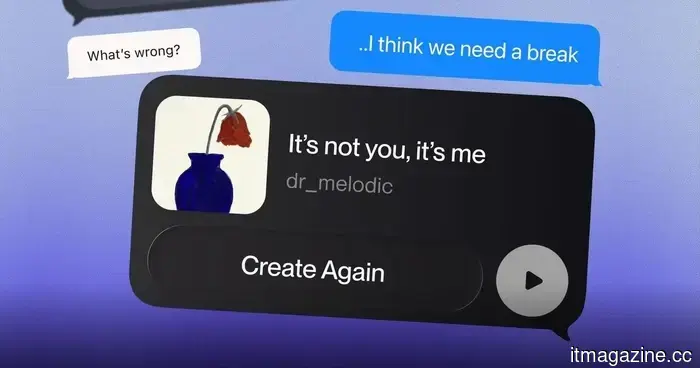 You can now create songs within your iMessage conversations.
Suno's newest iOS update allows users to create 30-second songs using typed prompts, voice messages, and recordings within iMessage.
You can now create songs within your iMessage conversations.
Suno's newest iOS update allows users to create 30-second songs using typed prompts, voice messages, and recordings within iMessage.
Playing against AI might boost your confidence when teaming up with real players.
According to recent research, AI opponents in gaming have enhanced player confidence, raised playtime by 50 percent, and motivated more individuals to collaborate with friends.