
Doubao's AI companions have disappeared. Users have a period of 3 months to take screenshots of what remains.
The notice resembled housekeeping instructions. "Take screenshots while you can," ByteDance advised Doubao users, or alternatively, export the text. On July 15, the custom agents they had created stopped functioning, leaving behind a read-only archive with a cutoff date of October 15. After this date, the company stated that the data would be subject to its privacy policy and would no longer be accessible or retrievable within the app.
The new AI companion regulations from Beijing are the cause behind this situation, making up one aspect of the story. The other, less visible side involves the extent of what has gone silent. Doubao reported 382 million monthly active users in May, while Qwen had 167 million, according to QuestMobile. Not every user maintained a companion, and neither platform has disclosed how many actually did.
What is known is an earlier statistic. ByteDance stated in 2024 that users had created over 8 million agents on Doubao when the app had 26 million monthly users, but it hasn't updated this figure since then.
Doubao’s three-month period is the more favorable scenario. Alibaba deactivated Qwen’s humanlike and user-created agents on July 10, followed by the discontinuation of its broader agent services just five days later. Users were informed that they would lose access to the agent settings and previous conversations upon shutdown.
The 💜 of EU tech The latest updates from the EU tech world, insights from our wise founder Boris, and some dubious AI art. It's free, delivered weekly to your inbox. Sign up now! Neither company provided a way for users to transfer a character’s accumulated memory to another product. However, ByteDance did offer an alternative. Doubao users were guided to Maoxiang, its standalone companion app, where they can create a new agent from the ground up.
A persona can be rewritten in a minute, but the months of conversations that made it unique cannot, which is the aspect users cherished. On Weibo, one user described the agents as longstanding sources of emotional support, highlighting the difficulty of exporting chat histories.
Bloomberg shared the story of Yan Yongqi, a 19-year-old student who claimed to have exchanged hundreds of thousands of messages with a Doubao boyfriend over more than a year. This account represents just one instance, reported by a single outlet, and it reflects the limited public records currently available.
These measures provide users with no entitlement to take their data with them, which presents a surprising reversal for a sector typically criticized for retaining excessive data. This stems from findings by Mozilla showing that AI companions collect intimate data, including health conditions, with minimal options for users to opt out.
In China, the complaint is quite the opposite. People desire access to their transcripts but are unable to obtain them.
The emotional significance of those transcripts remains an active area of research. A survey of 612 users of AI companion apps in mainland China revealed that frequency of use was linked to emotional attachment, which in turn was associated with reduced feelings of loneliness and enhanced subjective wellbeing. The study's cross-sectional and self-reported nature means it cannot definitively state whether the apps help alleviate loneliness or merely provide companionship.
The category is not disappearing. Tencent removed Yuanbao’s user-created agent feature on June 30, and NetEase Cloud Music shuttered its Miaoshi app on July 14. However, dedicated companion products persist, now fulfilling filing and minor protective roles while operating within a broader AI regulatory framework that has been in place since April.
Maoxiang, the app that Doubao users were directed to, had already experienced a decline in monthly users, dropping from over 6 million to around 3.9 million by June. Its subscription fee is 25 yuan per month.
This illustrates the new market into which users are being redirected. Sixth Tone reported Maoxiang has around 4.7 million monthly users in December, while MiniMax’s Xingye reached 4.6 million, according to tracker Aicpb.com. These specialized apps are roughly 80 times smaller than the general-purpose one that just discontinued the feature.
New entrants are still appearing. On July 13, just two days before the deadline, game studio miHoYo launched an AI companion on Steam. Named Olivia Lin, a piano student from Shanghai, she interacts with users by reading and responding to letters, reaching over 100,000 downloads in a single day.
For those who spent a year communicating with something that recognized them, October 15 isn’t just a policy date; it represents a deadline for capturing a relationship, page by page, within three months.
Other articles
 Australia instructs AI data centers to contribute more power than they consume.
Albanese unveiled an Office of AI, regulations for data centres regarding net generation, and stringent copyright provisions. However, none of these measures are legally binding as of now.
Australia instructs AI data centers to contribute more power than they consume.
Albanese unveiled an Office of AI, regulations for data centres regarding net generation, and stringent copyright provisions. However, none of these measures are legally binding as of now.
 Gold Eagle: the AI cybersecurity hub of the White House
Gold Eagle is the White House's new AI-powered clearinghouse designed to consolidate, prioritize, and manage solutions for cybersecurity vulnerabilities within US critical infrastructure.
Gold Eagle: the AI cybersecurity hub of the White House
Gold Eagle is the White House's new AI-powered clearinghouse designed to consolidate, prioritize, and manage solutions for cybersecurity vulnerabilities within US critical infrastructure.
 India commits $20 billion to encourage chip and smartphone production as Modi advocates for the creation of an Indian mobile brand.
Modi's cabinet has authorized $13.3 billion for semiconductors and $6.5 billion for smartphones. The minister stated that Modi aims for India to "establish an Indian mobile brand."
India commits $20 billion to encourage chip and smartphone production as Modi advocates for the creation of an Indian mobile brand.
Modi's cabinet has authorized $13.3 billion for semiconductors and $6.5 billion for smartphones. The minister stated that Modi aims for India to "establish an Indian mobile brand."
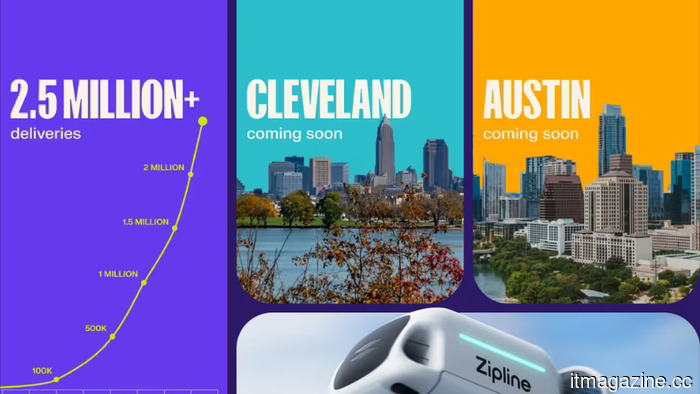 Zipline is starting a healthcare drone delivery service in partnership with Cleveland Clinic. It has recruited former employees from Tesla and Waymo to help expand the initiative.
Zipline has reached 2.5 million deliveries and is set to commence healthcare delivery in partnership with the Cleveland Clinic. The company has brought on former executives from Tesla, Waymo, and Uber to facilitate further expansion.
Zipline is starting a healthcare drone delivery service in partnership with Cleveland Clinic. It has recruited former employees from Tesla and Waymo to help expand the initiative.
Zipline has reached 2.5 million deliveries and is set to commence healthcare delivery in partnership with the Cleveland Clinic. The company has brought on former executives from Tesla, Waymo, and Uber to facilitate further expansion.
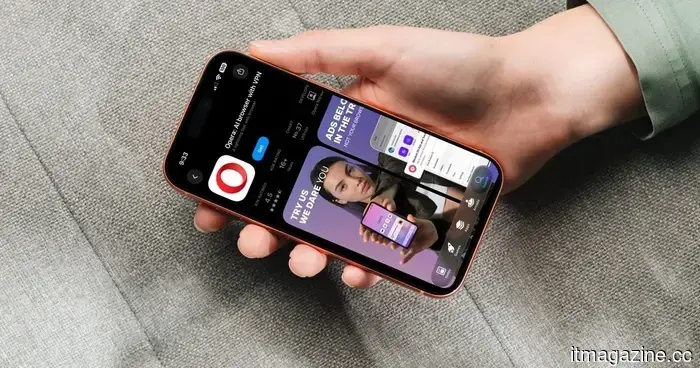 Opera's expansion indicates that users are willing to change browsers when presented with options.
Opera's browser is gaining significant market share in the US and UK, demonstrating that when users are offered genuine options, they are willing to abandon the default choice.
Anthropic's safety hiring focuses on nuclear and biological threats.
Anthropic's current hiring for safety roles focuses on preventing nuclear, chemical, and biological threats by employing analysts to ensure its AI does not assist anyone in creating weapons.
Opera's expansion indicates that users are willing to change browsers when presented with options.
Opera's browser is gaining significant market share in the US and UK, demonstrating that when users are offered genuine options, they are willing to abandon the default choice.
Anthropic's safety hiring focuses on nuclear and biological threats.
Anthropic's current hiring for safety roles focuses on preventing nuclear, chemical, and biological threats by employing analysts to ensure its AI does not assist anyone in creating weapons.
Doubao's AI companions have disappeared. Users have a period of 3 months to take screenshots of what remains.
On July 15, Doubao and Qwen terminated custom AI agents. Doubao provides users with read-only access until October 15, whereas Qwen does not offer any access. Neither platform has a solution for exporting the data.