
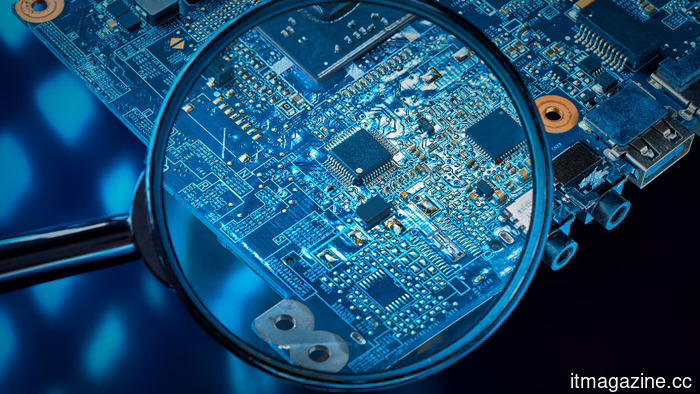
India commits $20 billion to encourage chip and smartphone production as Modi advocates for the creation of an Indian mobile brand.
India has committed a total of $19.7 billion, with $13.3 billion allocated for semiconductors and $6.5 billion for smartphones. Prime Minister Modi aims to establish an Indian mobile brand to challenge Chinese market dominance. On Wednesday, India announced a total of 1.9 trillion rupees ($19.7 billion) in incentives to boost domestic production of chips and smartphones. The cabinet approved 1.28 trillion rupees ($13.3 billion) specifically for semiconductors, which includes funding for chip design, machine manufacturing, research and development, and talent development, alongside 625 billion rupees ($6.5 billion) dedicated to mobile phone manufacturing. “The Prime Minister has clearly instructed us to create an Indian mobile brand,” stated Technology Minister Ashwini Vaishnaw in New Delhi.
This new initiative builds upon India's $10 billion initiative from 2021, which aimed to cover half of the expenses for establishing semiconductor projects. That previous effort successfully attracted Micron Technology and the Tata Group to the western state of Gujarat. Currently, India's first chip production has already commenced in Gujarat, and six semiconductor projects, totaling $14.7 billion, have been approved in the region.
India's moves are reminiscent of the U.S. CHIPS and Science Act, which allocates $52 billion for domestic chip manufacturing; however, India's program is still in its nascent phase with only a few significant projects in progress. Governments globally are striving to establish self-sufficient chip industries to meet the increasing demand from sectors such as AI, smartphones, automobiles, and appliances. In contrast, China supports its chip industry through large state-backed investment funds.
India is aiming to entice leading chip manufacturers by leveraging its engineering expertise, design capabilities, and subsidies, much like the strategy it employed to attract Apple's iPhone assembly operations. As a result of production-linked subsidies introduced during the pandemic, Apple now assembles 25% of its iPhones in India. The smartphone subsidies will also aid local companies in a market largely dominated by Chinese brands. India's broader ambition for technological self-reliance has gained momentum this year following the US export ban on Anthropic, highlighting the vulnerabilities of relying on foreign infrastructure. The combined $20 billion funding supports a comprehensive strategy that spans from raw silicon to consumer electronics and sovereign AI.
Other articles
 You can apply this wearable on your skin similar to a tattoo to track your heart and brain functions.
Researchers at Penn State have developed a washable tattoo that can be painted on the skin, capable of monitoring heart, brain, and muscle activity, providing a vibrant alternative to cumbersome wearable health sensors.
You can apply this wearable on your skin similar to a tattoo to track your heart and brain functions.
Researchers at Penn State have developed a washable tattoo that can be painted on the skin, capable of monitoring heart, brain, and muscle activity, providing a vibrant alternative to cumbersome wearable health sensors.
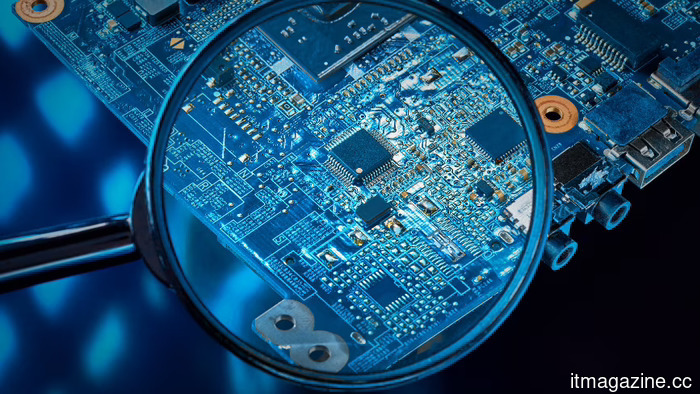 India commits $20 billion to enhance chip and smartphone production as Modi advocates for a domestic mobile brand.
Modi's cabinet has authorized $13.3 billion for semiconductors and $6.5 billion for smartphones. The minister noted that Modi aims to "establish an Indian mobile brand."
India commits $20 billion to enhance chip and smartphone production as Modi advocates for a domestic mobile brand.
Modi's cabinet has authorized $13.3 billion for semiconductors and $6.5 billion for smartphones. The minister noted that Modi aims to "establish an Indian mobile brand."
 It's really warm outside, but please refrain from placing your heated phones in the refrigerator.
Experts and smartphone manufacturers caution that placing an overheating phone in the refrigerator can result in condensation, which may cause internal damage that could be significantly more expensive to repair than the overheating issue itself.
Anthropic's safety hiring focuses on nuclear and biological threats.
Anthropic's current hiring for safety roles focuses on preventing nuclear, chemical, and biological threats by employing analysts to ensure its AI does not assist anyone in creating weapons.
It's really warm outside, but please refrain from placing your heated phones in the refrigerator.
Experts and smartphone manufacturers caution that placing an overheating phone in the refrigerator can result in condensation, which may cause internal damage that could be significantly more expensive to repair than the overheating issue itself.
Anthropic's safety hiring focuses on nuclear and biological threats.
Anthropic's current hiring for safety roles focuses on preventing nuclear, chemical, and biological threats by employing analysts to ensure its AI does not assist anyone in creating weapons.
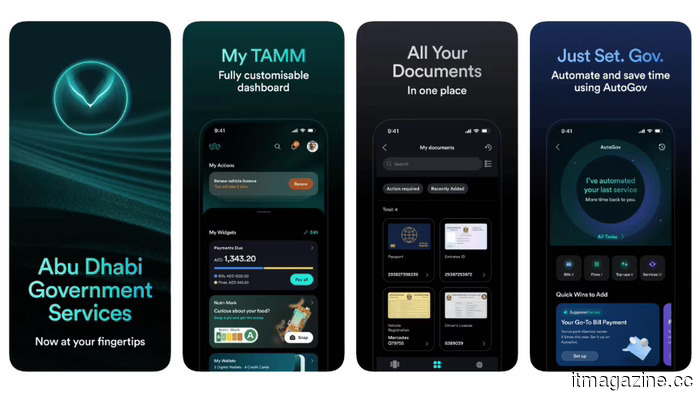 The AI-driven government of Abu Dhabi manages everyday life.
Abu Dhabi's AI-driven government operates through a single app, TAMM, which allows you to renew your ID and settle fines. The downside is that its model is not replicable by any democratic system.
The AI-driven government of Abu Dhabi manages everyday life.
Abu Dhabi's AI-driven government operates through a single app, TAMM, which allows you to renew your ID and settle fines. The downside is that its model is not replicable by any democratic system.
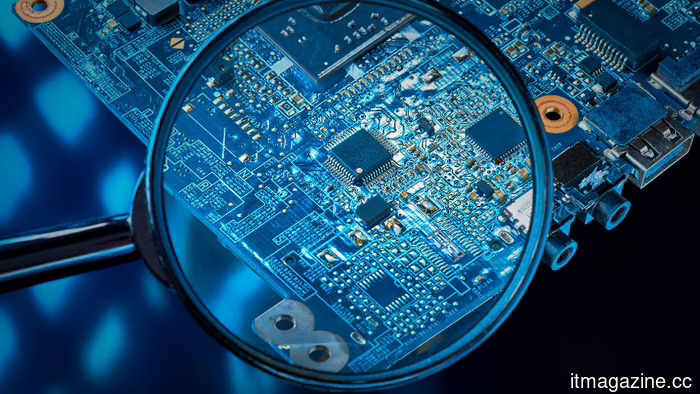 India commits $20 billion to enhance chip production and smartphones as Modi advocates for a domestic mobile brand.
Modi's cabinet has authorized $13.3 billion for semiconductors and $6.5 billion for smartphones. The minister indicated that Modi aims for India to "develop an Indian mobile brand."
India commits $20 billion to enhance chip production and smartphones as Modi advocates for a domestic mobile brand.
Modi's cabinet has authorized $13.3 billion for semiconductors and $6.5 billion for smartphones. The minister indicated that Modi aims for India to "develop an Indian mobile brand."
India commits $20 billion to encourage chip and smartphone production as Modi advocates for the creation of an Indian mobile brand.
Modi's cabinet has authorized $13.3 billion for semiconductors and $6.5 billion for smartphones. The minister stated that Modi aims for India to "establish an Indian mobile brand."