

Australia instructs AI data centers to contribute more power than they consume.
Anthony Albanese has informed the AI sector that Australian literature, music, and journalism should not be utilized as free training data, and that any large data facility established in the country must contribute more electricity to the grid than it consumes. However, these stipulations are not yet laws.
During a speech at the University of Sydney on Wednesday, the prime minister announced the immediate establishment of an Office of AI within his department, along with Australian Standards related to energy, water, copyright, and location.
This announcement came two days after reports indicated that Anthropic and other companies were considering tens of billions in investments for data centers, amid discussions of copyright exemptions that Canberra has already dismissed.
The energy requirement was the most striking aspect of the address. Future operators of large data centers would need to support new power supply, cover their complete share of grid connection costs to avoid passing charges onto households or businesses, and ensure they contribute at least as much energy to the grid as they consume.
"To be net-generators, not net-users," Albanese emphasized, which entails investing in new renewable energy production and stabilization instead of relying on existing supplies. This demand represents a much greater challenge than what hyperscalers encounter in Europe and the U.S., where the grids are already overwhelmed with connection requests.
Water use will also be similarly regulated. Operators must limit their water consumption, enhance energy efficiency, and finance any extra water infrastructure they may require, given that Australia is the sunniest and driest continent on earth, according to Albanese.
On copyright, he made a strong statement: “Let me make this crystal clear: not everything produced in Australia is up for grabs,” he asserted. He highlighted the necessity for Australian writers, musicians, artists, and journalists to maintain ownership and control over their creations, insisting that no entity should utilize their work without the artist’s agreement on pricing and value. “Anything less is theft.”
However, the speech lacked a definitive mechanism. While the policy has been interpreted as requiring AI companies to negotiate with local artists and media prior to using their material, Albanese did not specify how such control would be implemented, and a consultation on copyright by the attorney-general is still underway.
The gap between what was announced and what becomes law is crucial here. No binding commitments were made on Wednesday; the Office of AI is an executive establishment, the standards are set to go before the National Cabinet next month, and the legislation is slated for introduction early next year.
Albanese candidly stated that he doesn’t aim to create an exhaustive rulebook. “It is not our goal to try and legislate for every possible eventuality or risk,” he noted. This suggests a more relaxed approach than the language surrounding it implies, aligning more with the path the EU has been taking than with the drafted AI Act.
His assertion that Australia “will be the first country in the world to bring these issues into a single, national framework” is overstating the situation. The EU introduced the AI Act in 2024 and established an AI Office to oversee it, as legal experts quickly pointed out.
Reactions to the timeline were mixed. Greenpeace Australia's Joe Rafalowicz labeled the facilities as “water-guzzling energy vampires,” accusing the government of welcoming them while leaving them unregulated until at least 2027. Meanwhile, Opposition Leader Angus Taylor claimed that the office would merely add to bureaucracy.
Just hours before Albanese's speech, New York paused large data center constructions for a year, a halt that Australia has opted not to implement. Washington continues to debate who bears the costs when data centers increase power expenses, a question Albanese believes he has addressed preemptively.
Anthropic, which informed Treasurer Jim Chalmers that its A$21.6 billion investment in Australia hinges on copyright clarity, stated it respected the process and would comply with the government's requirements. This indicates a company awaiting the specifics.
APRA AMCOS chief executive Dean Ormston welcomed the clarity but mentioned that the Office of AI “must seriously interrogate the numbers AI platforms are presenting.” At this point, those figures have not been made available, nor has the bill.
Other articles
 Starlink V5 has arrived, boasting a lighter design, enhanced intelligence, and significantly improved efficiency.
SpaceX has launched the new Starlink V5 kit, featuring a more compact and lightweight design, reduced power usage, and download speeds reaching up to 375 Mbps, emphasizing efficiency over sheer speed.
Starlink V5 has arrived, boasting a lighter design, enhanced intelligence, and significantly improved efficiency.
SpaceX has launched the new Starlink V5 kit, featuring a more compact and lightweight design, reduced power usage, and download speeds reaching up to 375 Mbps, emphasizing efficiency over sheer speed.
 India commits $20 billion to enhance chip production and smartphones as Modi advocates for a domestic mobile brand.
Modi's cabinet has authorized $13.3 billion for semiconductors and $6.5 billion for smartphones. The minister indicated that Modi aims for India to "develop an Indian mobile brand."
India commits $20 billion to enhance chip production and smartphones as Modi advocates for a domestic mobile brand.
Modi's cabinet has authorized $13.3 billion for semiconductors and $6.5 billion for smartphones. The minister indicated that Modi aims for India to "develop an Indian mobile brand."
 India commits $20 billion to enhance chip and smartphone production as Modi advocates for a domestic mobile brand.
Modi's cabinet has authorized $13.3 billion for semiconductors and $6.5 billion for smartphones. The minister noted that Modi aims to "establish an Indian mobile brand."
India commits $20 billion to enhance chip and smartphone production as Modi advocates for a domestic mobile brand.
Modi's cabinet has authorized $13.3 billion for semiconductors and $6.5 billion for smartphones. The minister noted that Modi aims to "establish an Indian mobile brand."
 Doubao's AI companions are no longer available. Users have three months to take screenshots of any remaining content.
On July 15, Doubao and Qwen eliminated custom AI agents. Doubao provides users with read-only access until October 15, while Qwen offers no access at all. Neither platform offers a means to exit with the data.
Doubao's AI companions are no longer available. Users have three months to take screenshots of any remaining content.
On July 15, Doubao and Qwen eliminated custom AI agents. Doubao provides users with read-only access until October 15, while Qwen offers no access at all. Neither platform offers a means to exit with the data.
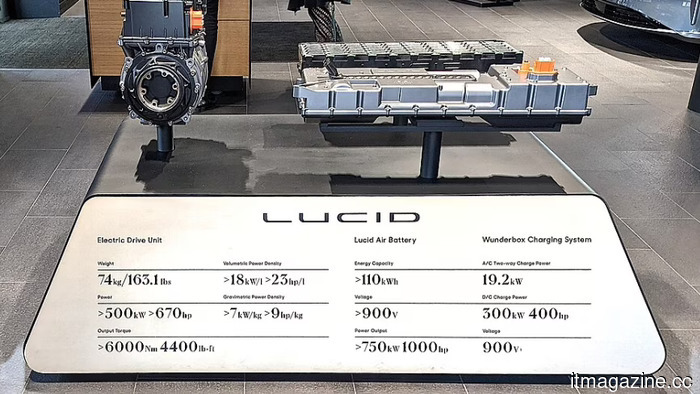 Lucid's stock fell by 40% following a bankruptcy rumor reported by an EV blog. A denial was issued a few hours later.
Lucid's stock fell sharply following a report indicating that AlixPartners was assessing Chapter 11 and going-private alternatives. Lucid refuted the allegations. The stock closed down 16% at $4.62.
Lucid's stock fell by 40% following a bankruptcy rumor reported by an EV blog. A denial was issued a few hours later.
Lucid's stock fell sharply following a report indicating that AlixPartners was assessing Chapter 11 and going-private alternatives. Lucid refuted the allegations. The stock closed down 16% at $4.62.
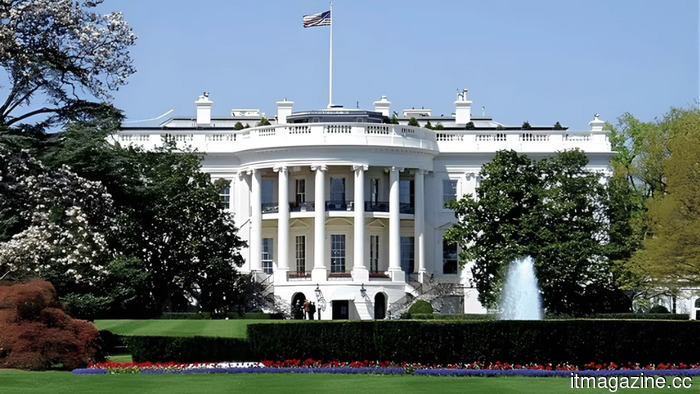 Gold Eagle: the AI cybersecurity hub of the White House
Gold Eagle is the White House's new AI-powered clearinghouse designed to consolidate, prioritize, and manage solutions for cybersecurity vulnerabilities within US critical infrastructure.
Gold Eagle: the AI cybersecurity hub of the White House
Gold Eagle is the White House's new AI-powered clearinghouse designed to consolidate, prioritize, and manage solutions for cybersecurity vulnerabilities within US critical infrastructure.
Australia instructs AI data centers to contribute more power than they consume.
Albanese unveiled an Office of AI, regulations for data centres regarding net generation, and stringent copyright provisions. However, none of these measures are legally binding as of now.