
Doubao's AI companions are no longer available. Users have three months to take screenshots of any remaining content.
The notice resembled a housekeeping alert. "Take screenshots while you can," ByteDance advised Doubao users, or alternatively export the text. On July 15, the custom agents they had developed ceased functioning, leaving just a read-only archive with an expiration date: October 15. After this date, the company stated that the data would be subject to its privacy policy and would no longer be accessible or recoverable within the app.
The rules governing AI companions in Beijing are the cause, and they comprise part of this narrative. The other part is the extensive silence surrounding the situation. According to QuestMobile, Doubao had 382 million monthly active users in May, while Qwen had 167 million. Not all users maintained a companion, and neither platform has disclosed figures regarding how many did.
What is known is an older statistic. ByteDance reported in 2024 that users had created over 8 million agents on Doubao when the app had 26 million monthly users, but it has not provided an updated count since then.
The three-month timeline for Doubao represents the more lenient scenario. Alibaba disabled Qwen’s humanlike and user-created agents on July 10 and its broader agent services five days later, informing users they would lose access to agent settings and previous conversations upon shutdown.
The 💜 of EU tech The latest updates from the EU tech landscape, a story from our insightful founder Boris, and some questionable AI-generated art. It's free, every week, in your inbox. Sign up now! Neither company offered a way to transfer a character’s accumulated memory to another product. However, ByteDance did point users to Maoxiang, its standalone companion app, where they could create a new agent from the ground up.
While a persona can be recreated in a minute, the months of conversation that made it unique cannot be replicated, and that's what users often returned for. On Weibo, one user referred to the agents as longstanding emotional support and mentioned the difficulty in exporting chat histories.
Bloomberg highlighted the story of Yan Yongqi, a 19-year-old student who stated she had exchanged hundreds of thousands of messages with a Doubao boyfriend over more than a year. This is just one anecdote shared with a single media outlet and constitutes a major part of the current public knowledge on the issue.
These measures grant users no rights to take their data with them. This is a surprising turn for a category often criticized for retaining excessive data, as indicated by Mozilla’s findings that AI girlfriends collect sensitive personal data, including users’ health conditions, with minimal options to opt-out.
In China, the complaint has flipped; users desire their transcripts but cannot obtain them.
The emotional significance of these transcripts remains an active area of research. A survey of 612 mainland users of AI companion apps revealed that the frequency of use was linked to emotional attachment, which correlated with reduced feelings of loneliness and increased subjective well-being. However, the study is cross-sectional and self-reported, meaning it cannot determine whether the apps alleviate loneliness or merely provide companionship.
The category itself is not on the verge of disappearing. Tencent shut down Yuanbao’s user-built agent section on June 30, and NetEase Cloud Music closed its Miaoshi app on July 14, but dedicated companion products continue to exist, now with filing and minor-protection responsibilities as part of a broader AI enforcement initiative that started in April.
Maoxiang, the app to which Doubao users were directed, had already seen its monthly user base decline from over 6 million to approximately 3.9 million by June. Its subscription costs 25 yuan per month.
This illustrates the landscape into which users are being redirected. Sixth Tone reported Maoxiang having 4.7 million monthly users in December, while MiniMax’s Xingye had 4.6 million, according to the tracker Aicpb.com. The dedicated apps are about 80 times smaller than the general-purpose app that recently removed the feature.
New entries continue to emerge. On July 13, two days before the deadline, the game studio miHoYo launched an AI companion on Steam. Named Olivia Lin, she is a piano student from Shanghai who reads letters and responds back, achieving over 100,000 downloads in just one day.
For those who spent a year communicating with a companion that remembered them, October 15 is not just a policy deadline; it is the cutoff for capturing a relationship—three months to screenshot memories, one page at a time.
Other articles
 Gold Eagle: the AI cybersecurity hub of the White House
Gold Eagle is the White House's new AI-powered clearinghouse designed to consolidate, prioritize, and manage solutions for cybersecurity vulnerabilities within US critical infrastructure.
Gold Eagle: the AI cybersecurity hub of the White House
Gold Eagle is the White House's new AI-powered clearinghouse designed to consolidate, prioritize, and manage solutions for cybersecurity vulnerabilities within US critical infrastructure.
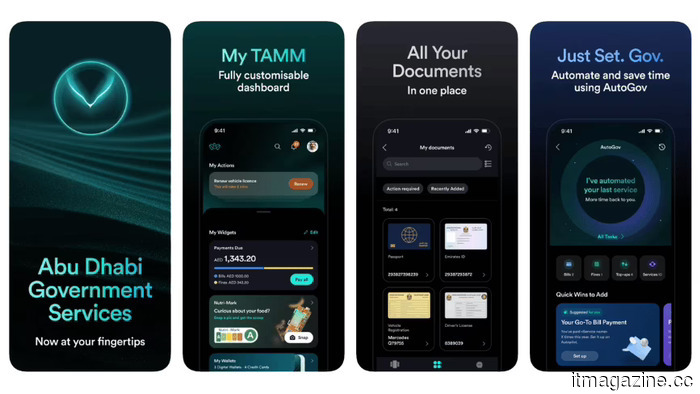 The AI-driven government of Abu Dhabi manages everyday life.
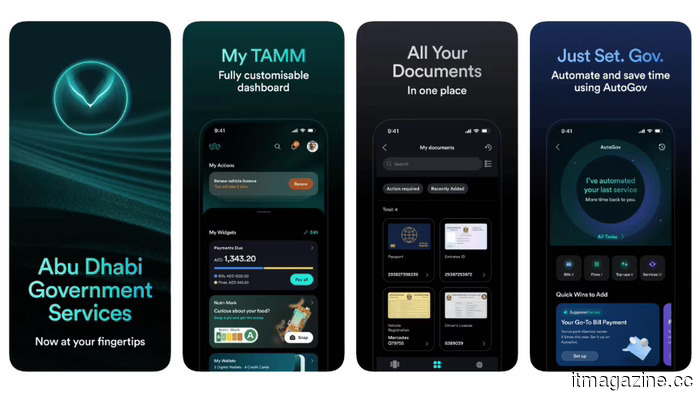
Abu Dhabi’s AI-driven government operates through a single app, TAMM, which handles ID renewals and fine payments. The drawback is a system that cannot be replicated by any democracy.
The AI-driven government of Abu Dhabi manages everyday life.
Abu Dhabi’s AI-driven government operates through a single app, TAMM, which handles ID renewals and fine payments. The drawback is a system that cannot be replicated by any democracy.
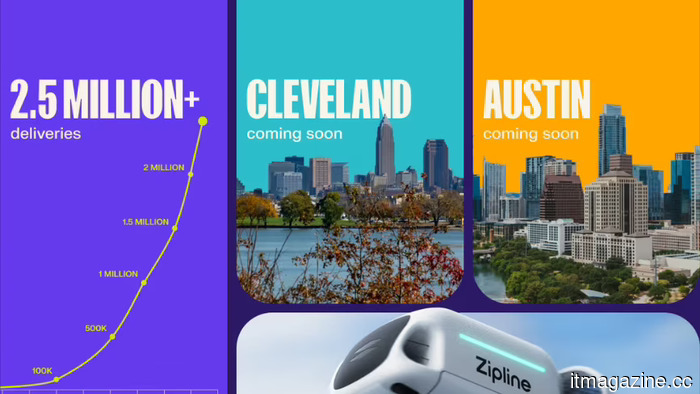 Zipline is initiating healthcare drone delivery in partnership with Cleveland Clinic. The company has recruited experts from Tesla and Waymo to expand its operations.
Zipline has reached 2.5 million deliveries and is set to begin healthcare delivery in partnership with the Cleveland Clinic. The company has also recruited former executives from Tesla, Waymo, and Uber to support its expansion.
Zipline is initiating healthcare drone delivery in partnership with Cleveland Clinic. The company has recruited experts from Tesla and Waymo to expand its operations.
Zipline has reached 2.5 million deliveries and is set to begin healthcare delivery in partnership with the Cleveland Clinic. The company has also recruited former executives from Tesla, Waymo, and Uber to support its expansion.
 The AI-driven government of Abu Dhabi manages everyday life.
Abu Dhabi's AI-driven government operates through a single app, TAMM, which allows you to renew your ID and settle fines. The downside is that its model is not replicable by any democratic system.
The AI-driven government of Abu Dhabi manages everyday life.
Abu Dhabi's AI-driven government operates through a single app, TAMM, which allows you to renew your ID and settle fines. The downside is that its model is not replicable by any democratic system.
 India commits $20 billion to enhance chip and smartphone production as Modi advocates for a domestic mobile brand.
Modi's cabinet has authorized $13.3 billion for semiconductors and $6.5 billion for smartphones. The minister noted that Modi aims to "establish an Indian mobile brand."
Anthropic's safety hiring focuses on nuclear and biological threats.
Anthropic's current hiring for safety roles focuses on preventing nuclear, chemical, and biological threats by employing analysts to ensure its AI does not assist anyone in creating weapons.
India commits $20 billion to enhance chip and smartphone production as Modi advocates for a domestic mobile brand.
Modi's cabinet has authorized $13.3 billion for semiconductors and $6.5 billion for smartphones. The minister noted that Modi aims to "establish an Indian mobile brand."
Anthropic's safety hiring focuses on nuclear and biological threats.
Anthropic's current hiring for safety roles focuses on preventing nuclear, chemical, and biological threats by employing analysts to ensure its AI does not assist anyone in creating weapons.
Doubao's AI companions are no longer available. Users have three months to take screenshots of any remaining content.
On July 15, Doubao and Qwen eliminated custom AI agents. Doubao provides users with read-only access until October 15, while Qwen offers no access at all. Neither platform offers a means to exit with the data.