
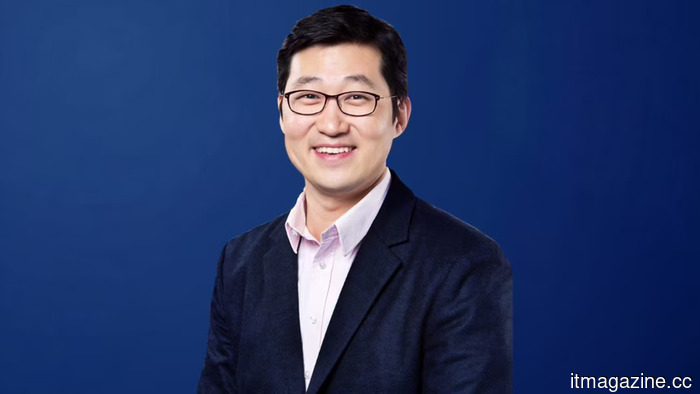
The Seoul court has put a hold on the ruling that designates Coupang's founder as its controlling individual.
Coupang has secured a preliminary victory against South Korea's competition authority. On Tuesday, the Seoul High Court temporarily halted the Fair Trade Commission's (FTC) ruling that identified founder Bom Kim as the controlling figure of the e-commerce company, delaying the associated disclosure requirements while the main lawsuit is processed.
The court's Administrative Division 7 granted the injunction requested by Coupang, Kim, and other parties involved. It suspended both the designation and the FTC’s request for Kim to provide further details about his relatives.
“The applicants have shown an urgent necessity to avert irreparable damage,” the court stated, indicating it found no evidence that the suspension would substantially harm the public interest.
The injunction is in effect until 30 days after the court delivers a decision on the principal case. Although Coupang had sought a longer suspension that would remain until the final judgment, this was not granted.
The conflict is based on a specific aspect of Korean corporate legislation without a direct English equivalent. Annually, the FTC publishes a list of large corporate groups obligated to adhere to disclosure rules, identifying for each group the "same person" or dongilin considered to be at the helm of the organization.
For Coupang, this designation had historically included Coupang Inc., its parent company listed in New York. However, in April, the commission replaced the company with the individual.
The FTC’s rationale was largely centered on family ties. According to the rules, a corporation can retain its designation only if relatives of the individual deemed to control the group do not participate in the management of its domestic subsidiaries. However, Kim’s younger brother, Kim Yoo-seok, serves as a vice president at Coupang and is involved in the Korean operations.
Coupang contends that this concern is unwarranted. “Coupang has a clear ownership structure, with Coupang Inc. holding 100 percent of the Korean operating company,” the firm stated, noting that neither Kim nor his family members possess shares in the Korean affiliates, thus eliminating any potential for private benefits to be transferred to Kim's family.
During a hearing in June, the company argued that the change would obligate Kim to reveal his relatives’ shareholdings and roles at related firms, describing this compliance requirement as challenging to rectify once implemented. They also highlighted procedural and substantive errors in the commission's decision-making process.
The FTC maintained that no immediate or significant harm would arise from the designation and that a business group managed from overseas should not receive more lenient treatment than a Korean conglomerate.
This argument holds considerable weight in Seoul, where the disclosure framework aims to prevent founding families from discreetly extracting value from publicly traded affiliates.
The ruling on Tuesday did not resolve the matter completely. The court determined only that the applicants were facing urgent harm and that delaying the measure would not adversely affect the public interest, which is a criterion for an injunction, not a judgement on the case's merits.
A notable finding from this case is that the court declared the FTC's request for additional information constitutes an administrative action subject to judicial review, allowing companies the opportunity to challenge seemingly routine information requests in court.
The commission has also been active in other areas, notably taking action against Google regarding its conduct in the Android app store, a case involving billions of won in revenue. This is part of a broader trend where national regulators are increasingly confronting foreign-listed platforms, such as Apple's App Store in Delhi and a sideloading regulation accepted in Brazil.
Coupang, listed in New York but primarily operating in Korea, occupies a unique position, which is essentially the stance the FTC has consistently maintained.
The main lawsuit aimed at reversing the designation remains pending. Until it is resolved, and for one month thereafter, the legally responsible entity for Coupang’s disclosures will be the company, not an individual.
Other articles
 Smartphone shipments in China decline for the fifth consecutive quarter due to the impact of memory costs.
In the second quarter of 2026, smartphone shipments in China decreased by 4.3% to 66 million units, marking the fifth consecutive decline, largely due to rising memory costs leading to increased Android prices. Both Huawei and Apple experienced growth.
Smartphone shipments in China decline for the fifth consecutive quarter due to the impact of memory costs.
In the second quarter of 2026, smartphone shipments in China decreased by 4.3% to 66 million units, marking the fifth consecutive decline, largely due to rising memory costs leading to increased Android prices. Both Huawei and Apple experienced growth.
 NestAI from Finland is developing the AI infrastructure that European armed forces seek to possess.
Finland, Estonia, and the Helsinki-based lab NestAI have entered into an agreement regarding defense AI. There is no financial transaction involved. The emphasis is on maintaining sovereign control of the code.
NestAI from Finland is developing the AI infrastructure that European armed forces seek to possess.
Finland, Estonia, and the Helsinki-based lab NestAI have entered into an agreement regarding defense AI. There is no financial transaction involved. The emphasis is on maintaining sovereign control of the code.
 Ericsson's revenue declines by 6% due to rising component costs and a decrease in licensing income.
Ericsson's revenue for Q2 declined by 6% to SEK 52.7 billion, although the adjusted operating profit exceeded expectations. Ekholm has raised concerns regarding the costs of components and pricing.
Ericsson's revenue declines by 6% due to rising component costs and a decrease in licensing income.
Ericsson's revenue for Q2 declined by 6% to SEK 52.7 billion, although the adjusted operating profit exceeded expectations. Ekholm has raised concerns regarding the costs of components and pricing.
 Thomson Reuters is reducing its engineering staff while bringing in engineers who are skilled in AI.
Thomson Reuters is reducing its engineering workforce as it implements AI in its legal and tax offerings. They mention that it is a small number of positions. Employees were informed that the cuts could affect up to 500 roles.
Thomson Reuters is reducing its engineering staff while bringing in engineers who are skilled in AI.
Thomson Reuters is reducing its engineering workforce as it implements AI in its legal and tax offerings. They mention that it is a small number of positions. Employees were informed that the cuts could affect up to 500 roles.
 China's smartphone shipments decline for the fifth consecutive quarter due to rising memory costs.
In the second quarter of 2026, China experienced a 4.3% drop in smartphone shipments, amounting to 66 million units, marking the fifth consecutive decline, attributed to rising memory costs that increased prices for Android devices. Meanwhile, both Huawei and Apple saw growth.
China's smartphone shipments decline for the fifth consecutive quarter due to rising memory costs.
In the second quarter of 2026, China experienced a 4.3% drop in smartphone shipments, amounting to 66 million units, marking the fifth consecutive decline, attributed to rising memory costs that increased prices for Android devices. Meanwhile, both Huawei and Apple saw growth.
 The forthcoming AI energy commitment from the White House focuses on utilities.
The White House intends to request utilities, data centre operators, and governors to commit to ensuring that the demand for AI power does not increase residential electricity costs.
The forthcoming AI energy commitment from the White House focuses on utilities.
The White House intends to request utilities, data centre operators, and governors to commit to ensuring that the demand for AI power does not increase residential electricity costs.
The Seoul court has put a hold on the ruling that designates Coupang's founder as its controlling individual.
The Seoul High Court has put on hold the FTC’s classification of Coupang founder Bom Kim as the controlling figure of the group while his lawsuit against the regulator is ongoing.