

A Seoul court has put a hold on the order designating Coupang's founder as its controlling individual.
Coupang has achieved an initial victory in its battle against South Korea's competition authority. On Tuesday, the Seoul High Court put a hold on the Fair Trade Commission's ruling that designated founder Bom Kim as the controlling figure of the e-commerce company, halting the associated disclosure requirements while the related lawsuit proceeds.
The court's Administrative Division 7 granted the injunction requested by Coupang, Kim, and other parties. It suspended both the designation and the FTC’s separate request for Kim to provide further information about his family members.
"The applicants have shown an urgent need to avert irreparable damage," stated the court, noting that it did not perceive any indication that the suspension would considerably affect public interests.
The stay will remain in effect until 30 days after the court resolves the main case. Coupang had sought a longer pause, requesting a suspension until the final judgment was made, but that request was denied.
The issue revolves around an aspect of Korean corporate law that lacks a straightforward English equivalent. Each year, the FTC publishes a list of large business groups that must adhere to disclosure regulations, identifying, for each group, the “same person” or dongilin believed to be at the helm.
For Coupang, this designation had historically belonged to Coupang Inc., the New York-listed parent company. In April, the commission replaced the company with the individual.
Its rationale was specific and related to family ties. According to the regulations, a corporation may retain the designation only if the relatives of the person who ultimately controls the group do not participate in the management of its domestic subsidiaries; however, Kim’s younger brother, Kim Yoo-seok, serves as a vice-president at Coupang involved in running the Korean business.
Coupang argues that the structure of ownership alleviates the concern. "Coupang has a transparent ownership model, with Coupang Inc. holding 100 percent of the Korean operating company," the firm stated, emphasizing that neither Kim nor his family members own shares in the Korean affiliates and that there are no avenues for private benefits to be transferred to the founder's family.
During a June hearing, the company contended that the change would require Kim to reveal his family members’ shares and positions in affiliated firms, a compliance burden that would be challenging to reverse once imposed. It also claimed there were procedural and substantive errors in the commission's decision-making process.
The FTC maintained that the designation did not result in immediate or substantial harm and argued that foreign-controlled business groups should not receive more lenient treatment than Korean conglomerates.
This stance resonates in Seoul, where the disclosure framework aims to prevent founding families from discreetly extracting value from publicly listed affiliates.
Tuesday's ruling did not resolve the matter entirely. The court determined only that the applicants faced immediate harm and that suspending the measure would not negatively impact public interest, which serves as the basis for issuing an injunction rather than a judgment on the merits.
One notable outcome of the ruling is that the court concluded the FTC's request for additional information constituted an administrative action subject to judicial review, thus allowing a seemingly routine information request to be contested in court.
The commission is also active in other areas, currently pursuing Google for its conduct related to the Android app store, a case involving billions of won in relevant revenue. This is part of a broader trend where national regulators are challenging foreign-listed platforms, including the App Store case against Apple in Delhi and a sideloading directive accepted in Brazil.
Coupang, listed in New York and primarily operating in Korea, finds itself in a unique position, which aligns with the FTC's ongoing arguments.
The main lawsuit, aimed at completely overturning the designation, is still pending. Until it is resolved, and for an additional month afterward, the entity legally accountable for Coupang's disclosures remains a corporation rather than an individual.
Other articles
 The Pentagon has halted the cyber audit regulation that was driving small suppliers away.
The Pentagon has halted CMMC Phase 2 cybersecurity audits, pointing to high costs and a lack of assessors as reasons that are pushing small contractors away.
The Pentagon has halted the cyber audit regulation that was driving small suppliers away.
The Pentagon has halted CMMC Phase 2 cybersecurity audits, pointing to high costs and a lack of assessors as reasons that are pushing small contractors away.
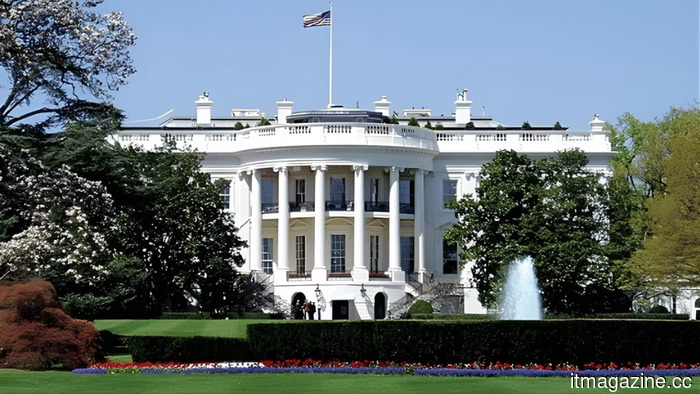 The next AI energy commitment from the White House focuses on utility companies.
The White House intends to request utilities, data center operators, and governors to commit to ensuring that the demand for AI power does not increase residential electricity costs.
The next AI energy commitment from the White House focuses on utility companies.
The White House intends to request utilities, data center operators, and governors to commit to ensuring that the demand for AI power does not increase residential electricity costs.
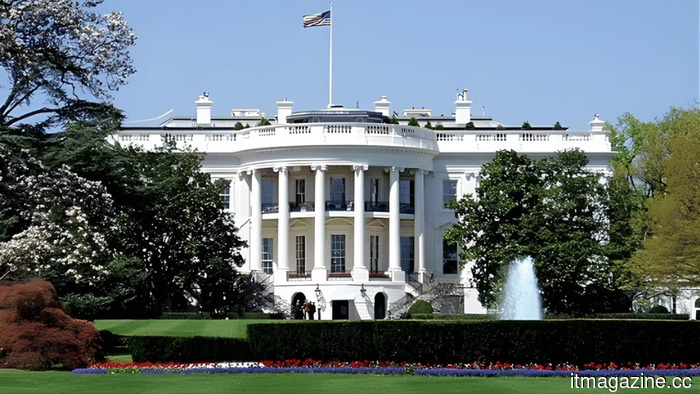 The upcoming AI energy commitment from the White House focuses on utility companies.
The White House intends to request that utilities, data center operators, and governors commit to ensuring that the demand for AI power will not increase residential electricity costs.
The upcoming AI energy commitment from the White House focuses on utility companies.
The White House intends to request that utilities, data center operators, and governors commit to ensuring that the demand for AI power will not increase residential electricity costs.
 Smartphone shipments in China decline for the fifth consecutive quarter due to the impact of memory costs.
In the second quarter of 2026, smartphone shipments in China decreased by 4.3% to 66 million units, marking the fifth consecutive decline, largely due to rising memory costs leading to increased Android prices. Both Huawei and Apple experienced growth.
Smartphone shipments in China decline for the fifth consecutive quarter due to the impact of memory costs.
In the second quarter of 2026, smartphone shipments in China decreased by 4.3% to 66 million units, marking the fifth consecutive decline, largely due to rising memory costs leading to increased Android prices. Both Huawei and Apple experienced growth.
 Canada's banking regulator issued a warning to banks regarding Claude Mythos.
An email from April, made public through access-to-information regulations, reveals that Canada’s OSFI has cautioned bank technology leaders regarding Anthropic’s Claude Mythos.
Canada's banking regulator issued a warning to banks regarding Claude Mythos.
An email from April, made public through access-to-information regulations, reveals that Canada’s OSFI has cautioned bank technology leaders regarding Anthropic’s Claude Mythos.
 NestAI from Finland is developing the AI infrastructure that European armed forces seek to possess.
Finland, Estonia, and the Helsinki-based lab NestAI have entered into an agreement regarding defense AI. There is no financial transaction involved. The emphasis is on maintaining sovereign control of the code.
NestAI from Finland is developing the AI infrastructure that European armed forces seek to possess.
Finland, Estonia, and the Helsinki-based lab NestAI have entered into an agreement regarding defense AI. There is no financial transaction involved. The emphasis is on maintaining sovereign control of the code.
A Seoul court has put a hold on the order designating Coupang's founder as its controlling individual.
The Seoul High Court has put a hold on the FTC’s classification of Coupang founder Bom Kim as the controlling figure of the group while his legal action against the regulator moves forward.