
NestAI from Finland is developing the AI infrastructure that European armed forces seek to possess.
A lab in Helsinki, established less than a year ago and funded by Nokia and the Finnish government, is now developing battlefield software in collaboration with two defense ministries. The emphasis is less on the technology itself and more on who has control over it.
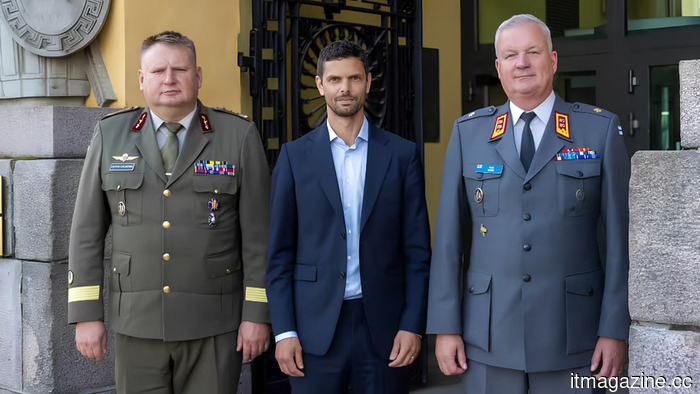
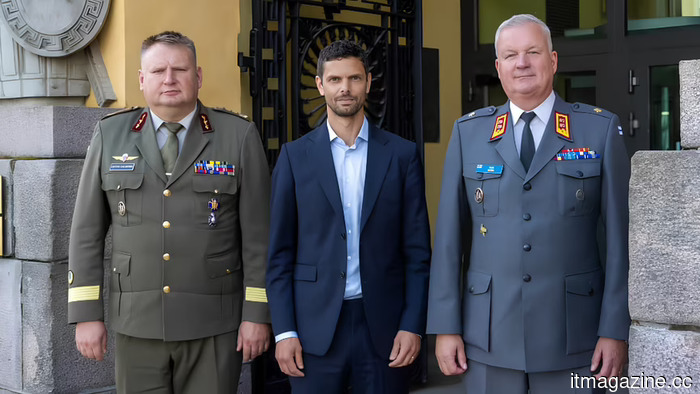
On the final day of June, representatives from Finland's Ministry of Defence, the Estonian Defence Forces, and the newly founded AI lab in Helsinki signed an agreement that does not obligate any party to expend any funds. The letter of intent explicitly omits any financial commitments, as confirmed by the Finnish Defence Forces in their announcement.
This document is one of the least impactful things a defense ministry could endorse on paper. However, it is, in the current European context, quite significant.
The letter connects the Finnish Defence Forces' AI Centre of Excellence with Estonia's Force Transformation Command, while NestAI is the industrial collaborator, establishing a framework for sharing knowledge, joint initiatives, training, and technological collaboration. Procurement is not addressed in this agreement. Rather than negotiating a contract, they are cultivating a collaborative habit.
NestAI itself is only slightly older than the agreement. Established in 2025, it currently employs nearly 200 engineers and scientists and raised €100 million from Nokia and Tesi, Finland's state investment firm, in November. This funding positions it among the better-funded physical-AI labs in Europe, even before it gained wider recognition outside Helsinki.
The product is named NestOS, and its offering is notably clear for the sector. It functions as an operating layer for unmanned vehicles and command-and-control systems, designed with open, modular architectures that continue to learn post-deployment, avoiding stagnation at the moment of delivery.
“European defense forces require AI systems that can operate seamlessly across borders and keep evolving after deployment,” stated Peter Sarlin, NestAI’s executive chairman. He emphasized that the evolution of capabilities should remain “in the control of the nations operating those systems.”
This stipulation is the crux of the argument. The preference for open and modular systems is not merely an engineering choice; it serves as a procurement principle: no single vendor can dictate the direction, and each country retains sovereign control over its data. Europe has spent three years grappling with the discomfort of relying on external terms for critical infrastructure.
The initial project areas focus on adaptive and learning AI, decision support for command and control, and autonomous, unmanned systems. The initial phase will involve pilots where participants identify focus areas, implement them, and evaluate results before scaling up more broadly. In the long run, there is a goal to engage AI organizations, centers of excellence, and industry partners from other countries.
Major General Sami Nurmi, deputy chief of staff for strategy at Defence Command Finland, positioned this agreement within the Finnish Defence Forces’ data and AI strategy introduced last year, expressing a desire to include additional nations in the collaboration.
His Estonian counterpart, Major General Viktor Kalnitski, remarked that merging operational insights with technical expertise should hasten the responsible integration of AI in command and control, unmanned systems, and adaptive decision support.
The commercial aspect is progressing more swiftly than the diplomatic one. On July 9, Nokia Defense and NestAI introduced a joint capability for what the industry refers to as denied environments—settings where satellite navigation is disrupted, bandwidth fails, and autonomous systems must continue functioning regardless.
This development marks the first practical application of the Nokia partnership and enters a market that has been increasingly rewarding European defense technology at a rate that would have seemed irrational in 2021.
Although NestAI is not the largest or most prominent player in this market—Munich's Helsing, valued at $18 billion in its recent funding round, has been forming a partnership with Mistral on military AI, and NATO has its own sensor-fusion initiative along the eastern front—NestAI possesses a unique advantage: proximity. Finland has a 1,340-kilometer border with Russia, while Estonia lies directly across the Gulf, which sharpens awareness regarding who develops the software and where the data is managed.
Other articles
 The Seoul court has put a hold on the ruling that designates Coupang's founder as its controlling individual.
The Seoul High Court has put on hold the FTC’s classification of Coupang founder Bom Kim as the controlling figure of the group while his lawsuit against the regulator is ongoing.
The Seoul court has put a hold on the ruling that designates Coupang's founder as its controlling individual.
The Seoul High Court has put on hold the FTC’s classification of Coupang founder Bom Kim as the controlling figure of the group while his lawsuit against the regulator is ongoing.
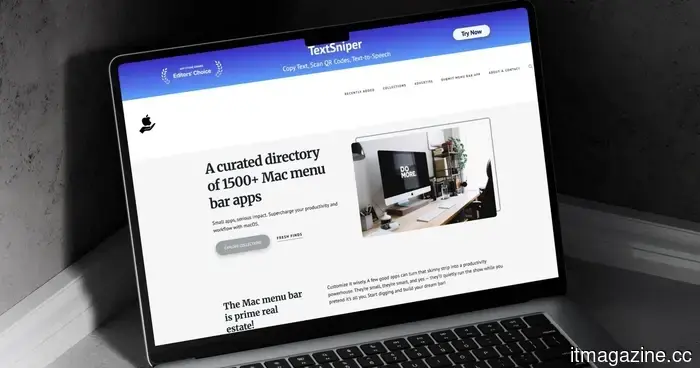 This website is a treasure trove for those who enjoy Mac menu bar applications.
MacMenuBar is a carefully organized directory featuring over 1,500 Mac menu bar applications, categorized into groups such as clipboard managers, timers, and window managers. Here's why you should consider bookmarking it.
This website is a treasure trove for those who enjoy Mac menu bar applications.
MacMenuBar is a carefully organized directory featuring over 1,500 Mac menu bar applications, categorized into groups such as clipboard managers, timers, and window managers. Here's why you should consider bookmarking it.
 Intel pledges $5.7 billion for Xeon manufacturing in Ireland.
Intel is committing €5 billion ($5.7 billion) to enhance its Leixlip campus in Ireland and increase the production of Xeon processors on the Intel 3 node, with the majority of the investment expected to be completed by 2027.
Intel pledges $5.7 billion for Xeon manufacturing in Ireland.
Intel is committing €5 billion ($5.7 billion) to enhance its Leixlip campus in Ireland and increase the production of Xeon processors on the Intel 3 node, with the majority of the investment expected to be completed by 2027.
 Anthropic has confirmed that Claude behaves differently based on the language you use and the model you choose.
A recent study by Anthropic indicates that Claude's tone varies based on the model you select and the language you use, with the differences being significant enough to consider before posing your next question.
Anthropic has confirmed that Claude behaves differently based on the language you use and the model you choose.
A recent study by Anthropic indicates that Claude's tone varies based on the model you select and the language you use, with the differences being significant enough to consider before posing your next question.
 NestAI from Finland is developing the AI component that European armed forces aim to possess.
Finland, Estonia, and the Helsinki-based lab NestAI have established a defense AI agreement. There is no financial exchange involved. The emphasis is on maintaining sovereign control over the code.
NestAI from Finland is developing the AI component that European armed forces aim to possess.
Finland, Estonia, and the Helsinki-based lab NestAI have established a defense AI agreement. There is no financial exchange involved. The emphasis is on maintaining sovereign control over the code.
 The upcoming AI energy commitment from the White House focuses on utility companies.
The White House intends to request that utilities, data center operators, and governors commit to ensuring that the demand for AI power will not increase residential electricity costs.
The upcoming AI energy commitment from the White House focuses on utility companies.
The White House intends to request that utilities, data center operators, and governors commit to ensuring that the demand for AI power will not increase residential electricity costs.
NestAI from Finland is developing the AI infrastructure that European armed forces seek to possess.
Finland, Estonia, and the Helsinki-based lab NestAI have entered into an agreement regarding defense AI. There is no financial transaction involved. The emphasis is on maintaining sovereign control of the code.