

China's smartphone shipments decline for the fifth consecutive quarter due to rising memory costs.
For the fifth consecutive quarter, fewer phones departed from Chinese warehouses compared to the previous year. According to data released by IDC on Tuesday, shipments dropped 4.3% to 66 million units in the second quarter, as manufacturers increased prices to offset the rising costs of memory and other components.
Shipments in the first half of the year decreased by 4.2% compared to the same period last year. This extended period of decline suggests a shift in market dynamics rather than just a temporary setback. However, only two brands saw growth: Huawei shipped 19.4% more phones than a year ago, while Apple’s shipments rose by 24.4%, giving them 22.6% and 18.1% of the market share respectively.
The remaining brands experienced declines. Xiaomi, ranked fifth, reported a 21.7% drop in shipments, while Oppo and Vivo fell by 9.7% and 11.4%, respectively. The distinction between the successful companies and others was not related to product cycles but rather to their pricing strategies.
"Huawei and Apple maintained their prices while competitors increased theirs, providing hesitant buyers a reason to purchase during a period when most of the market was prompting them to wait," stated Arthur Guo, a senior analyst at IDC China.
The reason for the price increases among competitors stems from circumstances far removed from retail. DRAM prices have soared as the few companies that dominate memory production have shifted wafer capacity towards high-bandwidth components favored by AI accelerators, leaving the smartphone industry to compete for the remaining supply.
Budget smartphones are the first to feel the impact since lower-cost devices have the smallest margins to absorb the doubling costs of components. Consequently, an AI boom is gradually affecting entry-level phones, incrementally increasing their bill of materials.
According to IDC, many Android manufacturers responded by raising prices or reducing their budget offerings, which effectively encourages price-sensitive consumers to retain their current devices. Additionally, the diminishing influence of government subsidies has further weakened demand that had previously buoyed earlier quarters.
This trend is not limited to China. IDC now anticipates that global smartphone shipments will decline by 13.9% in 2026, reaching 1.09 billion units, marking the most significant annual contraction recorded in the industry, with China alone expected to see roughly a 13% decrease over the year.
The first quarter already indicated this downward trend. Shipments in China fell 3.3% from January to March, with Huawei and Apple once again supporting the market, while rival tracker Omdia noted a 1% decline during the same timeframe as costs drove device prices higher.
This downward adjustment in the global forecast reflects IDC's earlier prediction of a 12.9% decline made in February, with the additional contraction largely attributed to lower-end Android manufacturers grappling with the new cost landscape.
Apple's success in China is not new; its shipments grew approximately 20% in the first quarter according to Counterpoint, the fastest increase among major vendors, and the trend continued into the second quarter.
Xiaomi's 21.7% decline is the most pronounced among major brands, coinciding with a shift in the company's narrative towards its electric vehicle deliveries rather than its smartphones. Oppo and Vivo, which are heavily reliant on the mid-range market, also experienced declines, albeit smaller ones.
None of the top five companies have publicly attributed their struggles solely to memory costs, and they have said little regarding their pricing strategies. However, the shipment data suggests a clear pattern: the two companies that maintained their prices were the ones that increased their phone sales.
Any potential relief will likely come from production capabilities rather than marketing efforts. Memory manufacturers are hurrying to boost capacity, with discussions underway in Seoul about establishing a second domestic chip cluster with Samsung and SK Hynix, although most projections predict that significant new supply will not materialize until late 2027.
Until then, the Chinese market will serve as a test of who can maintain their pricing; Huawei and Apple managed to do so for one quarter. The third-quarter results, expected in the fall alongside the next iPhone launch, will reveal whether this was a strategic decision or merely a fleeting moment.
Other articles
 Canada's banking regulator issued a warning to banks, mentioning Claude Mythos.
An email from April, made public under access-to-information regulations, reveals that Canada's OSFI cautioned bank technology leaders regarding Anthropic’s Claude Mythos.
Canada's banking regulator issued a warning to banks, mentioning Claude Mythos.
An email from April, made public under access-to-information regulations, reveals that Canada's OSFI cautioned bank technology leaders regarding Anthropic’s Claude Mythos.
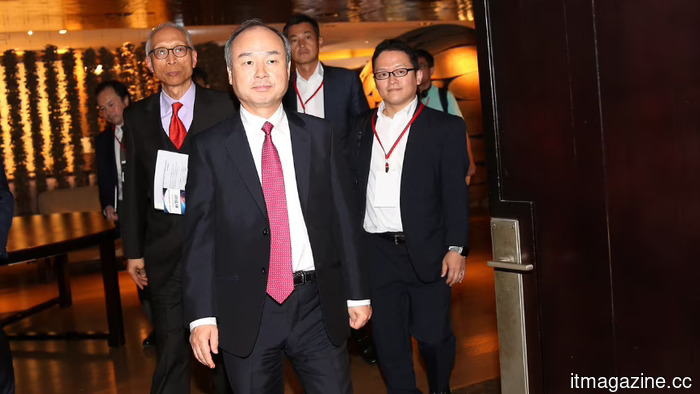 Masayoshi Son claims that AI will incur costs of $5 trillion annually by 2040, asserting that discussions about a bubble are ridiculous.
Masayoshi Son stated that AI will require an annual investment of $5 trillion by 2040 and dismissed concerns about a bubble as ludicrous during SoftBank's annual conference in Tokyo.
Masayoshi Son claims that AI will incur costs of $5 trillion annually by 2040, asserting that discussions about a bubble are ridiculous.
Masayoshi Son stated that AI will require an annual investment of $5 trillion by 2040 and dismissed concerns about a bubble as ludicrous during SoftBank's annual conference in Tokyo.
 The public beta of iOS 27 has finally arrived, and you can access it without a developer account.
The public beta of iOS 27 has launched, introducing Siri AI, enhanced features, and a more secure testing approach.
The public beta of iOS 27 has finally arrived, and you can access it without a developer account.
The public beta of iOS 27 has launched, introducing Siri AI, enhanced features, and a more secure testing approach.
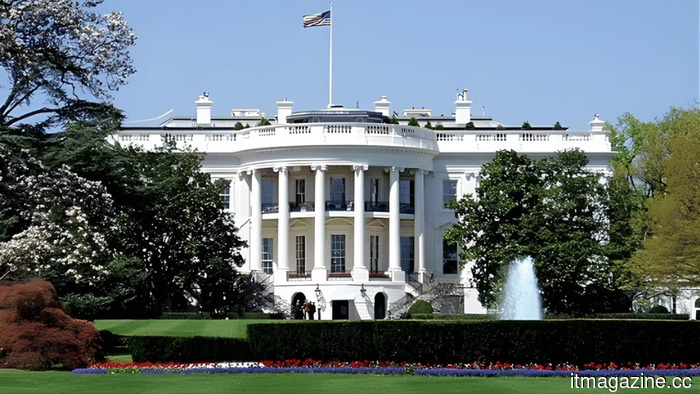 The upcoming AI energy commitment from the White House focuses on utility companies.
The White House intends to request that utilities, data center operators, and governors commit to ensuring that the demand for AI power will not increase residential electricity costs.
The upcoming AI energy commitment from the White House focuses on utility companies.
The White House intends to request that utilities, data center operators, and governors commit to ensuring that the demand for AI power will not increase residential electricity costs.
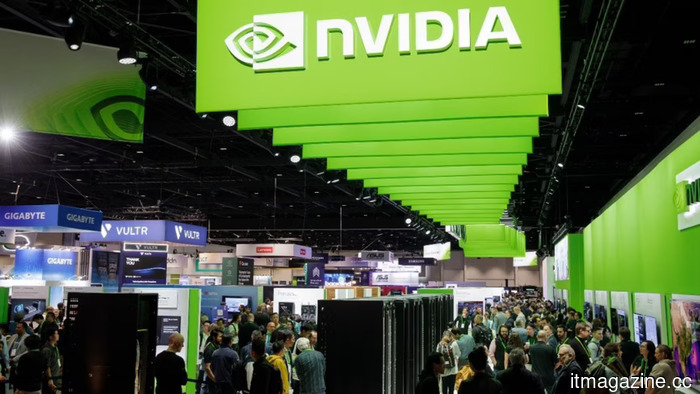 Nvidia creates a whitelist: over fifty percent of its Asian clients are excluded from it.
Nvidia has reduced its roster of Asian clients authorized to purchase AI chips by more than 50%, implementing a whitelist and stricter screening processes in Singapore, Malaysia, and Japan.
Nvidia creates a whitelist: over fifty percent of its Asian clients are excluded from it.
Nvidia has reduced its roster of Asian clients authorized to purchase AI chips by more than 50%, implementing a whitelist and stricter screening processes in Singapore, Malaysia, and Japan.
 Canada’s banking regulator issued a warning to banks, identifying Claude Mythos.
An email from April disclosed through access-to-information regulations reveals that Canada’s OSFI cautioned bank technology leaders regarding Anthropic’s Claude Mythos.
Canada’s banking regulator issued a warning to banks, identifying Claude Mythos.
An email from April disclosed through access-to-information regulations reveals that Canada’s OSFI cautioned bank technology leaders regarding Anthropic’s Claude Mythos.
China's smartphone shipments decline for the fifth consecutive quarter due to rising memory costs.
In the second quarter of 2026, China experienced a 4.3% drop in smartphone shipments, amounting to 66 million units, marking the fifth consecutive decline, attributed to rising memory costs that increased prices for Android devices. Meanwhile, both Huawei and Apple saw growth.