
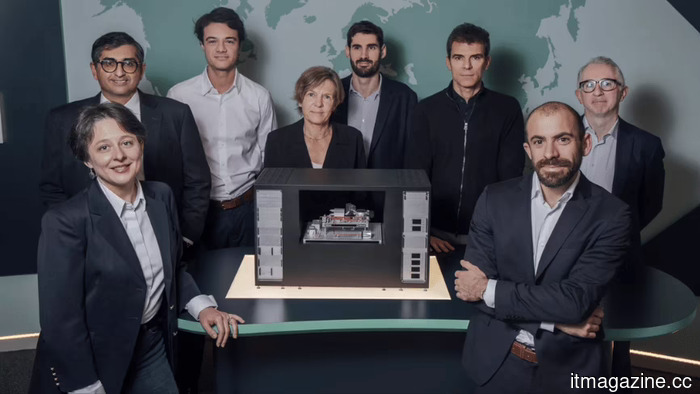
Pasqal's $2 billion Nasdaq wager faces a French veto.
France's Pasqal is set to join Nasdaq with a valuation of $2 billion, approximately 100 times its revenue. Its filings highlight two main points: quantum computing may never yield profits, and Paris retains the power to approve company ownership.
The French quantum computing company is merging with Bleichroeder Acquisition Corp. II, a blank-check firm, in a deal valuing Pasqal at $2 billion before cash. Sifted’s Daphné Leprince-Ringuet examined the extensive 300-plus pages of filings, offering a candid perspective on the financial realities of quantum technology.
To begin with the valuation, Pasqal generated €16.5 million in revenue in 2025, making the $2 billion valuation roughly 100 times its sales. This appears high until compared to other companies in the sector.
Relatively Affordable in Quantum Terms
CEO Wasiq Bokhari suggests that Pasqal is, comparatively, a good deal. He highlighted to Leprince-Ringuet that its publicly traded counterparts are valued much higher. Quantinuum recently entered the public market and has a market cap nearing $20 billion, translating to around 647 times its 2025 revenue. In this context, the 100 times multiple seems almost conservative.
This comparison is insightful, indicating how the market assesses quantum technology: not by current earnings but by the potential future returns anticipated by investors. The filings candidly address the inherent risks, cautioning that “commercial traction of quantum computing technology may never materialize” and the machines might fail to perform as expected.
The French Government's Oversight
Another significant risk is political. As a French company engaged in vital technology, Pasqal is subject to what the filings describe as “French state influence.” Any outside investor from outside France or the EU seeking a substantial ownership stake must obtain approval from the French Ministry of the Economy.
In essence, Paris maintains control over ownership stakes. This control is a characteristic aspect of Europe’s strategy regarding strategic technologies, balancing the desire to cultivate champions while retaining oversight. This principle aligns with France’s broader tech-sovereignty initiatives.
For a company seeking investments from global sources, this stipulation poses a real challenge. It also explains why Pasqal’s decision to list in the US is significant.
Rationale for Listing in the US
Bokhari explained that the choice of the US market was driven by the availability of capital. This rationale has prompted numerous European deep-tech companies to make the jump across the Atlantic. IQM made history as the first European quantum firm to list on a major US exchange. Others involved in advanced hardware and chip inspection have also opted to raise funds where capital is most abundant.
The transaction is substantial, with Pasqal anticipating around $500 million in gross proceeds. The merged entity will be known as Pasqal Holding SA and aims to finalize the listing on Nasdaq in the latter half of this year. The details were laid out in a joint Form F-4 submitted to the SEC on May 26 and updated a month later.
This trend poses challenges for Europe.
It nurtures its most sophisticated companies domestically but watches as international markets assign their values. Pasqal’s filings illuminate the need for substantial, patient investment in quantum technology, making the French ownership veto an unappealing factor. Ultimately, whether the technology justifies its valuation remains an unresolved question, as the company itself acknowledges.
Other articles
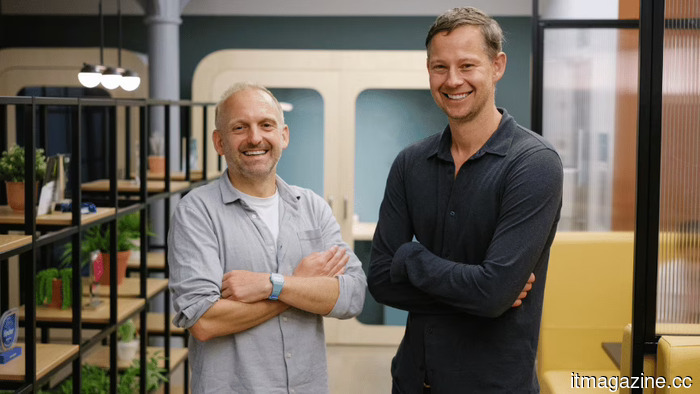 Moneybox reaches unicorn status on London’s new Pisces market.
Moneybox has become Europe's latest unicorn, valued at £800 million (US$1.1 billion), following a £45 million employee share sale on the new Pisces market of the LSE, rather than through a fundraising effort.
Moneybox reaches unicorn status on London’s new Pisces market.
Moneybox has become Europe's latest unicorn, valued at £800 million (US$1.1 billion), following a £45 million employee share sale on the new Pisces market of the LSE, rather than through a fundraising effort.
 xAI is operating 59 unauthorized gas turbines, which is double the amount it has acknowledged.
Emails from regulators indicate that xAI set up 59 unapproved gas turbines for Colossus 2. Approximately 94% of the Tennessee residents living within a five-mile radius of the site are Black.
xAI is operating 59 unauthorized gas turbines, which is double the amount it has acknowledged.
Emails from regulators indicate that xAI set up 59 unapproved gas turbines for Colossus 2. Approximately 94% of the Tennessee residents living within a five-mile radius of the site are Black.
 The permission error on the Pixel Watch persists, but there is an unusual workaround.
Owners of the Pixel Watch are experiencing a persistent Fitbit permission error that remains even after performing a factory reset. Fortunately, one user has discovered a peculiar workaround that proves effective.
The permission error on the Pixel Watch persists, but there is an unusual workaround.
Owners of the Pixel Watch are experiencing a persistent Fitbit permission error that remains even after performing a factory reset. Fortunately, one user has discovered a peculiar workaround that proves effective.
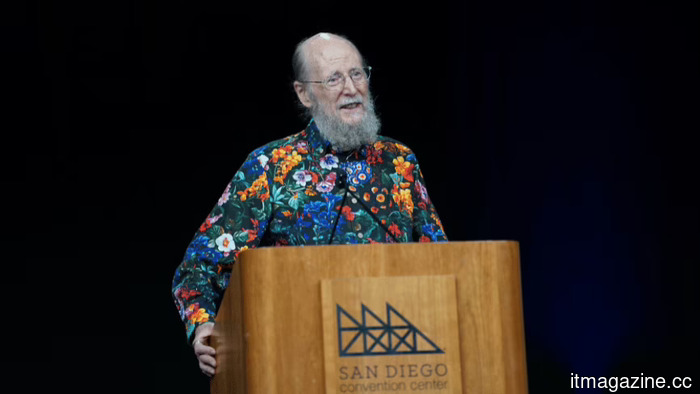 Richard Sutton departs from Carmack to establish his own artificial intelligence laboratory.
Richard Sutton, regarded as the pioneer of reinforcement learning, has departed from John Carmack’s Keen to develop an AI that can learn in real time using approximately 20 watts of power.
Richard Sutton departs from Carmack to establish his own artificial intelligence laboratory.
Richard Sutton, regarded as the pioneer of reinforcement learning, has departed from John Carmack’s Keen to develop an AI that can learn in real time using approximately 20 watts of power.
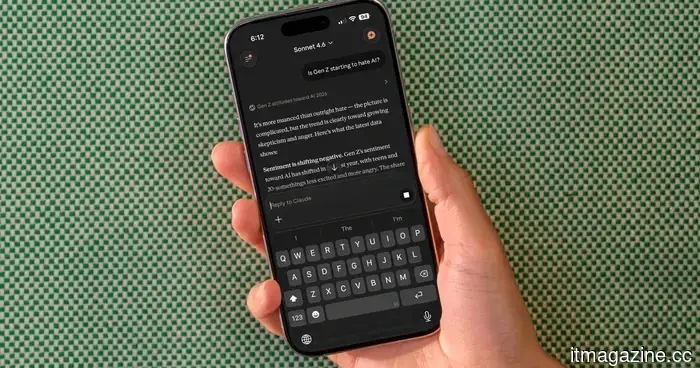 Claude identified the issue with my washing machine in just a few minutes, and it was completely free of charge.
A perplexing error code led me to believe that my washing machine was beyond repair. However, Claude posed the right questions, assisted me in identifying the actual issue, and prevented me from making an unnecessary purchase.
Claude identified the issue with my washing machine in just a few minutes, and it was completely free of charge.
A perplexing error code led me to believe that my washing machine was beyond repair. However, Claude posed the right questions, assisted me in identifying the actual issue, and prevented me from making an unnecessary purchase.
 Tower Semiconductor is investing $3 billion in Japan, with Tokyo covering a third of the amount.
Tower Semiconductor plans to invest approximately $3 billion to enhance its 300mm silicon photonics capacity in Japan, after accounting for $1 billion in government grants from Japan.
Tower Semiconductor is investing $3 billion in Japan, with Tokyo covering a third of the amount.
Tower Semiconductor plans to invest approximately $3 billion to enhance its 300mm silicon photonics capacity in Japan, after accounting for $1 billion in government grants from Japan.
Pasqal's $2 billion Nasdaq wager faces a French veto.
Pasqal is set to go public on Nasdaq through a SPAC, achieving a valuation of $2 billion, which is approximately 100 times its revenue. Its regulatory filings caution that quantum technology may never generate returns, and France has the authority to approve potential buyers.