
Tower Semiconductor is investing $3 billion in Japan, with Tokyo covering a third of the amount.
Tower Semiconductor announced on Tuesday that it will invest approximately $3 billion to expand its 300mm operations in Japan, with a net of about $1 billion coming from grants provided by the Japanese government. This expansion will focus on optical components that AI data centers are demanding at an unprecedented rate. The announcement was made with support from Japan’s Ministry of Economy, Trade and Industry, and will include developments in silicon photonics, silicon germanium, and advanced optical packaging.
As a specialized analog foundry, Tower does not compete with TSMC for leading-edge nodes but focuses on more fundamental manufacturing needs. The first phase involves repurposing the Arai facility, formerly known as Fab 6, for 300mm silicon photonics and packaging, while maximizing output at Fab 7 in Uozu. The company anticipates full production readiness by the fourth quarter of 2027 and based on this, has increased its revenue forecast for 2028 to $3.6 billion, with a net profit of $1.2 billion.
The second phase represents a larger and less defined investment, which includes constructing a completely new 300mm facility adjacent to Fab 7, dependent on signing undisclosed agreements. This phase is expected to significantly increase silicon photonics and silicon germanium capacity for the company. Tower predicts this expansion will be “highly accretive” starting in 2029, with reports suggesting that the total 300mm capacity could reach around four times the current output in Uozu, although this estimate falls outside of Tuesday’s announcement and should be seen as an approximation rather than a firm promise.
Tower acquired these Japanese assets through TPSCo, a joint venture stemming from Panasonic’s former semiconductor business, in which it holds a 51% stake. In a previously announced restructuring, Tower is gaining full ownership of the 300mm Fab 7 while its partner retains the 200mm site, simplifying the justification for the $3 billion investment to its board.
CEO Russell Ellwanger framed this initiative as an industrial policy partnership, expressing gratitude to the Japanese government for selecting Tower to oversee the expansion of these strategically significant technologies, while also referencing local suppliers and Japanese universities in a statement likely prepared with input from METI.
The demand for these technologies is substantial, as increased data rates are straining traditional copper interconnects, making optical solutions necessary for larger AI training clusters. This is underscored by Nvidia’s commitment of at least $6.5 billion to photonics since March, HyperLight’s $80 million funding for thin-film lithium niobate, and the collaboration between Tower and Marvell, which reported shipping over five million coherent photonic ICs.
Japan’s investment is also crucial, as it seeks to reintegrate into advanced manufacturing. The $1 billion in public funds directed towards an Israeli foundry in exchange for establishing a photonics center of excellence in Japan mirrors the strategy Europe utilized when Infineon launched its €5 billion Dresden fab under the EU Chips Act, highlighting that Tokyo is investing in maintaining a presence rather than merely subsidizing chip production.
However, potential risks outlined by Tower include construction delays, equipment delivery times, permits, negotiations for definitive agreements, and the conditions of the METI grants, which may lead to the forfeiture of some or all grant money if certain agreements are not fulfilled. Notably, the second phase has yet to be formalized with signed agreements.
Additionally, the supply side remains uncertain, as Beijing has imposed stricter regulations on indium phosphide, a crucial material for the optical chips used in AI data centers, reminding stakeholders that capacity is only as effective as the materials available.
Tower has already indicated its second-quarter earnings call will be the next opportunity to assess these projections against performance metrics beyond what has been reported in this announcement.
Other articles
 This $68 phone offers smartphone-savvy kids the childhood experiences that millennials missed out on.
Pinwheel’s vintage-style home phone offers children the ability to make voice calls with contacts approved by parents, has designated calling hours, and eliminates the need for apps or social media.
This $68 phone offers smartphone-savvy kids the childhood experiences that millennials missed out on.
Pinwheel’s vintage-style home phone offers children the ability to make voice calls with contacts approved by parents, has designated calling hours, and eliminates the need for apps or social media.
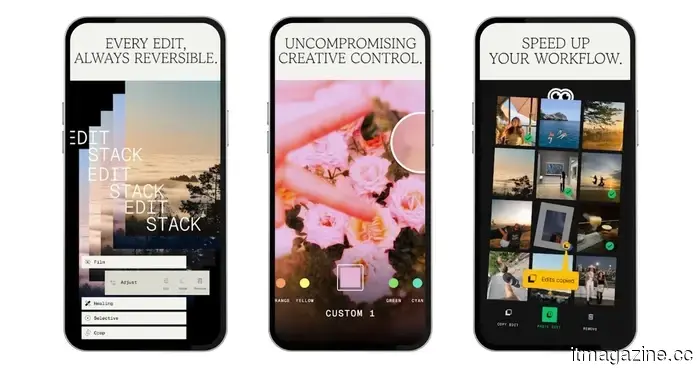 If you capture in RAW format, Snapseed has conveniently addressed one of your major concerns.
The latest Android update for Snapseed introduces support for a majority of major RAW formats, as well as in-tool undo and redo options.
If you capture in RAW format, Snapseed has conveniently addressed one of your major concerns.
The latest Android update for Snapseed introduces support for a majority of major RAW formats, as well as in-tool undo and redo options.
 Richard Sutton departs from Carmack to establish his own artificial intelligence laboratory.
Richard Sutton, regarded as the pioneer of reinforcement learning, has departed from John Carmack’s Keen to develop an AI that can learn in real time using approximately 20 watts of power.
Richard Sutton departs from Carmack to establish his own artificial intelligence laboratory.
Richard Sutton, regarded as the pioneer of reinforcement learning, has departed from John Carmack’s Keen to develop an AI that can learn in real time using approximately 20 watts of power.
 Your seemingly broken TV might be less faulty than it appears.
A repair technician asserts that a small backlight issue can cause certain televisions to seem entirely nonfunctional, possibly leading owners to consider replacement before realizing that the core problem might still be fixable.
Your seemingly broken TV might be less faulty than it appears.
A repair technician asserts that a small backlight issue can cause certain televisions to seem entirely nonfunctional, possibly leading owners to consider replacement before realizing that the core problem might still be fixable.
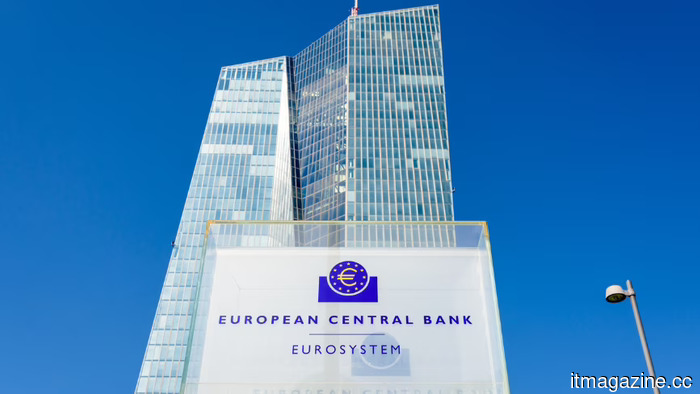 ECB selects 36 payment companies for the digital euro pilot program.
Deutsche Bank, UniCredit, Revolut, Stripe, and Adyen are part of 36 companies selected for the ECB’s digital euro pilot, a year-long trial set to commence in late 2027.
ECB selects 36 payment companies for the digital euro pilot program.
Deutsche Bank, UniCredit, Revolut, Stripe, and Adyen are part of 36 companies selected for the ECB’s digital euro pilot, a year-long trial set to commence in late 2027.
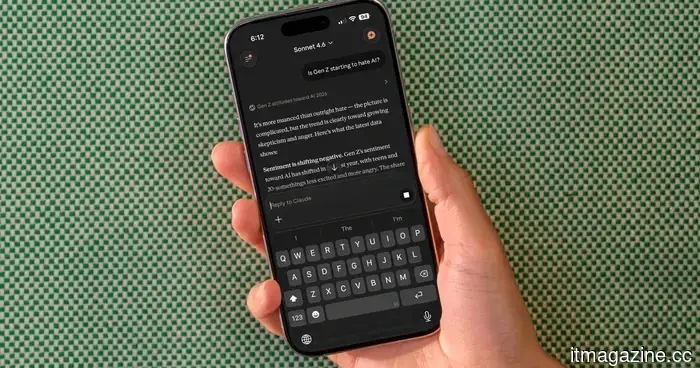 Claude identified the issue with my washing machine in just a few minutes, and it was completely free of charge.
A perplexing error code led me to believe that my washing machine was beyond repair. However, Claude posed the right questions, assisted me in identifying the actual issue, and prevented me from making an unnecessary purchase.
Claude identified the issue with my washing machine in just a few minutes, and it was completely free of charge.
A perplexing error code led me to believe that my washing machine was beyond repair. However, Claude posed the right questions, assisted me in identifying the actual issue, and prevented me from making an unnecessary purchase.
Tower Semiconductor is investing $3 billion in Japan, with Tokyo covering a third of the amount.
Tower Semiconductor plans to invest approximately $3 billion to enhance its 300mm silicon photonics capacity in Japan, after accounting for $1 billion in government grants from Japan.