

This hovering AI robot appears to have emerged from a Studio Ghibli movie, and that’s precisely the intention.
Many of today’s home robots share a common trait: they tend to be noisy, inflexible, and distinctly robotic. Whether it’s a vacuum bumping into furniture or a drone hovering above, their design is focused on task completion rather than providing comfort to users. Researchers in Japan believe there is a better alternative, inspired by animated creatures instead of industrial machinery.
A team led by Mingyang Xu at Keio University, in partnership with several institutions including the MIT Media Lab, has introduced a prototype of a floating companion robot that quietly moves through the air rather than rolling on the floor. Instead of appearing as just another gadget, the robot looks like a small floating entity, drawing inspiration from characters like Tinker Bell, Pokémon’s Mew, and Studio Ghibli’s Soot Sprites.
The team recently showcased this concept in a video illustrating how these buoyant robots could eventually blend into daily life.
A gentler approach to robots coexisting with humans
In contrast to typical drones, the prototype doesn’t depend on rapidly spinning propellers that generate consistent noise. It features a lighter-than-air design with small fins that gently propel it, giving it the appearance of a floating white whale moving from room to room.
The design prioritizes more than just looks. Its lightweight and soft-bodied structure, devoid of exposed moving parts or pinch points, allows it to safely interact with people without the risks posed by traditional flying robots. This opens up new possibilities for robots that don't require safety barriers or can only function when humans are absent.
During the demonstration, the floating companion undertakes remarkably mundane tasks. It serves as an alarm clock, offers reminders, keeps companionship while someone studies, dances with its owner, and provides playful entertainment. Rather than replacing smartphones or smart speakers, the robot acts like a friendly presence that seamlessly coexists with its owner.
The significance of making robots feel approachable
This project also addresses one of robotics’ longstanding design challenges: the uncanny valley. Researchers have discovered that robots designed to closely resemble humans often induce discomfort because they appear somewhere between familiar and artificial, creating the uncanny valley effect – where something nearly human feels off.
Rather than striving for realistic facial expressions, the research team posits that emotion can be conveyed through movement. Gentle floating motions, soft body language, and playful interactions might be more effective than synthetic smiles or digital blinking eyes.
Cuddle-Fish is an innovative soft-bodied, lighter-than-air robot developed by Mingyang Xu at Keio University in Japan. Mingyang Xu/Keio University
This philosophy could become crucial as AI companions gain popularity. Companies like OpenAI, Meta, and Apple are making significant investments in AI assistants expected to transition from smartphones to standalone devices. Simultaneously, robotics companies are competing to create home companions that people genuinely enjoy living with, rather than machines that merely perform household tasks.
Although this floating robot isn’t close to being commercially available, it provides an intriguing glimpse into what future AI companions might resemble. If the researchers are correct, the most successful home robot of the future might not look like a humanoid assistant at all; it could simply float quietly into the room as if it came straight from an animated fantasy.

Other articles
 Fraudsters are currently replicating reputable news websites to swindle your money.
Cybercriminals are replicating reliable news websites by utilizing AI-generated content to advertise fraudulent investment schemes, which is increasingly making it difficult to differentiate between genuine journalism and scams.
Fraudsters are currently replicating reputable news websites to swindle your money.
Cybercriminals are replicating reliable news websites by utilizing AI-generated content to advertise fraudulent investment schemes, which is increasingly making it difficult to differentiate between genuine journalism and scams.
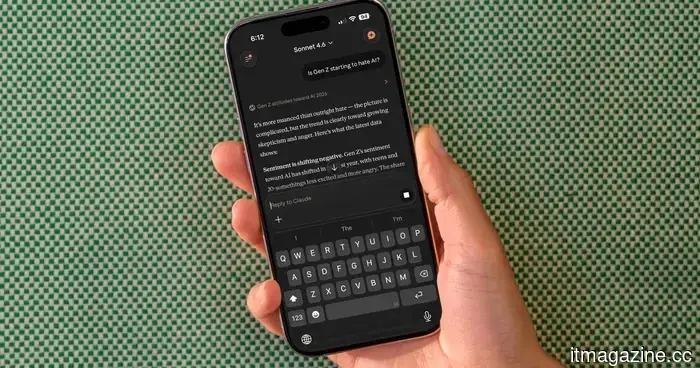 Anthropic is offering Claude Fable 5 for free for a limited period.
Anthropic is providing paid subscribers of Claude free access to Claude Fable 5 until July 19, after which further use will necessitate additional usage credits.
Anthropic is offering Claude Fable 5 for free for a limited period.
Anthropic is providing paid subscribers of Claude free access to Claude Fable 5 until July 19, after which further use will necessitate additional usage credits.
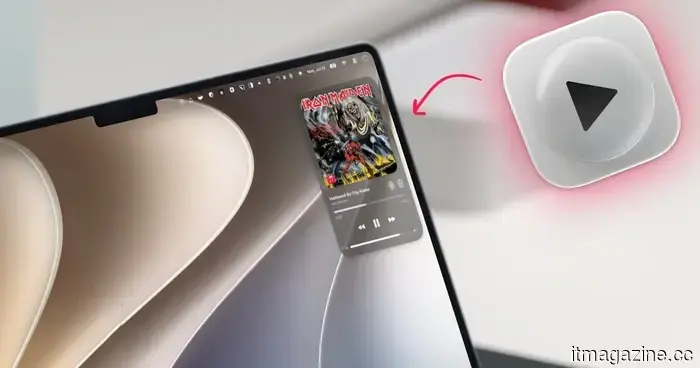 This app provides your Mac with a music player that you'll truly enjoy utilizing.
Liqoria is a Mac music player compatible with Apple Music, Spotify, YouTube, and other services. It offers a floating player, a menu bar player, a Dock player, and a Lock Screen player all within one application.
This app provides your Mac with a music player that you'll truly enjoy utilizing.
Liqoria is a Mac music player compatible with Apple Music, Spotify, YouTube, and other services. It offers a floating player, a menu bar player, a Dock player, and a Lock Screen player all within one application.
 Christopher Nolan's perspective on smartphones is unexpectedly pragmatic.
Christopher Nolan states that steering clear of smartphones helps safeguard the quiet moments in which his best ideas arise, even though living without one has become more and more impractical.
Christopher Nolan's perspective on smartphones is unexpectedly pragmatic.
Christopher Nolan states that steering clear of smartphones helps safeguard the quiet moments in which his best ideas arise, even though living without one has become more and more impractical.
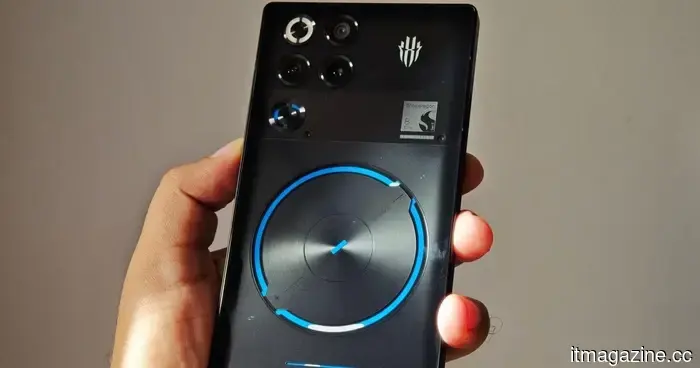 I used to own a liquid-cooled gaming phone, and it hardly ever disappointed me in my daily routine.
The Red Magic 11S Pro is capable of handling resource-intensive PC games, but its battery life, display quality, charging speed, and overall daily dependability are equally important beyond gaming.
I used to own a liquid-cooled gaming phone, and it hardly ever disappointed me in my daily routine.
The Red Magic 11S Pro is capable of handling resource-intensive PC games, but its battery life, display quality, charging speed, and overall daily dependability are equally important beyond gaming.
 TSMC has commenced construction on more advanced packaging factories in Chiayi.
Taiwan has begun construction on Phase II of the Chiayi Science Park, where TSMC will introduce advanced packaging fabs to a location that is currently operational with two facilities in mass production.
TSMC has commenced construction on more advanced packaging factories in Chiayi.
Taiwan has begun construction on Phase II of the Chiayi Science Park, where TSMC will introduce advanced packaging fabs to a location that is currently operational with two facilities in mass production.
This hovering AI robot appears to have emerged from a Studio Ghibli movie, and that’s precisely the intention.
Researchers have introduced a floating AI robot influenced by Studio Ghibli that moves quietly through the air, presenting a safer and more welcoming concept for future AI companions.