
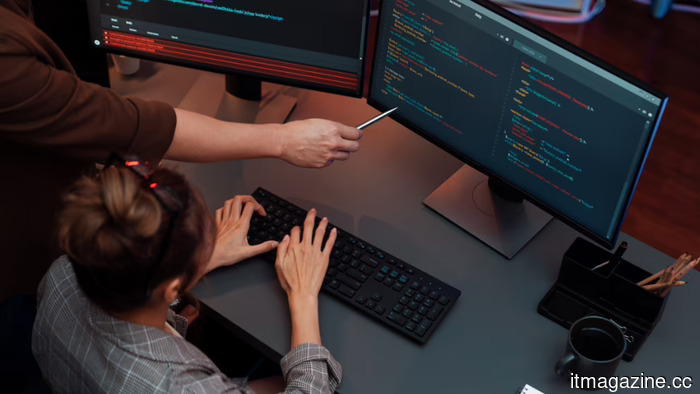
Never-skilling: studies indicate that junior developers utilizing AI fail to acquire debugging skills.
Research released this year has identified a concept that employers have been observing for some time. Deskilling refers to the decline in expertise when a skilled individual ceases to practice. In contrast, never-skilling describes the situation where a novice never achieves proficiency in the first place, presenting a more challenging issue as it pertains to individuals whom companies are increasingly hiring less frequently.
The strongest evidence is derived from a randomized controlled trial conducted by Anthropic researchers Judy Hanwen Shen and Alex Tamkin, published in January. They recruited 52 predominantly junior software engineers, provided half with an AI assistant, tasked all participants with learning Trio, a Python library unfamiliar to them all, and subsequently quizzed everyone on the concepts they had applied just moments before.
The AI group attained an average score of 50%, while the hand-coding group averaged 67%. Anthropic notes that this discrepancy equates to nearly two letter grades and is statistically significant, with a p-value of 0.01.
The anticipated speed advantage, which is the primary motivation for using the assistant, did not manifest as expected. The AI group completed the task about two minutes quicker, a difference that was not significant, partly due to several participants spending as much as 11 minutes formulating queries, approximately a third of their available time.
They learned less, finished no sooner, and performed worst in the crucial area of debugging, where the divide between the two groups was greatest. The control group, lacking an assistant, encountered errors and resolved them, which accurately reflects the way debugging is learned. The AI group, however, did not face these errors.
In medicine, a similar concern has emerged from a different angle. A Nature Medicine Perspective published in May, led by Duke-NUS Medical School with co-authors from Harvard, UCL, and King’s College London, highlighted the risks for trainees who rely on AI during their early clinical training and consequently fail to develop the reasoning necessary for safe, independent practice.
It introduced a third category that has received even less focus: mis-skilling, where a trainee accepts an AI error without question and records it as truth. The authors are careful to note that direct evidence from medical training is lacking. Their argument is based on learning theory and preliminary indications from non-clinical contexts, akin to studies such as Anthropic’s.
Their recommendation includes a three-phase framework: develop competence without AI, teach individuals to calibrate their skepticism, and later introduce the tools under supervision. How the tool is utilized holds greater significance than its mere usage. In the Anthropic trial, high achievers asked conceptual questions or sought explanations alongside code, whereas lower scorers fully delegated or relied on the assistant for debugging.
Employers are already taking this into account. Gartner predicts that the decline in critical-thinking will lead half of global organizations to require “AI-free” skills assessments by 2026, essentially indicating that hiring managers no longer trust portfolios alone. Meanwhile, Ford has been rehiring engineers to correct errors made by its AI systems, illustrating the repercussions when those who could have identified the mistake are no longer employed.
The trial has real limitations, which its authors acknowledge. The sample size was small, the quiz assessed comprehension immediately rather than after a duration, and it involved a sidebar assistant instead of a fully autonomous coder. The researchers anticipate that these factors will have a more pronounced impact rather than a lesser one.
It is noteworthy who conducted the study. Anthropic sells the assistant and has published a paper asserting that negligent use of the assistant can degrade job performance. This can be viewed as either unusual transparency or a strategic pitch for learning methodologies, and both interpretations can be valid.
What the research does not imply is that junior programmers should exclusively hand-code. It indicates that the shortcut and the skill do not lead down the same path, and the industry has mistakenly assumed they did for the past two years.
Другие статьи
 Yann LeCun's venture capital fund, Extelligence, collapses within hours.
Yann LeCun was appointed as a partner at the new venture capital firm Extelligence Invest. However, the fund was dissolved within eight hours due to undisclosed 'exclusive relationships'.
Yann LeCun's venture capital fund, Extelligence, collapses within hours.
Yann LeCun was appointed as a partner at the new venture capital firm Extelligence Invest. However, the fund was dissolved within eight hours due to undisclosed 'exclusive relationships'.
 Apple's lawsuit is already impacting OpenAI's competitor to the iPhone.
Apple's trade secret lawsuit could span several years, but Bloomberg reports that it is already impacting OpenAI's recruitment efforts and creating uncertainty around its device release prior to any decision.
Apple's lawsuit is already impacting OpenAI's competitor to the iPhone.
Apple's trade secret lawsuit could span several years, but Bloomberg reports that it is already impacting OpenAI's recruitment efforts and creating uncertainty around its device release prior to any decision.
 Apple's lawsuit is already impacting OpenAI's competitor to the iPhone.
Apple's trade-secret lawsuit could take years to resolve, but Bloomberg reports that it's already having a chilling effect on OpenAI's recruitment efforts and creating uncertainty around its product launch prior to any decision.
Apple's lawsuit is already impacting OpenAI's competitor to the iPhone.
Apple's trade-secret lawsuit could take years to resolve, but Bloomberg reports that it's already having a chilling effect on OpenAI's recruitment efforts and creating uncertainty around its product launch prior to any decision.
 'Scam Altman': Musk and Altman's weekend clash on X
Musk referred to Sam Altman as a 'scammer' throughout the weekend on X following Apple’s lawsuit against OpenAI. Altman responded by asserting that it simply demonstrated the effectiveness of his new model. Here's a closer look at the dispute.
'Scam Altman': Musk and Altman's weekend clash on X
Musk referred to Sam Altman as a 'scammer' throughout the weekend on X following Apple’s lawsuit against OpenAI. Altman responded by asserting that it simply demonstrated the effectiveness of his new model. Here's a closer look at the dispute.
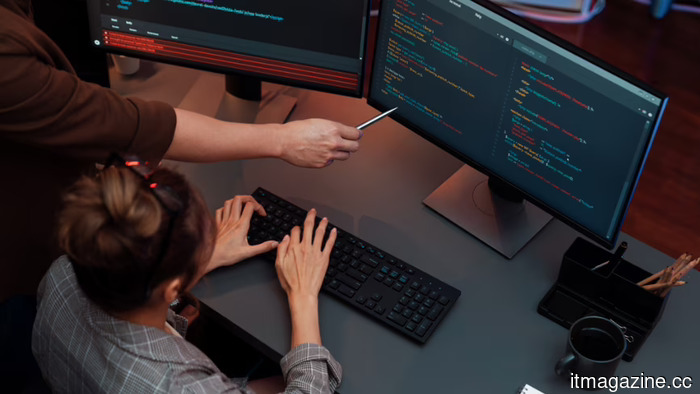 Never-skilling: studies indicate that junior developers who rely on AI do not acquire debugging skills.
A randomized trial showed that developers utilizing AI scored 50% on a quiz concerning code they had just created, compared to 67% for those who coded manually.
Never-skilling: studies indicate that junior developers who rely on AI do not acquire debugging skills.
A randomized trial showed that developers utilizing AI scored 50% on a quiz concerning code they had just created, compared to 67% for those who coded manually.
 The AI memory shortage will not improve until 2028.
The surge in AI has disrupted the typical boom-bust cycle of the memory market. The current memory shortage caused by AI is expected to persist until 2028, and the subsequent downturn could be unprecedented.
The AI memory shortage will not improve until 2028.
The surge in AI has disrupted the typical boom-bust cycle of the memory market. The current memory shortage caused by AI is expected to persist until 2028, and the subsequent downturn could be unprecedented.
Never-skilling: studies indicate that junior developers utilizing AI fail to acquire debugging skills.
A randomized trial revealed that developers utilizing AI achieved a score of 50% on a quiz regarding code they had recently created, compared to 67% for those who coded manually.