
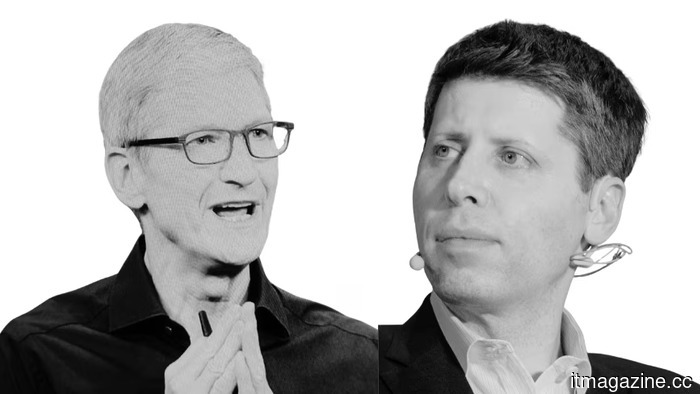
Apple's lawsuit is already negatively impacting OpenAI's competitor to the iPhone.
Apple's lawsuit against OpenAI may take years to reach a courtroom, yet the repercussions are already being felt. When Apple filed a lawsuit on Friday, alleging that OpenAI had stolen hardware trade secrets, the focus was on the sensational details, including interviews and an engineer retaining his work laptop. One individual even messaged a colleague saying, “LOL, I discovered I could access the [network storage].” However, the more significant aspect of the situation is less conspicuous. The lawsuit, even before a verdict is reached, poses a threat to the company that is making the greatest effort to create a competitor to the iPhone.
The impact begins immediately. This is the point that Bloomberg’s Mark Gurman emphasized recently, and it is difficult to argue against it. A battle over trade secrets necessitates new legal evaluations, stricter internal regulations, and extensive depositions and discovery that divert engineers’ attention from development. Former Apple employees now at OpenAI might refrain from discussing their previous work, and managers could avoid specific lines of inquiry altogether. The outcome is a slower, more cautious organization at a time when speed is crucial.
There is also a heightened risk involved. Should Apple demonstrate that OpenAI incorporated its trade secrets into a product, a court could mandate a redesign, reminiscent of Apple’s settlement with chip startup Rivos. Bloomberg Intelligence anticipates that Apple will achieve early, targeted relief, which will isolate contested material and compel OpenAI to preserve evidence and ensure compliance—none of which requires a jury.
For OpenAI, the timing is particularly challenging. It aims to unveil its first hardware product this year and deliver it in 2027, ultimately seeking to create an iPhone rival. This initiative involves io, the design firm co-founded by Jony Ive, which OpenAI acquired in May 2025 for approximately $6.5 billion, as noted in Apple’s complaint. OpenAI possesses the software, as its latest models rank among the best available. However, it has struggled to develop the necessary hardware, and the lawsuit now looms over every design choice made by the team.
Central to this situation are the individuals involved. Over 400 former Apple employees are currently employed by OpenAI, and the recruitment did not cease with the onset of Apple’s investigation. As recently as June, OpenAI hired Apple’s head of smart-glasses, according to Gurman. Apple’s complaint outlines a “checklist that Tang created,” named after OpenAI's hardware chief Tang Tan, to assist new hires in avoiding Apple’s exit security. It also cites a departing engineer’s colleague, Alyssa Peng, who responded “I’m ready” when asked to help retrieve files. Months later, she also departed for OpenAI.
Achieving victory in this case may be more difficult than it appears. California does not enforce non-compete agreements and generally dismisses the “inevitable disclosure” doctrine. Therefore, Apple cannot simply take legal action regarding the 400 departures, legal experts told Business Insider. Each allegation must be based on specific conduct, such as retained devices, unauthorized access, and coached evasion.
The actual vulnerability, several experts pointed out, lies in the supply chain. Apple claims that OpenAI had a shared manufacturing partner execute a proprietary metal-finishing technique, misleading Apple into thinking an agreement had been reached. There was no need for any employee to take physical items out of the facility.
This situation unfolds as OpenAI prepares to enter the public market. Its valuation has surged from about $29 billion in 2023 to $852 billion by April 2026. The company has raised over $180 billion and, as described in the complaint, is spending money “at a historic pace.” Additionally, it currently faces scrutiny from 42 state attorneys general and challenging questions after being overshadowed by Anthropic.
Apple’s lawsuit, stemming from a deteriorated ChatGPT-Siri partnership, adds another layer of uncertainty to the upcoming IPO. Meanwhile, Apple continues to pursue its hardware agenda and a new range of AI wearables. OpenAI maintains that it has “no interest in other companies’ trade secrets.” However, regardless of whether Apple ultimately proves its case, it may have already secured the most critical asset: time. Every month OpenAI spends on legal matters is a month it isn’t launching the device intended to rival the iPhone.
Other articles
 Meta AI detector fails to identify half of its own cropped fakes.
A Reuters test revealed that the Meta AI detector failed to identify 55% of its Muse Image photos after they were cropped, highlighting the limitations of AI watermarks.
Meta AI detector fails to identify half of its own cropped fakes.
A Reuters test revealed that the Meta AI detector failed to identify 55% of its Muse Image photos after they were cropped, highlighting the limitations of AI watermarks.
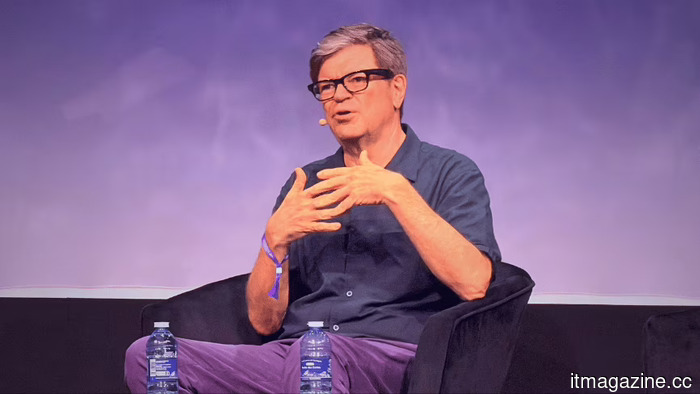 Yann LeCun's venture capital fund, Extelligence, collapses within hours.
Yann LeCun was appointed as a partner at the new venture capital firm Extelligence Invest. However, the fund was dissolved within eight hours due to undisclosed 'exclusive relationships'.
Yann LeCun's venture capital fund, Extelligence, collapses within hours.
Yann LeCun was appointed as a partner at the new venture capital firm Extelligence Invest. However, the fund was dissolved within eight hours due to undisclosed 'exclusive relationships'.
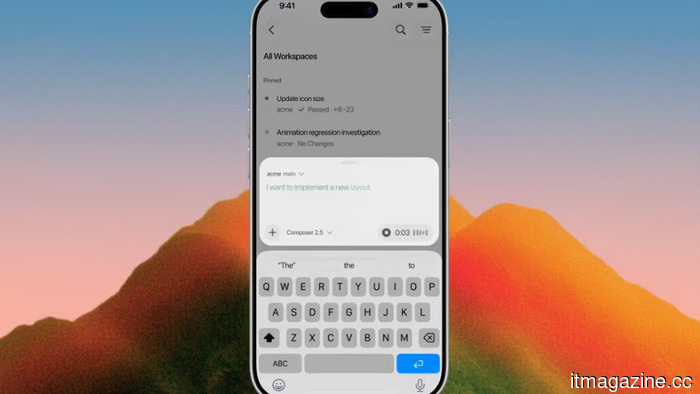 Cursor Sand: the competitor to Claude Cowork with a Musk twist.
Cursor Sand is a versatile agent designed to compete with Claude Cowork and ChatGPT Work. The decision on whether it will ever be released rests with Musk's SpaceX.
Cursor Sand: the competitor to Claude Cowork with a Musk twist.
Cursor Sand is a versatile agent designed to compete with Claude Cowork and ChatGPT Work. The decision on whether it will ever be released rests with Musk's SpaceX.
 The AI memory shortage is not expected to improve until 2028.
The surge in AI technology disrupted the typical boom-bust cycle of the memory market. The current memory shortage driven by AI is expected to persist until 2028, and the subsequent downturn may be unprecedented.
The AI memory shortage is not expected to improve until 2028.
The surge in AI technology disrupted the typical boom-bust cycle of the memory market. The current memory shortage driven by AI is expected to persist until 2028, and the subsequent downturn may be unprecedented.
 Meta's AI detector overlooks 50% of its own cropped forgeries.
A Reuters test revealed that the Meta AI detector was unable to identify 55% of its Muse Image pictures after they were cropped, highlighting the limitations of AI watermarks.
Meta's AI detector overlooks 50% of its own cropped forgeries.
A Reuters test revealed that the Meta AI detector was unable to identify 55% of its Muse Image pictures after they were cropped, highlighting the limitations of AI watermarks.
 The most cutting-edge calorie tracking applications of 2026.
Five calorie tracking applications advancing the field in 2026 through AI-driven food logging, adaptive algorithms, GLP-1 integration, and customized meal planning that adjusts to personal health conditions.
The most cutting-edge calorie tracking applications of 2026.
Five calorie tracking applications advancing the field in 2026 through AI-driven food logging, adaptive algorithms, GLP-1 integration, and customized meal planning that adjusts to personal health conditions.
Apple's lawsuit is already negatively impacting OpenAI's competitor to the iPhone.
Apple's trade-secret lawsuit could span several years, but according to Bloomberg, it is already impacting OpenAI's recruitment efforts and casting a shadow over its device release prior to any judgment.