
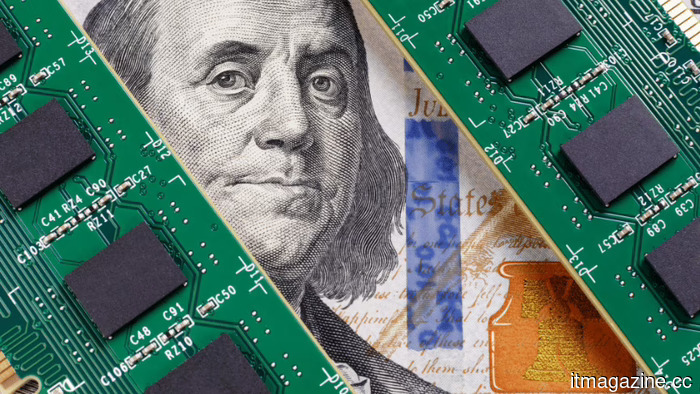
The AI memory shortage will not improve until 2028.
The AI surge has shattered the longest-standing principle of the memory market. Prices that should be declining are instead climbing, and the AI memory shortage is expected to persist until 2028. When the consequences finally hit, they could be severe.
Memory is typically unexciting. For many years, DRAM and NAND flash have functioned like other commodities, going through predictable cycles of growth and decline as new factories enter the market and prices crash. However, that cycle has now collapsed.
As highlighted by The Register, the expansion of AI has consumed every available chip, leading to a memory crisis with no quick resolution in sight.
The cycle that has unraveled
According to previous norms, 2025 and 2026 were anticipated to be down years, with prices gradually dropping as supply met demand. Instead, they have risen. GPU servers require significant amounts of high-bandwidth memory, such as DDR5 and NAND, which has created overwhelming demand.
The ripple effect has reached the retail level, increasing the prices of consumer electronics and, as The Register notes, effectively eliminating affordable smartphones. For manufacturers, this has been a boon. SK Hynix and Micron have seen their revenues triple within a year, while Samsung has nearly doubled its earnings.
A solution measured in years
The obvious response is to build more factories, and investments are in motion. In June, South Korean President Lee Jae Myung announced a $576 billion initiative led by SK Hynix and Samsung. Last week, Micron stated it would invest up to $3 billion to strengthen its supply chain in the U.S., with additional funding for Singapore, Taiwan, and Japan.
However, these developments will not yield immediate results. Constructing a new memory fabrication plant is one of the most challenging undertakings in the industry, involving everything from acquiring permits to setting up ultra-pure water systems and lithography tools, which can take months to calibrate. Any projects initiated today will take at least three years to become operational, with even more time needed to reach full production capacity. The analyst firm IDC does not anticipate relief until 2028.
Everyone downstream is affected
In the meantime, the financial burden falls on everyone beneath the memory giants. Chip manufacturers are already adapting to the shortage. Samsung is preparing a budget solid-state drive that eliminates onboard DRAM, as reported by TechRadar, instead utilizing a portion of the system memory to reduce costs.
AI companies are feeling the pressure as well. Every model developer using AI infrastructure is encountering higher costs, which is detrimental to already narrowed profit margins. Labs have invested four years and hundreds of billions of dollars in venture funding, yet they still need to transform the cost per token into profitability, a task made more difficult by the rising price of memory.
The bust that no one is predicting
This presents a dilemma: memory vendors finance their extensive fabs based on the strength of a boom, fully aware that when new capacity finally becomes available, it can inundate the market and drive prices down. This is the cyclical nature of the industry, and AI has only exacerbated the swings.
The entire system hinges on one key assumption: that demand for AI continues to grow. Should that demand fall short coinciding with the ramp-up of new fabs, manufacturers could face what The Register describes as a catastrophic downturn. Thus, the real competition is not between memory and demand, but rather whether the new fabs come online before the AI bubble bursts and the music stops.
For Europe, which is observing from the sidelines of a supply chain it barely controls, the strain serves as a reminder of its vulnerability. The region is racing to create its own AI data centers, yet only a few companies in Korea, Taiwan, and the United States control the resources needed to build them.
This "RAMpocalypse" is an excellent period for memory manufacturers, but it is a precarious situation for everyone else, and the impending reckoning has only been postponed, not eliminated.
Other articles
 Apple's lawsuit is already impacting OpenAI's competitor to the iPhone.
Apple's trade-secret lawsuit could take years to resolve, but Bloomberg reports that it's already having a chilling effect on OpenAI's recruitment efforts and creating uncertainty around its product launch prior to any decision.
Apple's lawsuit is already impacting OpenAI's competitor to the iPhone.
Apple's trade-secret lawsuit could take years to resolve, but Bloomberg reports that it's already having a chilling effect on OpenAI's recruitment efforts and creating uncertainty around its product launch prior to any decision.
 'Scam Altman': Musk and Altman's weekend conflict on X
Musk labeled Sam Altman a 'scammer' throughout the weekend on X following Apple's lawsuit against OpenAI. Altman responded by stating that it merely demonstrated the effectiveness of his new model. Here's a look at the clash.
'Scam Altman': Musk and Altman's weekend conflict on X
Musk labeled Sam Altman a 'scammer' throughout the weekend on X following Apple's lawsuit against OpenAI. Altman responded by stating that it merely demonstrated the effectiveness of his new model. Here's a look at the clash.
 Australia's AI copyright dispute: creators versus data centers
AI companies, such as Anthropic, are offering billions for data centers in exchange for an exception in Australia's copyright laws to use local content for training. The Labor party is divided on the issue.
Australia's AI copyright dispute: creators versus data centers
AI companies, such as Anthropic, are offering billions for data centers in exchange for an exception in Australia's copyright laws to use local content for training. The Labor party is divided on the issue.
 Yann LeCun's venture capital fund, Extelligence, crumbles within hours.
Yann LeCun was appointed as a partner at the new venture capital firm Extelligence Invest. However, within eight hours, the fund was dissolved due to unspecified 'exclusive relationships'.
Yann LeCun's venture capital fund, Extelligence, crumbles within hours.
Yann LeCun was appointed as a partner at the new venture capital firm Extelligence Invest. However, within eight hours, the fund was dissolved due to unspecified 'exclusive relationships'.
 The most cutting-edge calorie tracking applications of 2026.
Five calorie tracking applications advancing the field in 2026 through AI-driven food logging, adaptive algorithms, GLP-1 integration, and customized meal planning that adjusts to personal health conditions.
The most cutting-edge calorie tracking applications of 2026.
Five calorie tracking applications advancing the field in 2026 through AI-driven food logging, adaptive algorithms, GLP-1 integration, and customized meal planning that adjusts to personal health conditions.
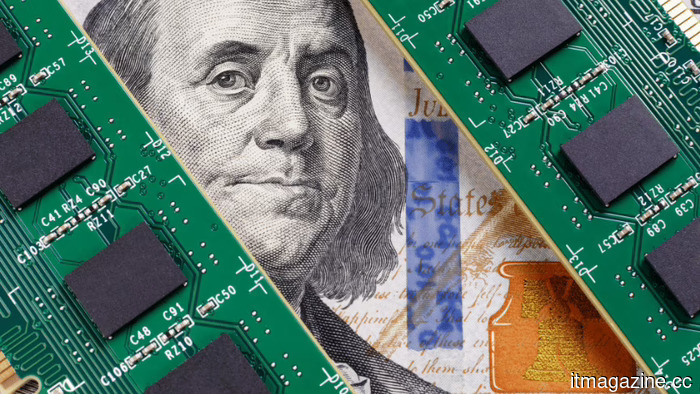 The AI memory shortage is unlikely to improve until 2028.
The surge in AI has disrupted the memory market's cycle of boom and bust. The current memory shortage due to AI is expected to last until 2028, and the subsequent downturn could be unprecedented.
The AI memory shortage is unlikely to improve until 2028.
The surge in AI has disrupted the memory market's cycle of boom and bust. The current memory shortage due to AI is expected to last until 2028, and the subsequent downturn could be unprecedented.
The AI memory shortage will not improve until 2028.
The surge in AI has disrupted the typical boom-bust cycle of the memory market. The current memory shortage caused by AI is expected to persist until 2028, and the subsequent downturn could be unprecedented.