
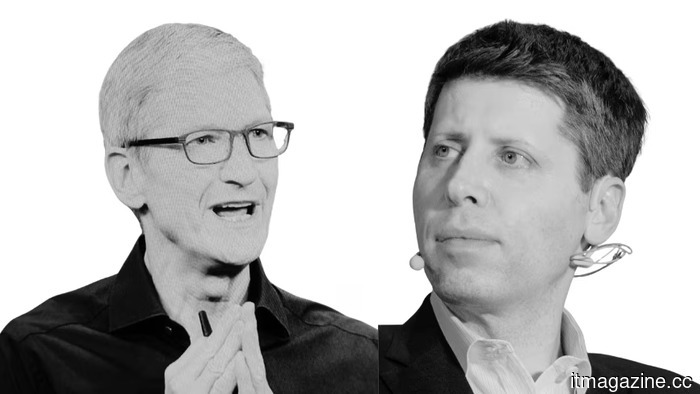
Apple's lawsuit is already impacting OpenAI's competitor to the iPhone.
Apple’s lawsuit against OpenAI may take years to see a courtroom, but it is already causing harm.
When Apple filed suit against OpenAI on Friday for allegedly stealing hardware trade secrets, the shocking details drew attention. This included "show and tell" interviews and an engineer who retained his work laptop. One engineer even texted a co-worker: “LOL, I discovered I can access the [network storage].” However, the more significant aspect is less discussed. The lawsuit itself, even before any ruling, poses a risk of delaying the company that is working hardest to create a competitor to the iPhone.
The impact begins now.
This argument, presented by Bloomberg’s Mark Gurman this week, is difficult to refute. A trade-secret dispute necessitates new legal examinations, stricter internal policies, and countless hours of interviews and evidence gathering, all of which distract engineers from their development work. Previous Apple employees at OpenAI might become reticent about their former projects, and managers may avoid certain lines of questioning entirely.
The outcome is a more sluggish and cautious organization, precisely at a time when speed is crucial.
There is also a heightened risk. If Apple can demonstrate that OpenAI integrated its trade secrets into a product, a court could mandate a redesign, reminiscent of Apple’s settlement with the chip firm Rivos.
Bloomberg Intelligence anticipates Apple will gain early, specific relief that segregates contested materials and compels OpenAI to maintain evidence and confirm compliance. None of this requires a jury’s involvement.
A product is at stake.
The timing could not be worse for OpenAI, which still intends to unveil its first hardware product this year and launch it in 2027, eventually aiming for a competitor to the iPhone. This initiative involves io, the design company co-founded by Jony Ive. OpenAI acquired it in May 2025 for around $6.5 billion, as noted in Apple’s complaint. OpenAI possesses the software—it has some of the top-ranking models currently—but has faced difficulties in developing the hardware for them, and the lawsuit now casts a shadow over every design choice.
The talent pool Apple aims to disrupt.
At the core of the matter are the personnel. Over 400 former Apple employees currently work at OpenAI, and the talent poaching continued even after Apple launched its investigation. As recently as June, OpenAI hired Apple’s chief of smart glasses, according to Gurman. Apple’s complaint mentions a “checklist compiled by Tang,” referring to OpenAI’s hardware head Tang Tan, aimed at assisting new hires in bypassing Apple’s exit security. It also cites a departing engineer’s colleague, Alyssa Peng, responding with “I’m ready” when approached about retrieving files. Months later, she too left for OpenAI.
Why Apple’s case may be more complex than it appears.
However, achieving a win may be another challenge. California does not enforce non-compete agreements and largely dismisses the "inevitable disclosure" doctrine. Consequently, as legal experts told Business Insider, Apple cannot simply sue for the 400 departures; each claim must hinge on specific actions: retained devices, unauthorized access, and instructed evasion.
Several experts pointed out that the actual vulnerability lies in the supply chain. Apple asserts that OpenAI had a common manufacturing partner undertake a proprietary metal-finishing process, misleading Apple into thinking it had consented. No employee needed to take anything physically out of the facility.
An IPO overshadowed.
All of this unfolds as OpenAI approaches the public markets. Its valuation has increased from around $29 billion in 2023 to $852 billion by April 2026. The company has raised over $180 billion and, as described in the complaint, is spending money “at a record pace.” OpenAI is already challenged by 42 state attorneys general and facing uncomfortable scrutiny after being outpaced by Anthropic.
Apple’s lawsuit, stemming from a problematic ChatGPT-Siri partnership, adds yet another obstacle to the upcoming listing.
Meanwhile, Apple continues to advance its own hardware plans and a new range of AI wearables. OpenAI maintains it has “no interest in other companies’ trade secrets.” Nevertheless, regardless of whether Apple proves its case, it may have already secured the most crucial advantage: time.
Each month OpenAI dedicates to legal matters is a month it is not launching the device intended to render the iPhone obsolete.
Other articles
 The pressure on AI memory is not expected to alleviate until 2028.
The surge in AI has disrupted the boom-bust cycle of the memory market. The current memory shortage driven by AI is expected to persist until 2028, and the subsequent downturn could be unprecedented.
The pressure on AI memory is not expected to alleviate until 2028.
The surge in AI has disrupted the boom-bust cycle of the memory market. The current memory shortage driven by AI is expected to persist until 2028, and the subsequent downturn could be unprecedented.
 Australia's AI copyright dispute: creators against data centers.
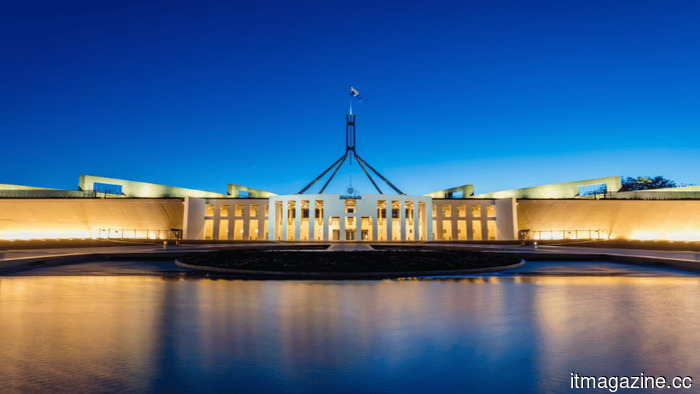
AI companies, such as Anthropic, are offering billions for datacentres in exchange for a specific Australian AI copyright exemption to utilize domestic work for training. There is a division within the Labor Party on this issue.
Australia's AI copyright dispute: creators against data centers.
AI companies, such as Anthropic, are offering billions for datacentres in exchange for a specific Australian AI copyright exemption to utilize domestic work for training. There is a division within the Labor Party on this issue.
 The AI memory shortage is not expected to improve until 2028.
The surge in AI technology disrupted the typical boom-bust cycle of the memory market. The current memory shortage driven by AI is expected to persist until 2028, and the subsequent downturn may be unprecedented.
The AI memory shortage is not expected to improve until 2028.
The surge in AI technology disrupted the typical boom-bust cycle of the memory market. The current memory shortage driven by AI is expected to persist until 2028, and the subsequent downturn may be unprecedented.
 Meta's AI detector overlooks 50% of its own cropped forgeries.
A Reuters test revealed that the Meta AI detector was unable to identify 55% of its Muse Image pictures after they were cropped, highlighting the limitations of AI watermarks.
Meta's AI detector overlooks 50% of its own cropped forgeries.
A Reuters test revealed that the Meta AI detector was unable to identify 55% of its Muse Image pictures after they were cropped, highlighting the limitations of AI watermarks.
 The AI penalty: employees penalized for using AI in good faith
Managers encourage employees to utilize AI, only to give credit to the technology instead. Researchers refer to this phenomenon as the AI penalty, and workers claim it is impacting their chances for promotions and salary increases.
The AI penalty: employees penalized for using AI in good faith
Managers encourage employees to utilize AI, only to give credit to the technology instead. Researchers refer to this phenomenon as the AI penalty, and workers claim it is impacting their chances for promotions and salary increases.
 Never-skilling: studies indicate that junior developers utilizing AI fail to acquire debugging skills.
A randomized trial revealed that developers utilizing AI achieved a score of 50% on a quiz regarding code they had recently created, compared to 67% for those who coded manually.
Never-skilling: studies indicate that junior developers utilizing AI fail to acquire debugging skills.
A randomized trial revealed that developers utilizing AI achieved a score of 50% on a quiz regarding code they had recently created, compared to 67% for those who coded manually.
Apple's lawsuit is already impacting OpenAI's competitor to the iPhone.
Apple's trade secret lawsuit could span several years, but Bloomberg reports that it is already impacting OpenAI's recruitment efforts and creating uncertainty around its device release prior to any decision.