
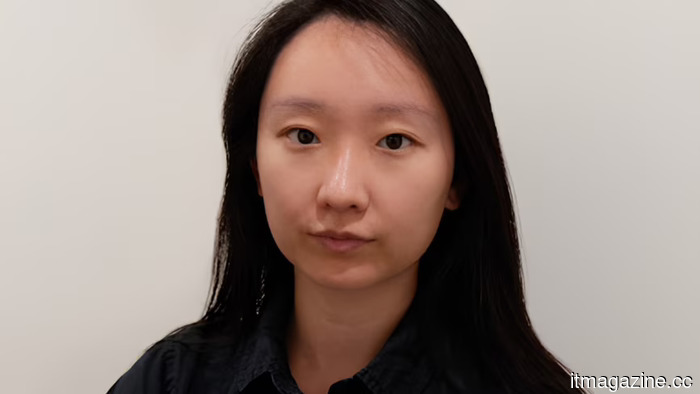
Tingyu Su emphasizes the importance of considering the founding designer as a strategic hire right from the beginning of the company's development for AI startups.
Artificial intelligence has significantly sped up software development, making it easier than ever to turn concepts into functional products. A recent report from Stanford highlights that AI performance on a crucial coding benchmark increased from 60% to nearly 100% in just one year, while organizational adoption of AI rose to 88%. As AI capabilities grow, Tingyu Su believes the primary challenge is no longer just software creation, but rather developing products that users can instantly understand, trust, and choose to adopt.
Su, a startup Founding Designer with experience in creative technology, product innovation, and multidisciplinary design, states that this shift has heightened the importance of the founding designer as an early hire. She notes that while startups tend to focus on engineering talent, they also require someone who can integrate product development, branding, and customer experience into a unified approach from the outset.
“The pace of AI advancement has transformed the basis of competition among companies,” Su remarks. “Creating an initial product has become more accessible. The foundation for lasting differentiation lies in establishing a brand and experience that people can quickly comprehend, trust, and remember.”
Su emphasizes that customers often form perceptions about a company well before they engage with its technology. “A website, conference booth, presentation, or marketing material might represent the first interaction someone has with a company,” she explains. She recalls an instance at a recent industry conference when a potential customer visited the company’s booth and commented that the materials appeared clean, immediately understandable, and were notably more polished compared to those of other exhibitors. For Su, such moments affirm that every interaction should consistently reflect the identity that customers will eventually encounter in the product itself. While a startup's product will undergo numerous changes, she insists that a well-crafted brand should remain constant. For AI startups, this consistency is vital for establishing customer trust before the technology demonstrates its efficacy.
Su’s diverse career has influenced her design philosophy. Her background includes roles in art institutions, creative agencies, consumer brands, and technology companies, supported by formal training in communication design and product innovation. She has received an iF Design Award and contributed to published research presented at CHI 2025. Currently, she leverages that extensive perspective as the founding designer at Youlify, a Silicon Valley healthcare AI startup focused on developing revenue cycle management solutions for healthcare providers and organizations.
Su observes that expectations for early-stage products have evolved in parallel with AI advancements. Although the minimum viable product remains useful for validating ideas, she argues that functional software is often insufficient to gain customer confidence. Instead, she advocates for creating a Minimum Lovable Product—an experience that is clear, intuitive, and trustworthy from the very first encounter. Su believes that thoughtful design can transform an early prototype into a product that users are eager to adopt and recommend.
“A product does not need numerous features to make an impact,” Su states. “Sometimes a single, well-designed experience that directly addresses a genuine issue fosters far greater confidence than a long list of features that people may not fully grasp.”
Su asserts that AI is transforming the role of designers just as it is reshaping technology. She envisions that the next generation will contribute across branding, product strategy, customer research, and engineering instead of adhering to traditional design roles. She notes that AI tools and an increasing understanding of technology are enabling designers to work more closely with engineering teams throughout product development.
Su advises founders hiring their first designer to prioritize curiosity, initiative, and systems thinking alongside technical expertise. She explains that early-stage startups often lack structures for specialized roles, making adaptability crucial for anyone joining the founding team. Designers who actively seek out customer challenges and collaborate across departments, making practical recommendations, can contribute significantly beyond conventional design responsibilities.
“The most valuable founding designers continually learn alongside the company,” Su explains. “They are eager to understand the customer, work collaboratively with engineers, engage in business discussions, and refine each experience as the company evolves.”
Su’s diverse career exemplifies this philosophy. Prior to entering the startup scene, she worked with well-known cultural institutions such as the Museum of Modern Art, the Solomon R. Guggenheim Museum, and the Rubin Museum of Himalayan Art, experiences that enhanced her grasp of storytelling, accessibility, and large-scale design systems. She later broadened that perspective through creative agencies and consumer brands before stepping into AI startup leadership, where she now fuses design, technology, and business strategy to shape emerging products.
As artificial intelligence continues to transform the landscape of software creation, Su believes the founding designer's role will further expand in tandem with technological advancements. While engineering excellence remains essential for successful startups, she argues that long-term differentiation will increasingly rely on how companies convey value, build customer trust, and provide seamless experiences across all interactions.
“Companies that are memorable are the ones that ensure every interaction feels intentional,” Su remarks. “Technology will keep evolving, but trust is cultivated through experiences that remain consistent from the initial impression to the product itself. This is where I think the founding designer adds lasting value.”
Other articles
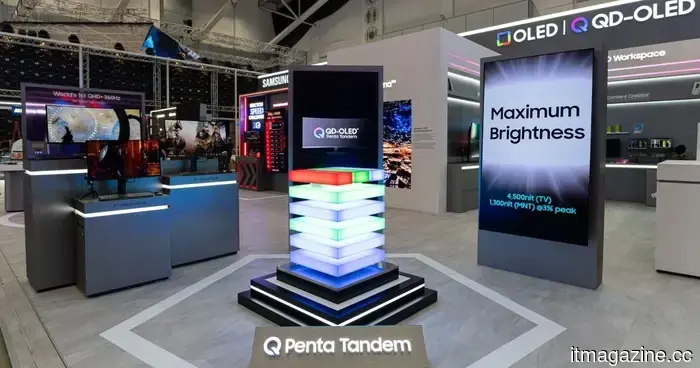 Samsung is introducing a new type of OBLYX OLED panels, which are expected to be available in gaming laptops shortly.
Samsung Display has launched OBLYX, marking its inaugural OLED gaming laptop brand, as it aims to take advantage of the swiftly increasing demand for high-end gaming displays, especially in China.
Samsung is introducing a new type of OBLYX OLED panels, which are expected to be available in gaming laptops shortly.
Samsung Display has launched OBLYX, marking its inaugural OLED gaming laptop brand, as it aims to take advantage of the swiftly increasing demand for high-end gaming displays, especially in China.
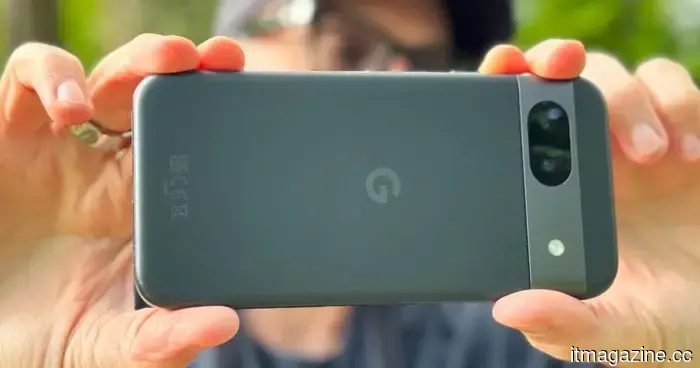 My old Pixel continues to receive AI features that Apple requires a newer iPhone to access.
My Pixel 8a continues to receive AI tools, while Apple's latest model is falling behind the standard iPhone 17, and this disparity speaks volumes about the level of long-term support.
My old Pixel continues to receive AI features that Apple requires a newer iPhone to access.
My Pixel 8a continues to receive AI tools, while Apple's latest model is falling behind the standard iPhone 17, and this disparity speaks volumes about the level of long-term support.
 What features define the optimal stablecoin payment solution?
A comprehensive guide to assessing stablecoin payment solutions for businesses, focusing on aspects such as acceptance, settlement, compliance, payouts, and API integration for e-commerce, SaaS, marketplaces, and international operations.
What features define the optimal stablecoin payment solution?
A comprehensive guide to assessing stablecoin payment solutions for businesses, focusing on aspects such as acceptance, settlement, compliance, payouts, and API integration for e-commerce, SaaS, marketplaces, and international operations.
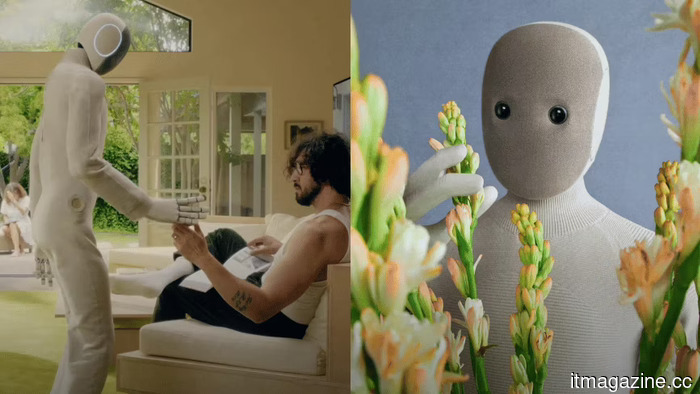 1X's NEO robot is equipped with hands capable of sensing when a glass is slipping.
The NEO home robot from 1X features new tendon-driven hands that offer 25 degrees of freedom and tactile skin. It can easily detect a slipping glass, but performing actual tasks remains challenging.
1X's NEO robot is equipped with hands capable of sensing when a glass is slipping.
The NEO home robot from 1X features new tendon-driven hands that offer 25 degrees of freedom and tactile skin. It can easily detect a slipping glass, but performing actual tasks remains challenging.
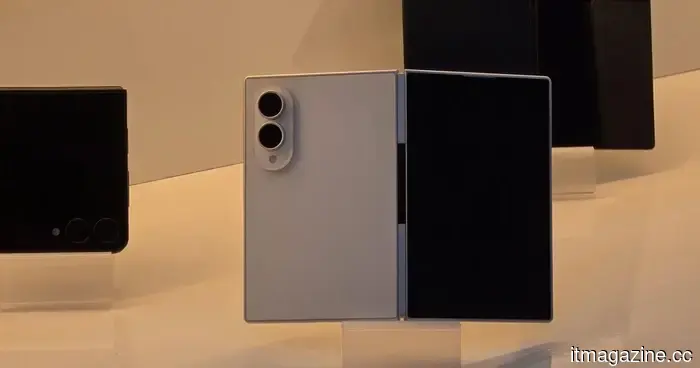 This image could be your initial genuine glimpse of the Galaxy Z Fold 8.
A photo shared on Reddit allegedly depicts Samsung's Galaxy Z Fold 8, Fold 8 Ultra, and Flip 8 in real life, weeks before the Unpacked event scheduled for July 22.
This image could be your initial genuine glimpse of the Galaxy Z Fold 8.
A photo shared on Reddit allegedly depicts Samsung's Galaxy Z Fold 8, Fold 8 Ultra, and Flip 8 in real life, weeks before the Unpacked event scheduled for July 22.
 Spotify has introduced new controls for Release Radar, allowing you to discover new music in your preferred way.
Spotify is introducing new session controls to Release Radar worldwide, allowing you to sort your weekly new music playlist by genre, emerging artists, or editor's selections before starting playback.
Spotify has introduced new controls for Release Radar, allowing you to discover new music in your preferred way.
Spotify is introducing new session controls to Release Radar worldwide, allowing you to sort your weekly new music playlist by genre, emerging artists, or editor's selections before starting playback.
Tingyu Su emphasizes the importance of considering the founding designer as a strategic hire right from the beginning of the company's development for AI startups.
Tingyu Su, the founding designer of the healthcare AI startup Youlify, points out that as AI simplifies software development, the role of the founding designer becomes essential. This individual plays a vital strategic role by linking product development, branding, and customer experience right from the start.