
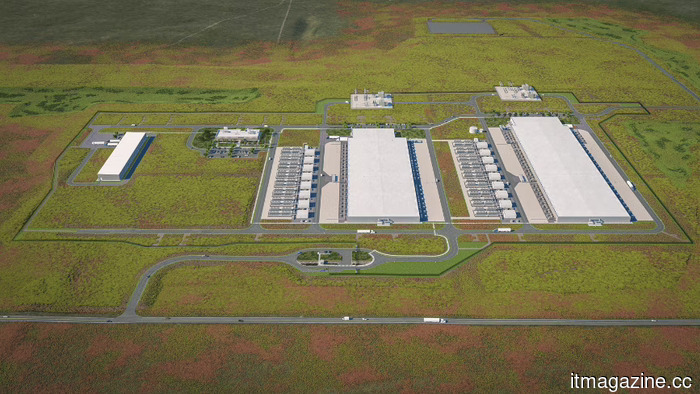
The debt of Big Tech in relation to AI has reached $350 billion and is making its way to Europe.
Big Tech established its reputation through vast amounts of cash. Now, it's constructing its AI empire on debt, and the consequences are beginning to unfold in Europe. The five largest developers of AI data centers in the US have doubled their debt over the past five years. Collectively, Alphabet, Amazon, Meta, Microsoft, and Oracle have amassed around $350 billion in debt, according to Bloomberg data. They are banking on advanced AI eventually generating enough returns to cover this amount.
Currently, the interest payments are almost negligible. Last year, the five companies paid a total of $10 billion on their debt. While this is more than double what they paid in 2019, it pales in comparison to Google’s cash flow of approximately $64 billion in the last quarter. These remain some of the most profitable companies globally.
However, strains are beginning to show. Amazon reported a negative free cash flow in the March quarter, while Oracle’s debt reached about 2.5 times its sales, leading to a downgrade from S&P on Thursday to one level above junk status, citing AI expenditures as the catalyst.
The market is starting to react.
So far, investors have been eager to purchase bonds. However, this trend may be shifting. Amazon’s $25 billion bond sale this week was met with a notably lukewarm response, marking the weakest hyperscaler launch since Meta’s in October. Traders are now offloading older tech bonds, including those from Amazon, Nvidia, and Oracle, to accommodate the new influx.
The buyers are running out of capacity, not confidence. Yet, the warning signs are accumulating. “Credit risk is too undervalued right now in the market,” stated Morgan Stanley’s Vishal Khanduja on Bloomberg TV.
Why this is significant in Europe
This is the crucial part for Europe. American tech companies have run out of dollars to borrow and are now looking to Europe for funds. No non-dollar bonds have been issued by hyperscalers in 2024, but by 2026, this will become a central aspect of their financing.
Morgan Stanley predicts that their borrowing in euros will hit €50 billion this year, according to TechFundingNews. This would position US Big Tech as the largest source of corporate debt in the eurozone, surpassing France. In just one year, Alphabet has borrowed in yen, Canadian dollars, Swiss francs, and pounds, even selling a 100-year bond.
When American giants compete for the same euro-denominated debt that European startups and infrastructure funds depend on, the cost of borrowing rises here as well. A startup in Munich or Paris lacking any AI exposure could end up paying more simply because Amazon secured funding first.
The Intel cautionary tale
Not everyone is anxious about the situation. Amazon CEO Andy Jassy expresses "high confidence" in the monetization of AI investments. Mark Zuckerberg asserts that the demand for computing power is continuously surpassing supply. Gil Luria from DA Davidson believes the current debt levels are manageable, stating, “If they were borrowing an order of magnitude more? That would seem alarming.”
However, others are more straightforward. “It seems like a lot of demand hype that is very aspirational at this point,” remarked Fitch’s Jason Pompeii. A cautionary example is found in the semiconductor industry. Intel accumulated significant debt over many years, completely missed the AI chip surge, and required a bailout from the US government along with an investment from Nvidia to stay afloat.
Why this is important
The push for AI infrastructure has quietly evolved into one of the largest debt bets in corporate history, with one research firm predicting the AI debt market could reach $7 trillion by 2029. This year, only Alphabet's stock has outperformed the market, while Microsoft and Oracle have both dropped by over 20%.
Share buybacks, which once characterized these companies, have nearly ceased. The central question now isn’t just whether AI technology will succeed but whether revenue will materialize before the debt becomes due, reflecting the concerns of a possibly impending bubble and lofty valuations prevalent in the sector. This same dilemma is influencing Nvidia’s bond issuances and ByteDance's loans.
Europe has now become the venue where this bet is being settled.
Other articles
 The Prime Minister of Malaysia is initiating the development of an AI version of himself.
Anwar Ibrahim's administration is set to introduce PMX AI, an interactive avatar modeled on his speeches, designed to communicate in his style and guide citizens through government services.
MiniMax secures $2 billion, with its CEO opting to waive their salary until the achievement of AGI.
MiniMax is seeking to raise up to $2 billion following an 80% decline, with founder Yan Junjie committing to forgo his salary until the achievement of AGI and promising 5% of his shares to employees and the open-source community.
The Prime Minister of Malaysia is initiating the development of an AI version of himself.
Anwar Ibrahim's administration is set to introduce PMX AI, an interactive avatar modeled on his speeches, designed to communicate in his style and guide citizens through government services.
MiniMax secures $2 billion, with its CEO opting to waive their salary until the achievement of AGI.
MiniMax is seeking to raise up to $2 billion following an 80% decline, with founder Yan Junjie committing to forgo his salary until the achievement of AGI and promising 5% of his shares to employees and the open-source community.
 Outlook will soon give you a heads-up before you respond to an old email.
Microsoft is working on a notification feature for outdated replies in Outlook, as well as enhancements to categories and the introduction of automatic responses utilizing saved templates.
Outlook will soon give you a heads-up before you respond to an old email.
Microsoft is working on a notification feature for outdated replies in Outlook, as well as enhancements to categories and the introduction of automatic responses utilizing saved templates.
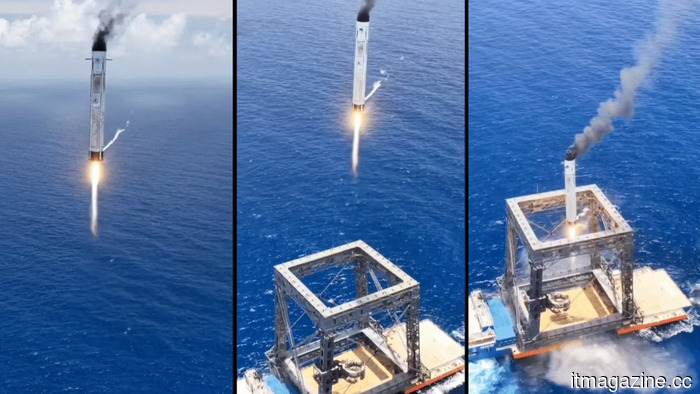 China successfully lands a reusable rocket booster for the first time.
China successfully captured a Long March-10B booster in a net at sea, marking its initial recovery of a reusable rocket. This places it alongside SpaceX and Blue Origin, though it significantly lags behind them.
China successfully lands a reusable rocket booster for the first time.
China successfully captured a Long March-10B booster in a net at sea, marking its initial recovery of a reusable rocket. This places it alongside SpaceX and Blue Origin, though it significantly lags behind them.
 Home robots are capable of walking. The challenging aspect is preventing them from damaging your glassware.
1X's NEO home robot features tendon-driven hands equipped with tactile sensing, force control, and water resistance. However, despite its impressive hardware, it still requires dependable autonomy to manage everyday tasks.
Home robots are capable of walking. The challenging aspect is preventing them from damaging your glassware.
1X's NEO home robot features tendon-driven hands equipped with tactile sensing, force control, and water resistance. However, despite its impressive hardware, it still requires dependable autonomy to manage everyday tasks.
The debt of Big Tech in relation to AI has reached $350 billion and is making its way to Europe.
Alphabet, Amazon, Meta, Microsoft, and Oracle have increased their debt to $350 billion to invest in AI, and are currently entering European bond markets, starting with France.